The Great American Squeeze Of 2026
The short version
- Between rising rent and gas prices, escalating grocery bills, and sky-high health insurance premiums, Americans are feeling a relentless squeeze from all directions.
- Recent economic numbers point to a weary consumer.
- In fact, consumer sentiment is at a 74-year low .
- To put that in perspective, Americans feel more pessimistic about the economy today than they did during the 2008 financial crisis, the stagflation of the 1970s…
- Why does it feel like your paycheck is evaporating before it even hits your bank account, while the S&P 500 is hitting record highs over 7,400?
The story
Authored by MN Gordon via Economic Prism,
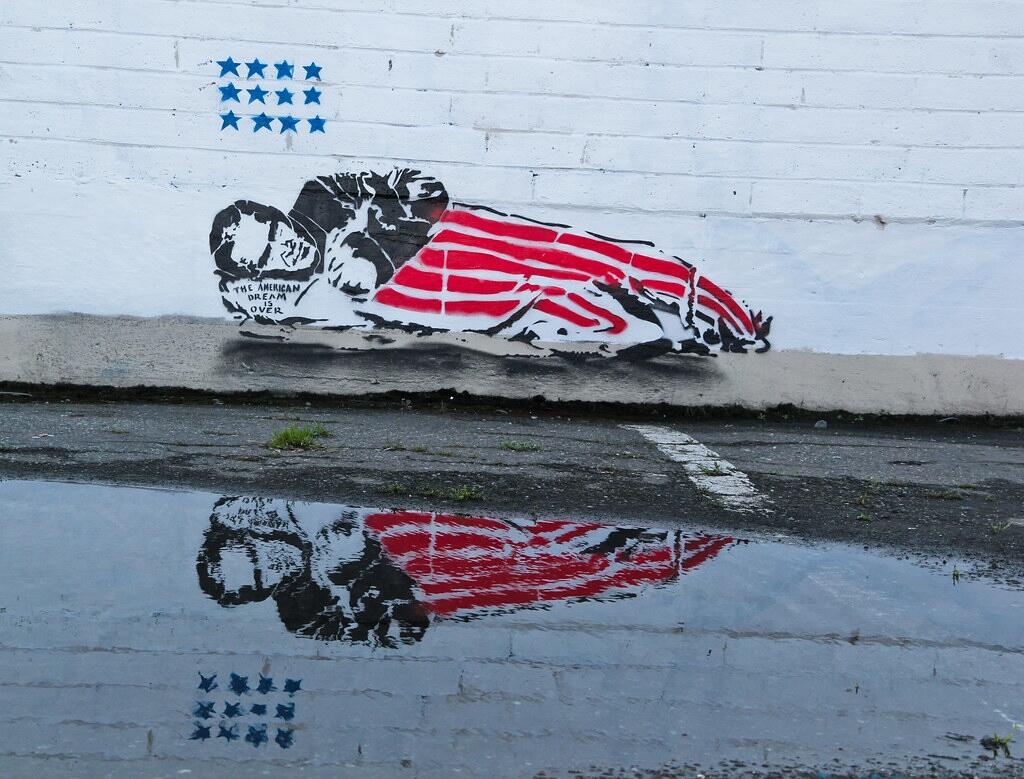
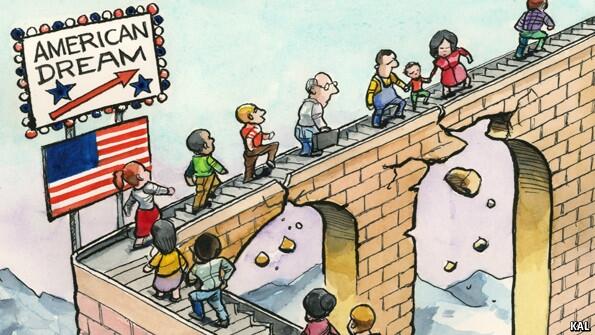
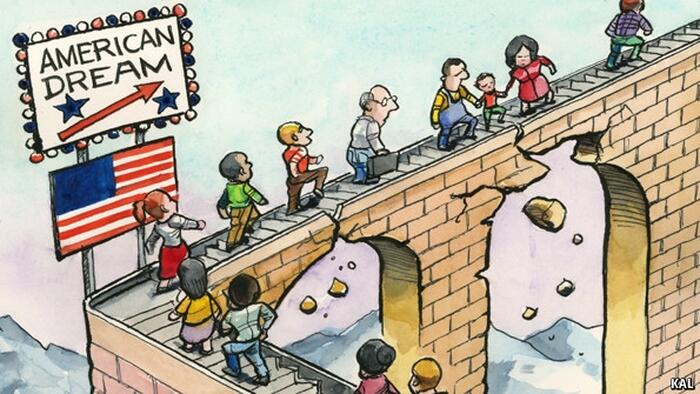
Does your American dream feel like it’s being put through a hydraulic press?
If so, you’re not alone. Between rising rent and gas prices, escalating grocery bills, and sky-high health insurance premiums, Americans are feeling a relentless squeeze from all directions. That’s the painful reality.
Recent economic numbers point to a weary consumer. In fact, consumer sentiment is at a 74-year low. To put that in perspective, Americans feel more pessimistic about the economy today than they did during the 2008 financial crisis, the stagflation of the 1970s, or the height of the 2020 lockdowns.
What’s going on?
Why does it feel like your paycheck is evaporating before it even hits your bank account, while the S&P 500 is hitting record highs over 7,400?
The answer has to do with the K-shaped reality of 2026.
For years, economists have tried to gaslight American workers and consumers. They blamed social media and partisanship. They reasoned that if your preferred politician isn’t occupying the White House, you complain a bit more to a pollster.
Several years ago, Kyla Scanton coined the term “vibecession” to describe a situation where the data looks fine on paper, but people feel bad in their souls. But what about when the data looks bad on paper?
Heather Long, chief economist at Navy Federal Credit Union, recently pointed out today’s reality. The vibes have officially been replaced by cold, hard financial pain. When the University of Michigan sentiment reading drops to 49.8, it’s not just because people are grumpy on Twitter. It’s because the cost of basic survival has outpaced the ability to pay for it.
What’s more, as middleclass families drown in debt, the wealthy flourish. This creates a highly visible divide that presages social instability.
A Tale of Two Americas
The fact is you likely took a pay cut last month. Even if your boss gave you a 3 percent raise this year, you’re still losing ground. With inflation rising at an annual rate of 3.8 percent, per this week’s CPI report for April, your real wages are in the red. Thanks to the U.S.-Israeli war in Iran the energy component of the CPI is increasing at an annual rate of 17.9 percent.
When consumer prices rise faster than your income, that’s not a vibe. That’s the real time erosion of your income. And this is just the beginning…
Joseph Brusuelas, chief economist at RSM, warns that as the supply shocks from the Middle East filter through the system, May is going to be even worse. We are essentially footing the bill for global conflicts through higher prices.
Yet the effects of inflation are felt differently throughout the economy. Those in the higher income brackets are benefiting from an inflating stock market. Retail sales are up 4 percent year over year. So, too, Disney recently confirmed that its domestic park bookings and cruise reservations remain strong through the second half of 2026.
Then there are those in the middle- and lower-income brackets who can’t keep up. They don’t own stocks. They don’t own a house with a 3 percent mortgage. For this group, personal loan applications are spiking. Credit card debt is at an all-time high. They’re also being forced out of their cars and onto the bus because they literally can’t afford the commute.
These diverging stories are both true. This is the tale of the K-shaped economy.
The top line of the K is heading toward the moon. These are the households earning $150,000 or more. For them, the squeeze is a gentle love pat. Their homes have skyrocketed in value, and their stock portfolios are thriving as the S&P 500 bubbles up.
The bottom line of the K, however, is a steep slide downward. This represents the bottom 50 percent of the income distribution. For these families, the resilience everyone has talked about for the last few years has finally hit a wall.
Quiet Desperation
When wages don’t cover the bills, people don’t stop eating. They reach for the plastic. Hence, there’s been a massive increase in people turning to personal loans and credit cards just to make it from one Friday to the next.
This is the latent phase of a recession. It doesn’t show up in the unemployment numbers (which are still a steady 4.3 percent) or the payroll data (115,000 jobs added in April). It shows up in the quiet desperation of an ascending balance on a 24 percent interest credit card.
When people finally get to the end of their credit card rope, we enter the demand destruction phase. This is when people are too broke to buy stuff. Lower-income households are forced to cut back on gasoline and non-essential spending.
There’s also a big picture issue coming into focus that Mohamed El-Erian, chief economic advisor at Allianz, has zoomed in on. Specifically, labor’s share of GDP has hit its lowest level in BLS history.
What that means is that of all the wealth being generated in the USA, a smaller and smaller piece of the pie is going to the people who actually do the work. In other words, more and more of the economy’s capital is being directed to the people who own the stocks, land, and the companies.
This is why the stock market is hitting record highs while the average worker feels like they’re drowning. The market likes muted wage growth because it means companies keep more profit. But for the person trying to pay rent, muted wage growth is a disaster.
Beyond the Siren
Regardless of whether the economy enters a full-blown recession, a large segment of workers and consumers are suffering a painful squeeze. For those being squeezed it adds insult to see people booking luxury cruises when they’re having to choose between buying gas or buying groceries.
As households max out their credit cards, we can expect to see a wave of defaults. If this persists, the banks may get nervous and tighten credit. This will make it even harder for the bottom half to get the loans they need to survive.
Also, with the cost of living so high, middle-class families are raiding their 401(k)s or stopping contributions altogether. People are trading their future security for today’s gas and bread.
The American worker and consumer have proved to be resilient over many years. They persevered through pandemic lockdowns, supply chain meltdowns, and years of inflation. But even the strongest rubber band snaps if you stretch it far enough.
The current sentiment data isn’t a vibe. It’s a warning siren. While the top earners continue to power the retail numbers and fill up the Disney parks, the foundation of the economy – the working and middle class – is being hollowed out by a combination of geopolitical shocks and a declining share of the nation’s wealth.
Until wages outpace the cost of a gallon of gas and a bag of groceries, the American consumer will continue to get squeezed. Alas, there appears to be no relief on the horizon.
With the Strait of Hormuz effectively shuttered, this squeeze will only intensify. As global energy flows cease, surging crude prices will inevitably bleed into your grocery bill. From the diesel powering delivery trucks to the fertilizers growing our crops, the cost of survival is headed for a painful, sustained peak.
* * *
Get a free copy of an important special report called, “Cash Machine – Why You Should Own this Mineral Royalty with a 12% Yield,” when you join the Economic Prism mailing list today. If you want a special trial deal to check out MN Gordon’s Wealth Prism Letter, you can grab that here.]
Related Markets
All MarketsMarket data may be delayed. Not financial advice.
How other outlets covered this
Compare allAlto found this story at 5 outlets. Same event, different framing — compare the headlines.
- ZeroHedgeThe Great Games Afootabout 16 hours ago
- Axios5 ways Iran's economy is wilting under Trump's pressure2 days ago
- The VergeBose CEO Lila Snyder on the fight for high-quality audio17 days ago
- APStates seek to lower drug prices by targeting the companies that manage them for health plans2 months ago
- Migration Policy InstituteHow Immigration Crackdowns and Aid Cuts Are Reshaping Migration Across Central America3 months ago
How this story developed
Full timelineAlto has tracked this across 24 days of coverage from 5 outlets.
Powered by Gab AI
The Story At A Glance
Reading this article now — analysis appears below
💡 AI analysis provides alternative perspectives on current events