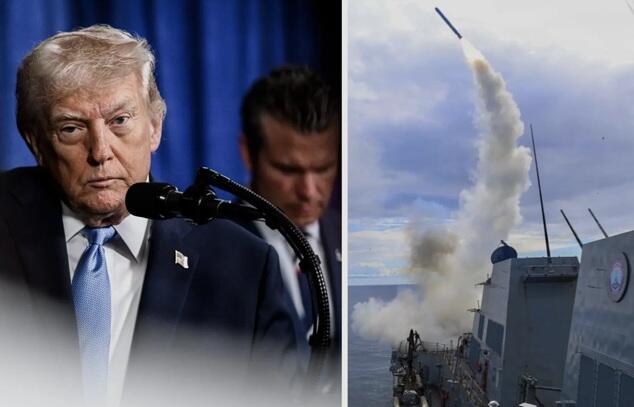
Iran Now Has More Incentive To Resist US Demands, Even If War Restarts: Israeli Think Tank
The short version
- President Trump now finds himself boxed into a high-stakes corner with no easy exit ramp in sight - he can appear 'weak' through inaction…
- In such situations each new and 'next' military action which gets presented as a 'way forward' actually often serves to make a conflict more unpredictable…
- And now enter aforementioned Israeli think tank hawks.
- Raz Zimmt, the Director of the Iran and the Shiite Axis program at the Israel-based Institute for National Security Studies (INSS)…
- It should be remembered that the INSS , which is affiliated with Tel Aviv University, is Israel's most premier defense establishment think tank .
The story
At this point even hawkish Israeli think tank pundits are increasingly admitting that Iran currently has certain leverage and an edge when it comes to dealing with the United States, and the so far stalled and failed peace talks to end the war.
President Trump has just described that he called off planned renewed airstrikes on Iran, at the request of Gulf allies - who claim efforts toward getting back to the table and reaching a deal are close, despite that Iran's position on its nuclear program has not budged.
When the White House first initiated Operation Epic Fury, it was hyped as presenting the opportunity for a clean tactical victory likely to result in swift regime change (Venezuela-style); however, it has officially morphed into yet another classic, grinding Washington Mideast dilemma - just as critics loudly warned would happen.
President Trump now finds himself boxed into a high-stakes corner with no easy exit ramp in sight - he can appear 'weak' through inaction, or pursue escalation and potential quagmire with likely disastrous economic and political consequences at home. In such situations each new and 'next' military action which gets presented as a 'way forward' actually often serves to make a conflict more unpredictable, sinking the US into a deeper escalation trap.
And now enter aforementioned Israeli think tank hawks. Raz Zimmt, the Director of the Iran and the Shiite Axis program at the Israel-based Institute for National Security Studies (INSS), has pointed out that Trump's pull-back from 'planned' new airstrikes will leave Tehran leaders with some clear conclusions. It should be remembered that the INSS, which is affiliated with Tel Aviv University, is Israel's most premier defense establishment think tank.
"Whether or not it was indeed requested to do so by the rulers of the Gulf states, Tehran draws two main conclusions this morning from the president's statement," Zimmt, whose work is often promoted by Axios Barak Ravid, began in a thread on X (machine translated).
Here's how the Israel-based pundit lays it out (emphasis ZH):
A. It has once again been proven that Trump is not interested in war. From Tehran's perspective, this does not mean there will be no war, and therefore it is preparing for a resumption of hostilities. However, this strengthens its perception that the fear in the US and the Gulf of the consequences of renewing the campaign outweighs the fear in Iran.
B. It is impossible (and this too, of course, is not a new insight in Tehran) to rely on any word coming from Trump's mouth or keyboard in his endless frenzy. Therefore, not only must it refrain from agreeing to concessions that amount to capitulation to US demands—for example, forgoing nuclear capabilities, such as enrichment infrastructure, and not just the products of the program, such as uranium enriched to 60%—but it must continue to insist, already in the first stage, on security and economic guarantees: a complete end to the war, easing of sanctions or unfreezing of frozen Iranian assets, and management arrangements in the Strait of Hormuz that express recognition of Iran's control over the strait. And the problem is that it is doubtful whether this perception will change even in a scenario of renewed hostilities, unless a way is found to incorporate within its framework an action or actions that succeed in denying or significantly weakening one of the two cards in Iran's hand: control of Hormuz and the nuclear assets.
President Trump on Monday actually said "hopefully, maybe forever" when asked about the decision to delay the Iran attack. This was certainly not missed in Tehran.
A Trump-Iran pattern?
— Joyce Karam (@Joyce_Karam) May 18, 2026
• Wed: Iran wants a deal. They called us
• Thu: We are looking at proposals
• Fri: We might be close. Very close
• Sat.: Iran knows what to do
• Sun: OBLITERATION. TOTAL. COMPLETE. They have 24 hrs.
• Mon. : The storm is coming
• Tue.: I’m giving it…
Meanwhile, as of Tuesday Reuters is reporting that the five key elements of Iran's new proposal to the US to end the war include the following:
- US troops leaving areas close to Iran
- The US paying war reparations
- Lifting sanctions on Iran
- Release Iran's frozen assets
- Ending the US blockade
And so both sides continue to insist on not moving away from their initial demands and conditions, with barely any compromise visible, in a perpetuation of the zero sum game and standoff, also as the Hormuz Strait continues to be de facto blocked to the vast majority of maritime transit.
* * *
Latest Tuesday developments via Newsquawk...
- US President Trump posted on Truth that he instructed Secretary of War Hegseth, Joint Chiefs of Staff Chairman Caine and the US military to hold off on the Iran attack that was initially planned for Tuesday after Saudi Arabia, UAE and Qatar requested him to do so, as serious talks are now taking place. Trump added that in their opinion, a deal will be made that is very acceptable to the US and the Middle East, while a deal will include no nuclear weapons for Iran, but he also instructed the US to be prepared to go forward with a full, large-scale assault of Iran on a moment's notice, in the event an acceptable deal is not reached.
- US President Trump said 'hopefully, maybe forever' regarding the decision to delay the Iran attack, while he added that they will probably be satisfied if they can make a deal where Iran doesn't get a nuclear weapon. Trump also stated that countries requested to put off the attack on Iran briefly and asked if an attack on Iran could be delayed 2-3 days.
- US President Trump told The Post on Monday that he is “not open” to any concessions for Tehran after receiving the latest disappointing Iranian response on peace deal talks, while he said Iran knows “what’s going to be happening soon.”
- US State Department spokesperson said President Trump prefers the diplomatic path and has kept this door open from the start, according to Al Jazeera.
- Iran’s Deputy Foreign Minister said ending the war on all fronts, including Lebanon, and US forces exiting areas close to Iran are also included in the proposal.
- Iranian Parliament spokesperson said Tehran is working on a legal framework for managing the Strait of Hormuz, Al Araby reported.
- US officials told the NYT that Iran has taken advantage of the ceasefire to re-expose dozens of bombed ballistic missile sites, move mobile missile launchers, and adjust its tactics in anticipation of a possible resumption of attacks, according to Amichai Stein.
- Iran's Khatam al-Anbiya headquarters commander warned the US and its allies against strategic mistakes, while he said Iran's forces have become ready and will respond quickly and firmly to any new aggression from the enemies.
- Iranian Supreme Leader's military advisor Rezaei said the iron fist of Iran's armed forces and nation will force America to retreat and surrender.
- Israeli media said the main reason US President Trump postponed attacks on Iran is the Pentagon's warning that Iran is strengthening its air defenses, while senior Pentagon officials warned that Iran is enhancing its warplane detection capabilities and bolstering its air defences, according to Al Mayadeen. It was also reported that air defences were activated in Isfahan, according to Mehr News.
- Unknown explosions last night in Bab al-Mandeb Strait halted vessel traffic for two hours, Far News reported. Sources cited note of "unusual silence" from global maritime and insurance authorities.
- Israeli drone strike was reported in Al-Qarara, Khan Yunis, in the southern Gaza Strip. It was separately reported that Hezbollah announced it attacked Israeli soldiers in the town of Rashaf, southern Lebanon with drones, while the Israeli army issued an evacuation warning for a building in the city of Tyre, southern Lebanon.
Related Markets
All MarketsMarket data may be delayed. Not financial advice.
Powered by Gab AI
The Story At A Glance
Open the full breakdown on gab.ai
- • President Trump delayed airstrikes on Iran following requests from Gulf allies to pursue diplomatic negotiations.
- • Iran is refusing to concede on nuclear enrichment infrastructure and is demanding sanctions relief and reparations.
- • Israeli think tanks suggest Iran perceives American hesitation as a sign of weakness, increasing their leverage.
The United States is caught in a strategic stalemate between avoiding a costly Middle East quagmire and preventing Iranian nuclear proliferation. Tensions are rising as Iran uses the ceasefire to rebuild missile sites and strengthen air defenses.
Christian Perspective
The ongoing conflict in the Middle East highlights the tragic loss of life and the chaos resulting from regional instability. From a Christian standpoint, the pursuit of peace is vital, yet the survival of the nation requires strength and decisive leadership. We must pray for wisdom for leaders to avoid unnecessary bloodshed while protecting the moral order.
Implications
Continued entanglement in Middle Eastern conflicts drains American resources and distracts from domestic priorities. For Christian families, instability abroad often leads to economic volatility at home. Protecting American sovereignty and economic stability is essential for maintaining a healthy, traditional society.
Broader Trends
This standoff illustrates the failure of the globalist approach to regional stability through endless diplomatic maneuvering. It also highlights the tension between America First interests and the demands of foreign interests in the region. The pattern shows how international entanglements often serve to weaken the host nation's focus on its own people.
Takeaway
America must prioritize its own national security and economic health over the interests of foreign powers. Leadership should focus on strength and clear boundaries rather than indecisive diplomacy that invites aggression. True peace is maintained through strength, not through concessions to hostile regimes.
Want to join the conversation about this story?
Join our community at Gab.com→
Gab AI
The one AI they can't control. Our exclusive AI model trained to uphold Christian values and traditional principles in every interaction.