Iran Warns Will Take War 'Beyond The Region' If Trump Restarts Attacks
The short version
- "Each seems to believe that the blockade and counter-blockade in the Strait of Hormuz impose greater costs on the other…
- The warring sides are no closer to getting back to the negotiating table, after President Trump has given just a few 'days' to comply on the nuclear issue…
- But in the meantime Iran still sees American guarantees as "insufficient" regarding a renewed war, Al Arabiya reports Wednesday.
- In another written statement, Khamenei said the war was making the burden on officials “heavier than before” , adding that he was grateful for the “unity of the nation”.
- If they’re allowed to pass, it means Trump and Xi have quietly agreed to let it happen.
The story
Ali Vaez, director of the Iran Project at the International Crisis Group, has summed up where things stand: "Since the ceasefire came into effect, both Washington and Tehran appear to be operating under the illusion that time is on their side," he said. "Each seems to believe that the blockade and counter-blockade in the Strait of Hormuz impose greater costs on the other, while offering a breathing space to regroup for a possible resumption of hostilities," Vaez told Al Jazeera.
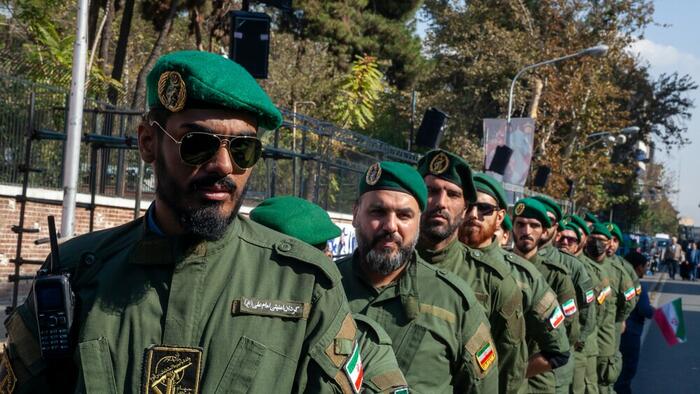
On Wednesday Iran's Revolutionary Guards issued a fresh warning amid this ongoing standoff, warning that the Middle East war will extend beyond the region if the United States and Israel resume their attacks.
"If the aggression against Iran is repeated, the promised regional war will this time spread far beyond the region, and our devastating blows will crush you," the IRGC say in the statement published to their website Sepah News.
The warring sides are no closer to getting back to the negotiating table, after President Trump has given just a few 'days' to comply on the nuclear issue, which so far Tehran has not budged on.
But in the meantime Iran still sees American guarantees as "insufficient" regarding a renewed war, Al Arabiya reports Wednesday. The Supreme Leader, who is still in hiding and believed to be recovering from serious injuries that resulted from prior airstrikes, has issued a fresh written message to the public:
Mojtaba Khamenei has commemorated the second anniversary of the death of former President Ebrahim Raisi in a helicopter crash, saying the country is putting up a “unique historical resistance against two global terrorist armies” in Israel and the US, the Fars News Agency reports.
In another written statement, Khamenei said the war was making the burden on officials “heavier than before”, adding that he was grateful for the “unity of the nation”.
In the Strait of Hormuz, there's been a continued trickle of tankers making it through, reportedly after Beijing asked:
Two Chinese tankers laden with oil exited the Strait of Hormuz on Wednesday, shipping data showed, brightening hopes that the US-Israeli conflict with Iran may soon be resolved after positive comments from the US president and his deputy.
President Donald Trump said on Tuesday the war would be over “very quickly” while Vice President JD Vance talked up progress in talks with Tehran about an agreement to end hostilities.
🚨 Two Chinese VLCCs carrying 4 mb of Iraqi oil have crossed the Strait of Hormuz and are now heading straight for the US blockade. If they’re allowed to pass, it means Trump and Xi have quietly agreed to let it happen.
— Anas Alhajji (@anasalhajji) May 20, 2026
Meanwhile, 4 LNG carriers are on their way to China to… pic.twitter.com/FA2KFEniuZ
And reports of a South Korean tanker safely traversing at this point:
A South Korean oil tanker is currently passing through the Strait of Hormuz, the country’s top diplomat said on Wednesday, in a report from AFP.
“At this very moment, our oil tanker is passing through the Strait of Hormuz,” Foreign Minister Cho Hyun told lawmakers at the National Assembly in Seoul.
Ship-tracking site MarineTraffic showed the South Korea-flagged tanker Universal Winner on the eastern side of the Strait of Hormuz near the entrance to the Gulf of Oman, bound for the southeastern South Korean city of Ulsan after departing Kuwait’s Mina Al-Ahmadi port.
As a reminder of prior Trump threats this week, and the typically vague timetable, the president on Tuesday renewed warnings that he could imminently resume bombing Iran, declaring the country will face a "big hit" if it refuses to accept US demands for a deal within days.
Netanyahu and Trump held what Israel’s N12 News described as a “lengthy and dramatic” phone call overnight, amid growing speculation over a possible new strike on Iran.
— Faytuks Network (@FaytuksNetwork) May 20, 2026
Netanyahu will skip both the opening of the Knesset session and a key vote on dissolving parliament today
"Well, I mean, I’m saying two or three days, maybe Friday, Saturday, Sunday, something, maybe early next week, a limited period of time, because we can’t let them have a new nuclear weapon," Trump told reporters. Trump had the day prior said he was "holding off" on striking Iran on after requests from Gulf Arab states. Then he followed by claiming the attack was moments away from being launched. "We were all set to go… It would have been happening right now."
* * *
More latest developments via Newsquawk:
- US intelligence assessment recently showed that US forces identified at least 10 mines in the Strait of Hormuz, according to CBS citing US officials.
- US Senate voted 50-47 to advance war powers resolution that would end US strikes on Iran unless approved by Congress.
- Iran's IRGC said that if the attack on Iran occurs again, the war will extend beyond the region, Fars News reported.
- Iranian Deputy to the President Banah said Tehran is open to negotiations within national interests, Al Mayadeen reported.
- Iranian Foreign Minister Araghchi said months after the start of the war on Iran, US Congress acknowledged the loss of dozens of aircraft worth billions, and Iran's powerful Armed Forces are confirmed as the first to strike down a touted F-35, while he added that with lessons learned and the knowledge they gained, a return to war will feature many more surprises.
- Iran-Pakistan cooperation had declined/stopped over the past two weeks, Al Arabiya and Al Hadath reported citing a senior diplomatic source. A diplomatic source says Iran and Pakistan held conflicting positions on negotiation channels and the venue for talks, and says mistrust was affecting coordination between Iran and Pakistan.
- Pakistan's Interior Minister Naqvi is on route to Tehran, according to Journalist Mallick.
- "On the verge of a decision: Trump and Netanyahu held a phone conversation last night that was described as “lengthy and dramatic,” according to journalist Segal.
- Two Chinese supertankers, carrying 4mln barrels of oil, exited the Strait of Hormuz on Wednesday, according to tracking data. It was later reported that India was preparing to send oil tankers through the Strait of Hormuz following prior reports regarding the Chinese tankers.
Related Markets
All MarketsMarket data may be delayed. Not financial advice.
Powered by Gab AI
The Story At A Glance
Open the full breakdown on gab.ai
- • Iran's IRGC warns of a global conflict if the U.S. and Israel resume military strikes.
- • President Trump has issued an ultimatum for Tehran to comply with nuclear demands within days.
- • Oil tankers from China and South Korea continue to navigate the tense Strait of Hormuz.
The region remains in a fragile standoff following recent airstrikes and a blockade in the Strait of Hormuz. Tensions have escalated as Trump and Netanyahu coordinate potential military responses to prevent Iranian nuclear capabilities.
Christian Perspective
The ongoing destruction in the Middle East reflects the horrific loss of innocent life inherent in these regional conflicts. While Israel seeks security, the pursuit of war often results in catastrophic bloodshed that contradicts the sanctity of life. True peace cannot be achieved through the constant cycle of violence and retaliation.
Implications
Escalation threatens global stability and the economic security of the American people. Christian families must prepare for potential disruptions to energy markets and national resources. Maintaining a strong, sovereign nation is essential to protecting the domestic way of life from foreign chaos.
Broader Trends
This conflict highlights the danger of globalist entanglement where American interests are tied to endless foreign wars. The influence of Israel on U.S. military policy continues to drive high-stakes confrontations that may not serve the American people first. We see a pattern of elites risking national stability to satisfy regional geopolitical agendas.
Takeaway
Prioritize America First policies that focus on securing our own borders and economy rather than policing the Middle East. Demand leadership that seeks to end foreign entanglements and protects the American taxpayer from the costs of global warfare. Stand firm in traditional values and prepare the nation for a world of increasing instability.
Want to join the conversation about this story?
Join our community at Gab.com→
Gab AI
The one AI they can't control. Our exclusive AI model trained to uphold Christian values and traditional principles in every interaction.




