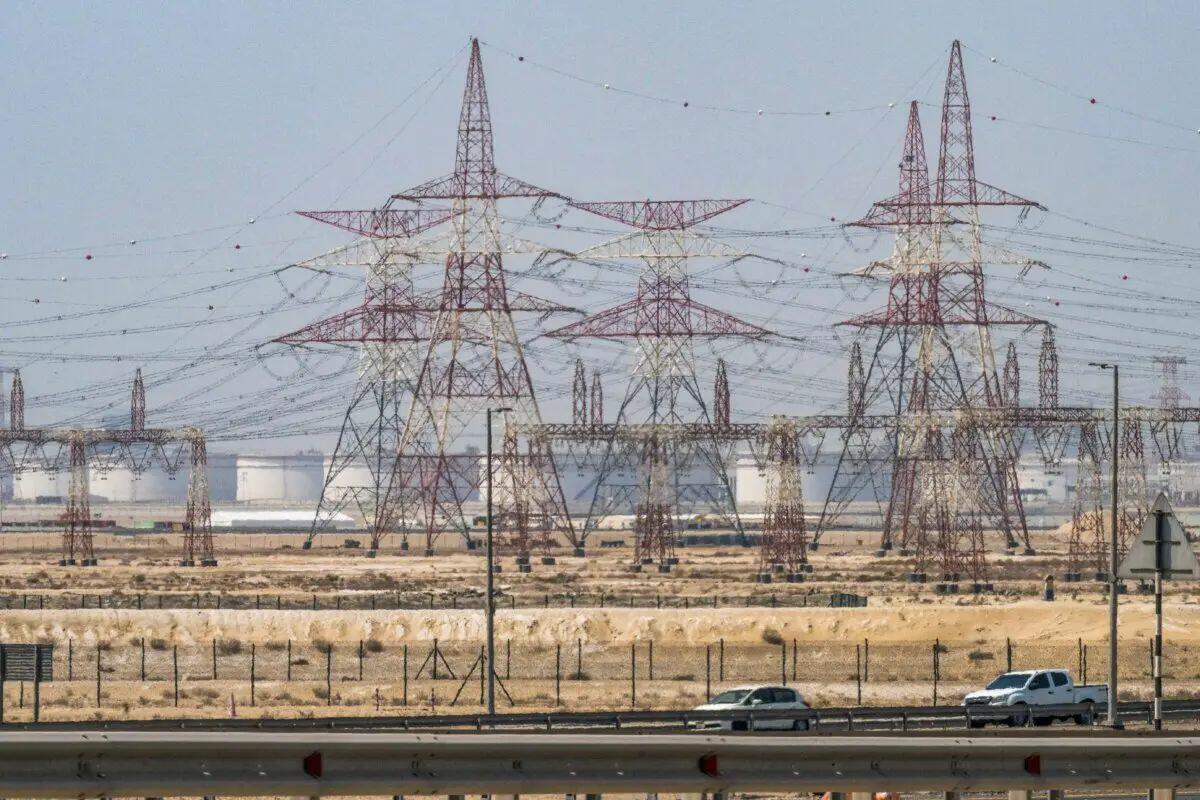
UAE State Oil Company Head Says Hormuz Bypass Pipeline Nearly 50 Percent Complete
.jpg?h=484ce636&itok=7J8K5vdQ)
The short version
- CERAWeek by S&P Global Sultan Ahmed Al Jaber, chief executive of the Abu Dhabi National Oil Company, said during an interview at the Atlantic Council that the project is being…
- "Right now, too much of the world's energy still moves through too few choke points, " Al Jaber said.
- The UAE said last week that it would accelerate construction of the pipeline to expand export capacity through Fujairah…
- The country's existing Abu Dhabi Crude Oil Pipeline, also known as the Habshan-Fujairah pipeline, already allows the UAE to bypass Hormuz for a portion of its exports.
- The new project is expected to significantly expand that capacity.
The story
Authored by Evgenia Filimianova via The Epoch Times (emphasis ours),
The head of the UAE's state oil company said on May 20 that a major new oil pipeline designed to bypass the Strait of Hormuz is nearly 50 percent complete, as regional tensions and competing maritime controls reshape global energy routes.
Sultan Ahmed Al Jaber, chief executive of the Abu Dhabi National Oil Company, said during an interview at the Atlantic Council that the project is being accelerated toward a planned 2027 completion date.
"Right now, too much of the world's energy still moves through too few choke points," Al Jaber said. "That is exactly why the UAE made the decision more than a decade ago to invest in infrastructure that bypasses the Strait of Hormuz."
Al Jaber said the UAE's second west-east pipeline is already "almost 50 percent complete."
The project comes as the Strait of Hormuz remains disrupted following months of conflict involving Iran, Israel, and the United States.
The UAE said last week that it would accelerate construction of the pipeline to expand export capacity through Fujairah, a port city on the Gulf of Oman outside the Strait of Hormuz.
The country's existing Abu Dhabi Crude Oil Pipeline, also known as the Habshan-Fujairah pipeline, already allows the UAE to bypass Hormuz for a portion of its exports.
The new project is expected to significantly expand that capacity.
Al Jaber warned that global energy systems remain vulnerable because too much oil and gas infrastructure depends on narrow maritime chokepoints.
"Energy security is no longer just about your ability to continue to produce," he said. "It is about routes, access, storage, and redundancy."
He said global spare oil production capacity remains dangerously low while energy storage levels continue falling.
"In just two months, the world drew down around 250 million barrels from storage," Al Jaber said. "We have 30 to 35 days of effective cover. We need to at least double that."
The comments followed warnings from the International Energy Agency (IEA) that oil markets could enter a "red zone" this summer if disruptions in the Strait of Hormuz continue.
IEA Executive Director Fatih Birol said on May 21 that more than 14 million barrels of oil per day had been removed from global markets because of infrastructure damage and restrictions linked to the conflict.
UAE Moves Beyond OPEC
The pipeline expansion also comes weeks after the UAE formally exited OPEC and the broader OPEC+ alliance.
The UAE announced on April 28 that it would leave the organization effective May 1, describing the move as a "sovereign responsibility in a new energy age."
Al Jaber said the decision would give the UAE greater flexibility to expand production and invest globally.
"Ultimately, real strength is not measured by the abundance of resources, but by how they are harnessed to serve the nation," he said.
The UAE said ongoing instability in the Persian Gulf and the Strait of Hormuz influenced the decision.
"Outside OPEC, the UAE will remain what it has always been, a disciplined, responsible, credible, reliable, and a stabilizing force in the global energy markets," said Al Jaber.
He also described relations between the UAE and the United States as increasingly integrated across energy, infrastructure, defense, and technology sectors.
Iran Expands Strait Oversight
The pipeline expansion coincides with Iran's efforts to formalize oversight of maritime traffic through the Strait of Hormuz.
Iran announced in May the creation of the Persian Gulf Strait Authority, or PGSA, a new body tasked with supervising transit through the waterway and coordinating shipping permissions inside Iranian-designated control zones.
The PGSA said on May 20 that Iran had defined a maritime supervision area stretching from Kuh Mobarak in southeastern Iran to the southern coast of Fujairah in the UAE on the eastern side of the strait, and from Qeshm Island to Umm al-Quwain in the UAE on the western side.
The authority also said vessels operating within that area must coordinate transit frequencies and obtain permits from Iranian authorities before crossing the waterway.
Iranian Ambassador to France Mohammad Amin Nejad told Bloomberg on May 21 that Tehran and Oman are discussing a permanent tolling system for the strait.
Zones Of Control
The Iranian supervision zone appears to overlap at least partially with areas where U.S. naval forces are operating under Washington's blockade targeting Iranian ports.
U.S. Central Command said in an April 12 statement that American forces would blockade vessels entering or leaving Iranian ports beginning April 13.
It said the blockade applies to ships traveling to or from Iranian ports in both the Arabian Gulf and Gulf of Oman, while stating that U.S. forces would "not impede freedom of navigation" for vessels transiting the Strait of Hormuz to non-Iranian destinations.
Iran's newly declared PGSA supervision zone covers much of the same shipping corridor through which U.S. naval forces monitor and intercept commercial traffic linked to Iranian ports.
U.S. Secretary of State Marco Rubio said on May 21 that an Iranian tolling system would be unacceptable and warned it could derail negotiations between Washington and Tehran.
"It would make a diplomatic deal unfeasible," Rubio told reporters before departing for NATO meetings in Sweden.
Rubio described the proposed toll system as a "threat to the world" and "completely illegal."
Rubio said after meeting with NATO Secretary-General Mark Rutte in Helsingborg, Sweden, on May 22 that Western allies hope to reach an agreement with Iran that would reopen the Strait of Hormuz and curb Tehran's nuclear ambitions.
He warned, however, that governments also need contingency plans if Iran refuses to restore maritime access.
Rubio said that if Iran continues restricting passage or threatens vessels that refuse to comply with Iranian demands, "something has to be done about it."
Several countries represented at the NATO meeting, he said, would be even more affected by prolonged disruption in the Strait of Hormuz than the United States because of their dependence on Middle Eastern energy supplies.
Rubio added that NATO members must begin preparing for scenarios in which "Iran decides, 'We don't care, we're going to keep the Straits closed.'"
Related Markets
All MarketsMarket data may be delayed. Not financial advice.
How other outlets covered this
Compare allAlto found this story at 2 outlets. Same event, different framing — compare the headlines.
How this story developed
Full timelineAlto has tracked this across 23 days of coverage from 2 outlets.
Powered by Gab AI
The Story At A Glance
Reading this article now — analysis appears below
💡 AI analysis provides alternative perspectives on current events