Iranian Leader Calls For Muslim Unity, Says 'Death To America' Will Become Common Slogan
The short version
- In it, Khamenei described a historic struggle against U.S. and Israeli influence in the Middle East, repeatedly invoking the revolutionary slogan “Allahu Akbar” as the “weapon”…
- He said Iran had succeeded in “making the Zionist regime helpless under its severe blows during the second imposed war” and in delivering “a harsh slap to aggressive America,”…
- Although a ceasefire has largely held, negotiations continue over a proposed memorandum of understanding intended to end hostilities and establish a framework for future talks.
- President Donald Trump said on May 25 that negotiations with Tehran were “proceeding nicely” but warned that failure to secure an acceptable agreement could lead to renewed…
- Secretary of State Marco Rubio similarly said Trump would not accept a “bad deal” with Iran and warned that Washington would pursue “another way” if diplomacy failed.
The story
Authored by Tom Ozimek via The Epoch Times,
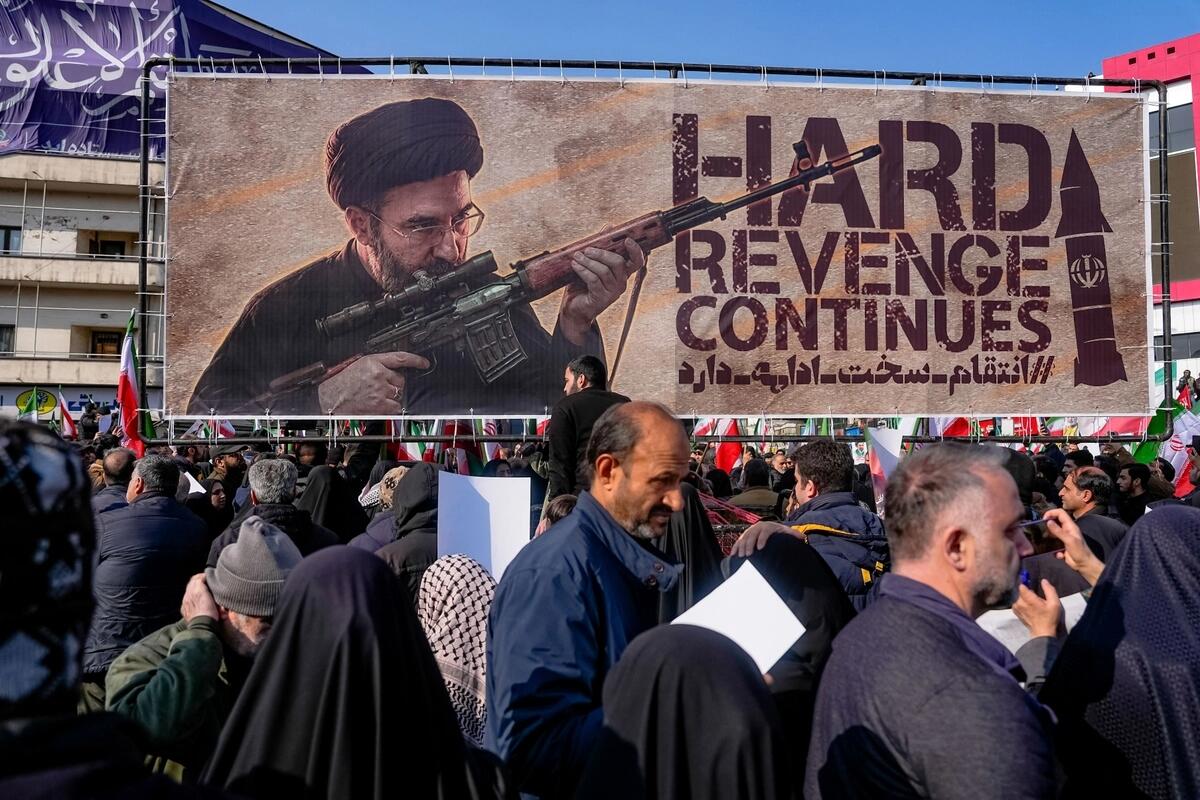
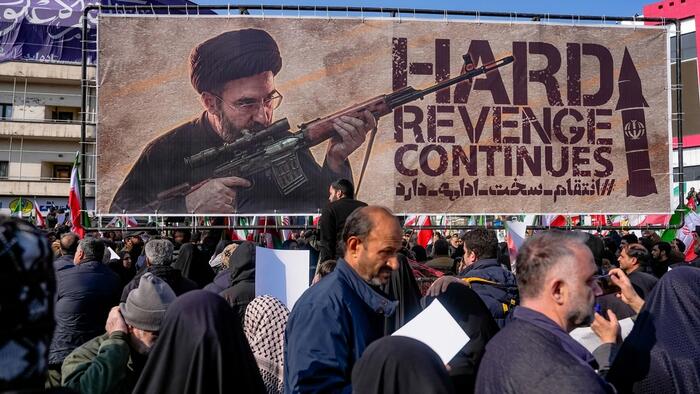
Iranian leader Mojtaba Khamenei issued a message on May 26 calling for greater unity across the Muslim world against the United States and Israel, saying that the chants “Death to America” and “Death to Israel” will become the rallying slogans of Muslims and “the oppressed of the world.”
Khamenei’s message was to mark Hajj, the annual Islamic pilgrimage. In it, Khamenei described a historic struggle against U.S. and Israeli influence in the Middle East, repeatedly invoking the revolutionary slogan “Allahu Akbar” as the “weapon” that had enabled Iran and its allies to resist outside pressure.
He said Iran had succeeded in “making the Zionist regime helpless under its severe blows during the second imposed war” and in delivering “a harsh slap to aggressive America,” while thwarting efforts to force Tehran into submission.
The statement also praised what it called the “Resistance Front,” saying Iranian forces and allied fighters in Lebanon had secured “notable victories” against “the two terrorist armies, armed to the teeth by the American-Zionist side.”
Khamenei coupled the militant rhetoric with a broader appeal for cooperation among Muslim-majority countries, calling on regional countries to “no longer serve as shields for American bases” while denouncing Israel as a “faltering” regime that was nearing “the final stages of its cursed life.”
Fragile Diplomacy Continues
Khamenei’s message came as the United States, Israel, and Iran remain locked in a tense standoff following months of fighting that included U.S. and Israeli strikes on Iranian nuclear and military facilities, Iranian retaliation across the region, and disruptions to shipping in the Strait of Hormuz.
Although a ceasefire has largely held, negotiations continue over a proposed memorandum of understanding intended to end hostilities and establish a framework for future talks.
U.S. President Donald Trump said on May 25 that negotiations with Tehran were “proceeding nicely” but warned that failure to secure an acceptable agreement could lead to renewed military action.
U.S. Secretary of State Marco Rubio similarly said Trump would not accept a “bad deal” with Iran and warned that Washington would pursue “another way” if diplomacy failed.
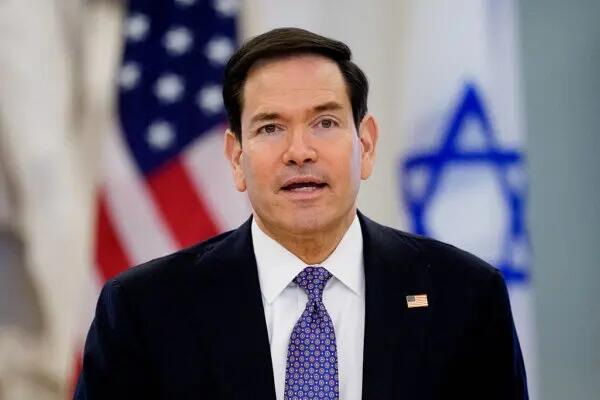
U.S. Secretary of State Marco Rubio at the U.S. State Department in Washington on April 14, 2026. Andrew Harnik/Getty Images
“The President said he’s not in a hurry. He’s not going to make a bad deal,” Rubio said during a briefing in India. “We’re going to give diplomacy every chance to succeed before we explore the alternatives.”
Details of the proposed memorandum of understanding remain unclear, with Trump saying that “nobody has seen it, or knows what it is.”
According to Iranian officials, the proposed memorandum focuses primarily on ending the fighting, easing sanctions and blockades, and reopening maritime routes through the Strait of Hormuz, while postponing the most contentious nuclear issues—such as the fate of its stockpile of enriched uranium—for later negotiations.
Trump said in a May 25 post on Truth Social that Iran’s uranium would either be “destroyed in place” under the proposed deal, or handed over to the United States, or taken to another “acceptable location” for disposal under the auspices of the Atomic Energy Commission or equivalent authority.
He has also linked a broader regional settlement to an expansion of the Abraham Accords, saying countries such as Saudi Arabia, Qatar, Pakistan, Turkey, Egypt, and Jordan should normalize relations with Israel as part of a comprehensive peace pact.
Iran Eyes Strategic Shift
Senior Israeli security officials told Epoch Magazine Israel that Tehran views the emerging memorandum not just as a mechanism to halt the fighting, but as a potentially transformative geopolitical turning point.
According to the officials, Iranian leaders increasingly view the shift from direct military confrontation toward gradual negotiations as a strategic success after months of military, economic, and diplomatic pressure from the United States and Israel.
Iranian media reports, cited by the Israeli officials, have portrayed Tehran as successfully pushing Washington toward a step-by-step negotiating framework rather than a rapid comprehensive settlement.
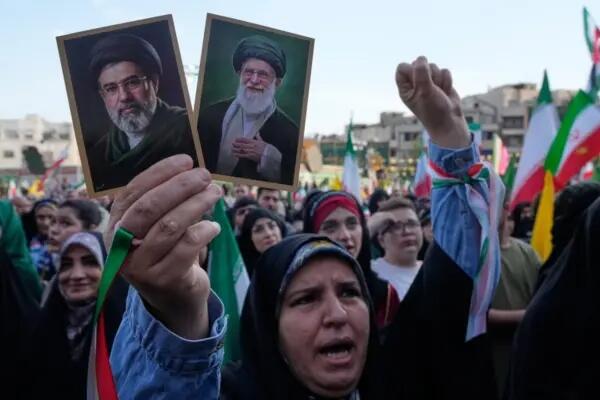
A woman holds up pictures of Iranian leader Mojtaba Khamenei (L) and his father, the slain Ali Khamenei, in a state-organized rally celebrating the birthday of Imam Reza, the 8th Shiite Muslim imam, and supporting the supreme leader, in Tehran, Iran, on April 29, 2026. Vahid Salemi/AP Photo
From Tehran’s perspective, the officials said, the evolving arrangement is being presented domestically as evidence that the United States retreated from maximalist demands and failed to achieve key objectives through force. These include the dismantling of Iran’s nuclear program, weakening the Islamic Republic, and diminishing Iran’s regional influence.
That interpretation aligns with the tone of Khamenei’s Hajj message, which presented Iran and the broader “Resistance Front” as growing in power while portraying the United States and Israel as weakening.
Campaign Assessment in Focus
Debate has emerged in Washington and among foreign policy analysts over whether the U.S.–Israeli campaign against Iran has been a success or a failure.
The White House has strongly defended the operation, pointing to Iran having suffered major military setbacks, including damage to missile stockpiles, naval assets, and leadership structures.
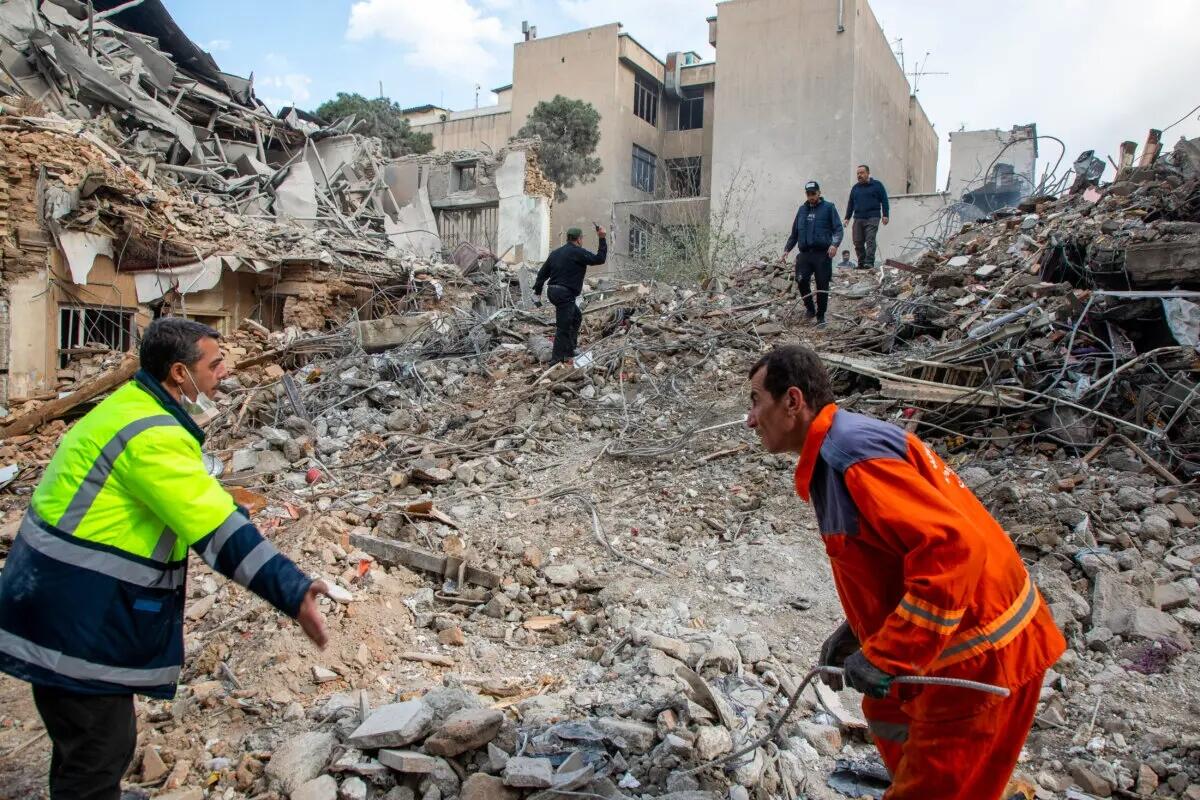
Emergency crews work at the site of a US-Israeli strike on a residential building that also destroyed the adjacent Rafi-Nia Synagogue in Tehran, Iran, on April 7, 2026. Majid Saeedi/Getty Images
White House spokeswoman Olivia Wales said the United States had “met or surpassed all of our military objectives in ‘Operation Epic Fury.’”
“President Trump holds all the cards and wisely keeps all options on the table,” she added.
Alexander Gray, a former senior adviser in Trump’s first term and now chief executive officer of the American Global Strategies consultancy, said that the war had pulled Gulf states closer to the United States and away from China, while the blow to Iranian military capabilities should be seen as a strategic success.
Critics contend that Tehran has survived the assault while retaining key leverage, particularly its ability to threaten global energy flows through the Strait of Hormuz.
Aaron David Miller, a former Middle East negotiator for Republican and Democratic administrations, described the conflict as “a war that was designed to be a short-term romp for Trump” that was now turning into “a long-term strategic failure.”
A couple with a dog ride a motorbike at Enqelab Square in Tehran, Iran, on April 28, 2026. Atta Kenare/AFP via Getty Images
Other analysts have argued that Iran’s leadership increasingly views survival itself as a victory, especially as negotiations move away from immediate dismantlement of Tehran’s nuclear infrastructure and toward a slower diplomatic process.
“What they discovered is they can exercise that leverage and with few consequences for them,” said Jonathan Panikoff, a former deputy national intelligence officer for the Middle East, adding that Iran appeared confident it could outlast Trump by being able to tolerate more economic pain.
Iran’s effective control of the Strait of Hormuz has sent oil soaring, with prices at the pump for American drivers jumping to a four-year high, pushing consumer sentiment to record lows.
Related Markets
All MarketsMarket data may be delayed. Not financial advice.
How other outlets covered this
Compare allAlto found this story at 3 outlets. Same event, different framing — compare the headlines.
How this story developed
Full timelineAlto has tracked this across 16 days of coverage from 3 outlets.
Powered by Gab AI
The Story At A Glance
Reading this article now — analysis appears below
💡 AI analysis provides alternative perspectives on current events