Kicking The Can On A Ceasefire "Which Does Not Solve Anything"
The short version
- However, Tasnim reported that the text of the memorandum of understanding had not been finalized.
- US Vice President Vance said that the two sides are still “ going back and forth on a couple of language points ,” which reportedly includes the wording on Iran’s nuclear capacity…
- But the Vice President said that Iran appears to be negotiating in good faith, paving the way for Trump’s approval of the ceasefire extension.
- While negotiators are trying to dot the i’s and cross the t’s of the memorandum, President Trump has reportedly asked for a couple of days to think about the final deal.
- Energy prices fell further on the news that a deal could –again– be imminent, after the US administration made similar claims last week.
The story
Bas van Geffen, Senior Macro Strategist at Rabobank
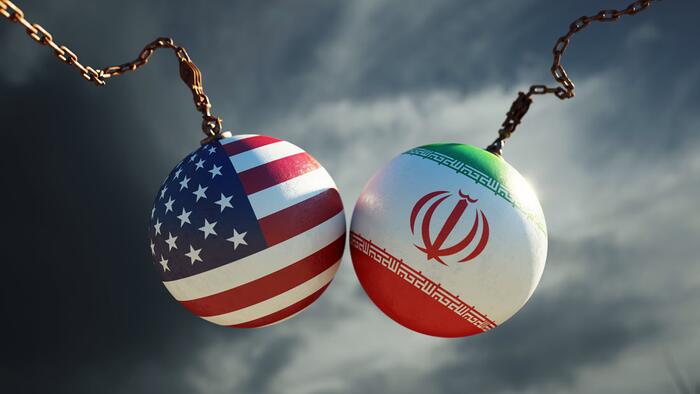
Both Bloomberg and Axios report that the US and Iran have reached a tentative deal to extend the ceasefire by 60 days as they engage in further negotiations over Iran’s nuclear programme. However, Tasnim reported that the text of the memorandum of understanding had not been finalized.
US Vice President Vance said that the two sides are still “going back and forth on a couple of language points,” which reportedly includes the wording on Iran’s nuclear capacity. But the Vice President said that Iran appears to be negotiating in good faith, paving the way for Trump’s approval of the ceasefire extension.
While negotiators are trying to dot the i’s and cross the t’s of the memorandum, President Trump has reportedly asked for a couple of days to think about the final deal.
Energy prices fell further on the news that a deal could –again– be imminent, after the US administration made similar claims last week. Brent futures are currently down about 10% on the week. That, in turn, is lifting optimism in other markets. Yields dropped, and green figures returned on stock exchanges.
Admittedly, a 60-day extension would lessen some of the near-term tail risks – although both sides have accused each other of violating the current ceasefire. Just the past day, Kuwait intercepted a missile that Iran had fired at a US base, causing the US to respond with new “defensive strikes” on Iran.
More importantly, a ceasefire does not solve anything, unless the US and Iran manage to agree on the key sticking points during that extended ceasefire.
Treasury Secretary Bessent reminded everyone that Trump’s three red lines are unchanged: Hormuz must reopen, Tehran must end its nuclear programme, and Iran must transfer its highly enriched uranium. As we noted earlier this week, a nuclear deal still seems highly unlikely at this juncture.
Likewise, Iran still believes that it can effectively control traffic through the Strait of Hormuz, together with Oman, allowing it to put down toll booths along the strait. Even though this would allow paying ships to cross, that’s not a “reopening” in Trump’s view.
The US imposed sanctions on the Hormuz Strait Shipping Authority, which is supposed to collect the toll. And Bessent warned that “Oman, in particular, should know that the U.S. Treasury will aggressively target any actors involved –directly or indirectly– in facilitating tolls for the Strait.” President Trump even threatened to “blow them up” if Oman works with Iran to control shipping through Hormuz.
It still seems unlikely that the key sticking points will be resolved soon. On that basis, we have shifted our baseline for Hormuz to remain closed for up to three more months before we see a crisis resolution. Only if either the US or Iran blinks regarding the nuclear programme, could we see a quicker end to the conflict.
Meanwhile, tensions are rising in other parts of the globe too. Talks between the US and Cuba appear to have stalled, while Cuba and China discussed agricultural cooperation, food shipments, and political support. This increases the risk that the US may resort to military aggression. China, meanwhile, claims that a Dutch frigate entered their waters – which the Netherlands disputed; and a Canadian frigate transited the Taiwan Strait, defying Chinese warnings not to do so.
And, as we’ve noted before, even if the US-Iran conflict is resolved sooner, it would still take a substantial amount of time before energy flows return to some form of normalcy. So, some further inflationary pressure is inevitable.
Policymakers are also starting to realize this. The ECB’s Schnabel noted recently that “even if the war ended today, a lot of damage has already been done to energy infrastructure and global supply chains.” She adds that higher costs will probably trickle through global supply chains and into higher goods prices.
The accounts of the April ECB meeting suggest that Schnabel is not the only policymaker who’s concerned about the size and the persistence of the inflation shock. It therefore looks like a June hike is all but a done deal. According to the minutes, some policymakers said that the decision to hold or hike was already a “close call” for them in April. This group essentially indicated that they would not have opposed a rate hike last month, if this had been proposed as the path forward.
Today’s inflation data are further cementing the case for a rate hike. French HICP inflation rose to 2.8% y/y, while Spanish HICP inflation edged up to 3.6%. Meanwhile, business surveys indicate that companies expect to raise selling prices further – although selling price expectations eased a bit in May, compared to the steep increases in the two months prior.
And, worryingly, consumers’ medium-term inflation expectations have started to pick up alongside the rise in current inflation rates. As Schnabel pointed out, these shifts in consumer expectations could be a first indication that expectations are de-anchoring.
However, we still believe that the current backdrop is less conducive to broader and protracted inflationary pressures than 2021-2022. Yesterday’s business confidence survey indicated that employment expectations continue to score below the long-term average. The labor hoarding index remains above its long-term average, but businesses appear to hoard less labor than before.
Related Markets
All MarketsMarket data may be delayed. Not financial advice.
Powered by Gab AI
The Story At A Glance
Reading this article now — analysis appears below
💡 AI analysis provides alternative perspectives on current events



