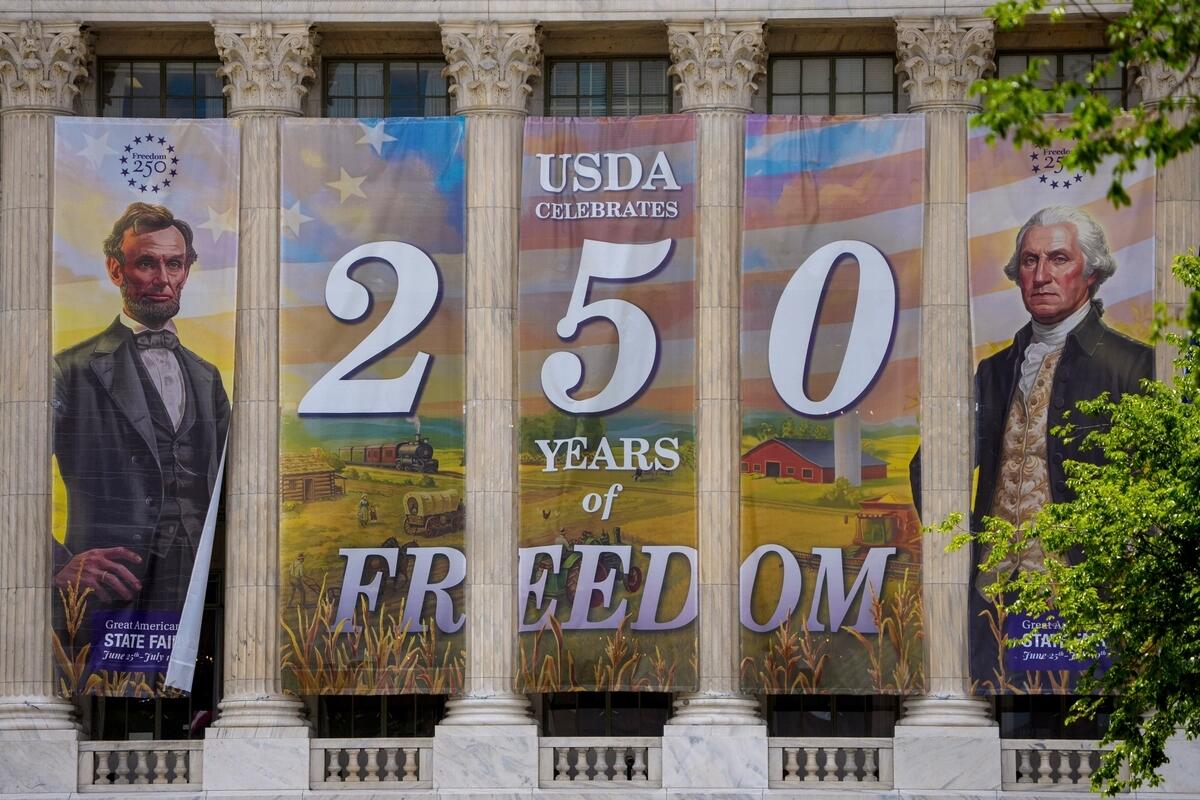
Do We Really Believe In Freedom?
The short version
- Authored by Mollie Engelhart via The Epoch Times, Do we really believe in freedom?
- Or do we only believe in freedom when it applies to people who agree with us?
- Do we trust people we fundamentally disagree with to remain free citizens?
- Or do we believe they must be controlled through laws, censorship, surveillance, or social pressure because they are too dangerous to be trusted with liberty?
- That question sits at the center of what I am most interested in during this moment in history, the 250th year of the American experiment.
The story
Authored by Mollie Engelhart via The Epoch Times,
Do we really believe in freedom?
Or do we only believe in freedom when it applies to people who agree with us?
Do we trust people we fundamentally disagree with to remain free citizens?
Or do we believe they must be controlled through laws, censorship, surveillance, or social pressure because they are too dangerous to be trusted with liberty?
That question sits at the center of what I am most interested in during this moment in history, the 250th year of the American experiment.
Because when I look around, it increasingly feels like both sides are drifting in the same direction while packaging it differently.
Each side frames the other as dangerous, radical, and incapable of self-governance. People on the left often believe the right is racist, authoritarian, anti-science, and driven by extremism. Many people on the right believe the left is hostile to faith, hostile to biology, hostile to free speech, and willing to use institutions to socially engineer society.
If you genuinely believe those things about your political opponents, then freedom starts to feel dangerous.
And once freedom feels dangerous, control starts to feel justified.
For me, the COVID-19 pandemic broke the illusion.
I suddenly realized I could no longer clearly see what the political left still offered someone like me. I watched censorship expand rapidly. I watched speech become conditional. I watched people lose jobs and platforms for asking questions. I watched mandates imposed alongside liability protections and dissent treated as danger.
I watched mandates destroy livelihoods.
I watched small businesses close while major corporations consolidated wealth and power. I watched people who had spent decades building restaurants, gyms, farms, salons, and family businesses suddenly deemed “nonessential.”
I wasn’t reading about these policies. I was living under them.
At the same time, I was living in a state that increasingly felt hostile to the practical realities of my life. Everything started feeling harder. More permits. More taxes. More hoops. More social pressure. It felt harder to make a living, harder to farm, harder to build, harder to protect my family, and harder to simply live outside institutional approval.
Socially, it also became harder to honestly say what I believed without risking professional or personal consequences.
This week, I heard arguments celebrating the fact that Democrats overwhelmingly voted against liability protections for chemical companies accused of poisoning Americans. Many people presented that as evidence that one side cares about ordinary people while the other protects corporations from accountability.
But that moral high ground becomes more complicated when you remember that many of those same political voices supported mandating a vaccine under an emergency authorization, with liability protections already built into the system. At the same time, dissent around those policies was aggressively silenced.
And the reality is that we are still learning about the long-term effects, trade-offs, and consequences years later.
That is not a conspiracy theory.
That is simply how medicine and biology work. Scientific understanding evolves over time.
The George Floyd era accelerated another version of this same instinct.
Suddenly, institutions across America were pressured to publicly demonstrate ideological “purity” around race, gender, identity, and social justice. Diversity, equity, Indigenous representation, and LGBTQ+ inclusion became not just social values but institutional litmus tests in many professional environments.
In some cases, executives, journalists, professors, and employees lost their positions not because they had committed crimes or acts of hatred, but because they failed to meet ideological expectations during a moment of intense cultural pressure.
And once again, people became afraid to say the wrong thing out loud.
But now I watch similar instincts emerge from the political right under different circumstances.
There are increasingly subjects people feel afraid to discuss openly because they fear losing jobs, reputations, platforms, or financial access. Concerns about extremism, hate speech, anti-Semitism, immigration, terrorism, and national security are all increasingly used to justify expanded speech restrictions and surveillance powers.
And to be fair, some of those fears are real.
But history shows that societies rarely surrender freedom all at once. Usually, it happens piece by piece, each side justifying control because they believe the other side is simply too dangerous to remain fully free.
Many people argued I should have stayed and fought politically where I was. But I didn’t.
I moved to Central Texas. Honestly, I needed to breathe a little.
And yet, even now, as I watch the country continue to fracture, I try very hard not to become tribal myself. I try to zoom out and see the bigger picture.
At the core of it, I still believe in freedom.
But that realization leads me to an uncomfortable conclusion: If I truly believe in freedom, then I have to believe the people around me deserve freedom, too—even when I deeply disagree with them.
Otherwise, what I’m actually asking for is not freedom, but power for my side and restriction for theirs.
Maybe the real test of a free society is not whether we support freedom for people we agree with.
Maybe the real test is whether we still support it when we don’t agree with each other.
Views expressed in this article are opinions of the author and do not necessarily reflect the views of The Epoch Times or ZeroHedge.
Related Markets
All MarketsMarket data may be delayed. Not financial advice.
How other outlets covered this
Compare allAlto found this story at 4 outlets. Same event, different framing — compare the headlines.
- ZeroHedgeAre Canada's Economic Threats Against The US Legit Or Are They Bluster?2 days ago
- AxiosU.S. officials believe sanctions could hurt Iran more than bombsabout 1 month ago
- The VergeTariffs didn’t bring manufacturing jobs back to the USabout 1 month ago
- APAmericans’ pride in US history and democracy drops, and fewer are proud to be American, polls findabout 2 months ago
How this story developed
Full timelineAlto has tracked this across 34 days of coverage from 4 outlets.
Powered by Gab AI
The Story At A Glance
Reading this article now — analysis appears below
💡 AI analysis provides alternative perspectives on current events