"Bring Your Own Capacity" - Google And Voltus To Deploy Virtual Power Plant
The short version
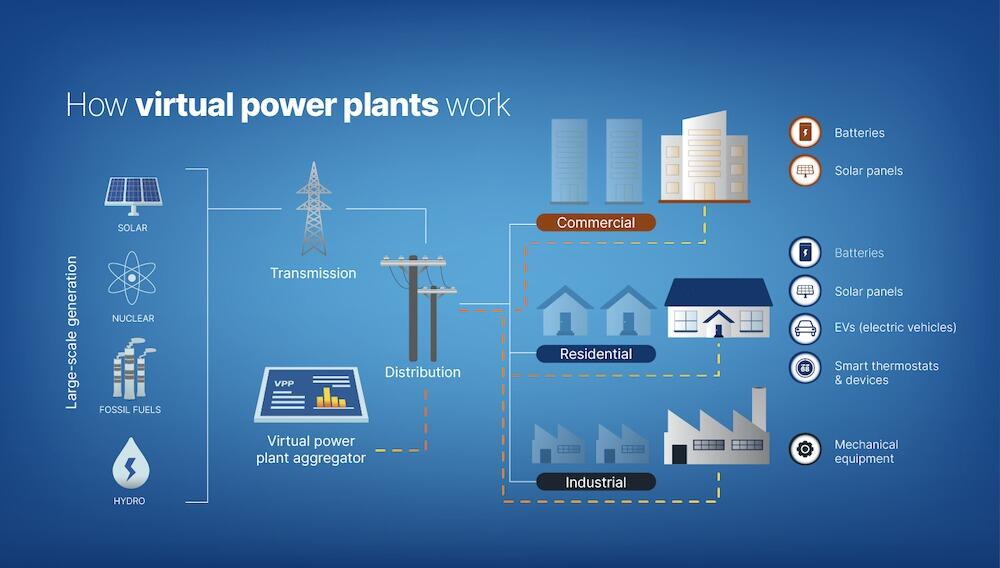
- Voltus will aggregate batteries, smart thermostats, electric vehicles, and other flexible assets from homes and businesses into a Google-funded Virtual Power Plant (VPP).
- When the grid needs relief, the software dispatches those resources in concert.
- Participants get paid, and Google gets capacity without waiting for traditional interconnection queues.
- It is coordinated software that turns thousands of small, customer-sited resources into something that behaves like dispatchable generation .
- Distributed energy resources (DERs) such as solar panels, batteries, smart thermostats, and flexible loads already sitting on the grid become a decentralized fleet.
The story
Google signed a three-year Bring Your Own Capacity (BYOC) agreement with Voltus for up to 100 MW of accredited distributed capacity in the PJM Interconnection. Voltus will aggregate batteries, smart thermostats, electric vehicles, and other flexible assets from homes and businesses into a Google-funded Virtual Power Plant (VPP).
When the grid needs relief, the software dispatches those resources in concert. Participants get paid, and Google gets capacity without waiting for traditional interconnection queues.
A VPP is not a physical plant at all. It is coordinated software that turns thousands of small, customer-sited resources into something that behaves like dispatchable generation. Distributed energy resources (DERs) such as solar panels, batteries, smart thermostats, and flexible loads already sitting on the grid become a decentralized fleet.
Instead of building another transmission line or expensive peaker plant that sits idle most of the year, the VPP squeezes more value out of what already exists. Brattle Group analysis suggests better utilization of existing infrastructure could save U.S. consumers over $100 billion this decade.
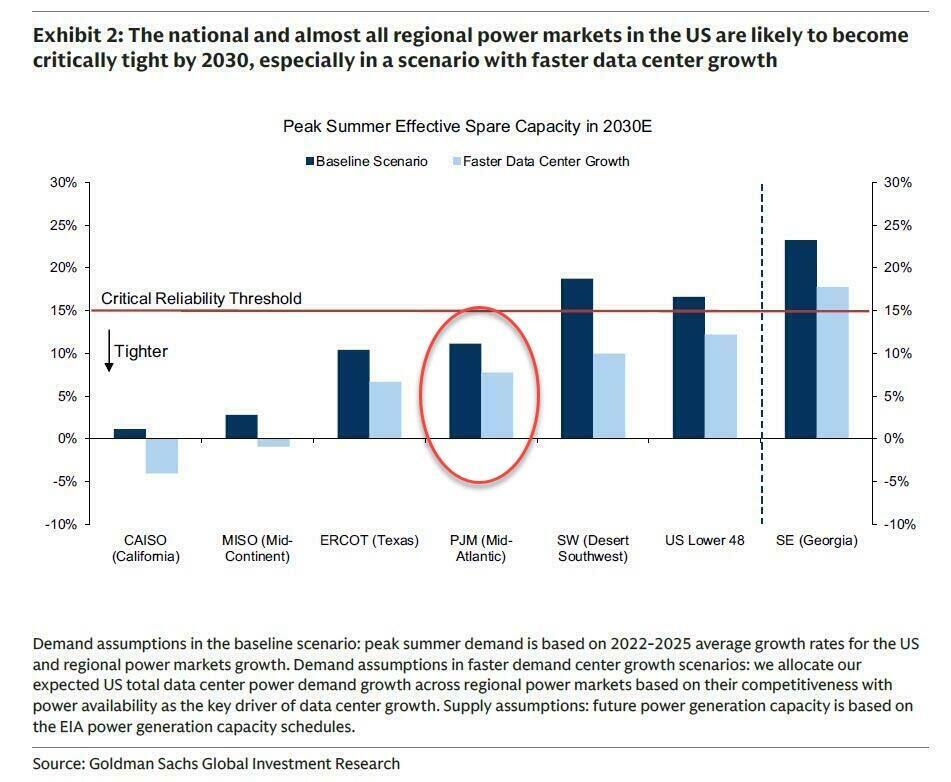
Voltus has positioned itself as the leading operator in this space. The company manages more than 7.5 GW of DERs across all nine North American wholesale markets and launched its BYOC offering specifically to help large loads shortcut interconnection delays. Google is the first named hyperscaler customer. The deal runs in PJM, the largest U.S. grid operator and one already feeling the strain of AI-driven load growth.
This move fits the broader pattern of Google methodically assembling exposure to nearly every generation and flexibility technology currently in play. Considering the alternative is to just sit back and watch grids like PJM start to go black in the years ahead...
On the firm, always-on side, the company struck a deal with NextEra to restart the 615 MW Duane Arnold nuclear plant in Iowa. Google is also looking to offtake power from Kairos' molten salt reactors in Tennessee.
For next-generation geothermal, Google has a long-running partnership with Fervo Energy. The Nevada pilot is already feeding carbon-free power to Google data centers, and the companies expanded via a Clean Transition Tariff structure with NV Energy for an additional 115 MW. Google also holds PPAs with Ormat under the same tariff framework.
On the renewables and storage front, Alphabet closed its $4.75 billion acquisition of Intersect Power earlier this year. Intersect develops co-located data center and energy infrastructure, including large-scale solar and battery storage projects.
Google has maintained a steady drumbeat of wind and solar PPAs for years; the Intersect deal accelerates co-location and gives the company more direct control over project development timelines.
Long-duration batteries even caught Google's interest with the Form Energy deal for iron-air technology and the batteries that will likely participate in the new Voltus VPP.
The through-line is speed. PJM and other grids are not adding transmission and firm generation fast enough to match announced data center builds. Hyperscalers have responded with every available lever: restarting nuclear, advancing geothermal, buying developers outright, and now directly funding distributed capacity.
Related Markets
All MarketsMarket data may be delayed. Not financial advice.
Powered by Gab AI
The Story At A Glance
Reading this article now — analysis appears below
💡 AI analysis provides alternative perspectives on current events