Rubio Backs Bolivia's Government As Protests Trigger Food, Fuel Shortages
The short version
- State Department spokesperson Tommy Pigott said on June 4.
- Pigott said Rubio reaffirmed “the United States’ unwavering commitment to support Bolivia’s democracy and the Paz Administration” as the country works through a political and…
- Paz’s government faces mounting pressure from labor unions, peasant groups, miners, and supporters of former Bolivian President Evo Morales…
- Blockades Disrupt Supplies The unrest began with a workers’ strike in May and later expanded into road blockades that cut off access to the neighboring cities of La Paz and El…
- Protesters are demanding that the government reverse austerity measures and address rising living costs.
The story
Authored by Evgenia Filimianova via The Epoch Times,
The United States has pledged additional emergency assistance to Bolivia as protests and road blockades deepen shortages of food, fuel, and medical supplies across the South American country.
U.S. Secretary of State Marco Rubio spoke with Bolivian President Rodrigo Paz on June 4 and discussed efforts to address growing shortages caused by nationwide unrest.
“The Secretary noted the United States is ramping up emergency assistance and logistics operations support in Bolivia to help those facing acute food and medical shortages due to illegal roadblocks intended to destabilize Bolivian society,” U.S. State Department spokesperson Tommy Pigott said on June 4.
Pigott said Rubio reaffirmed “the United States’ unwavering commitment to support Bolivia’s democracy and the Paz Administration” as the country works through a political and economic crisis.
Paz’s government faces mounting pressure from labor unions, peasant groups, miners, and supporters of former Bolivian President Evo Morales, who have staged protests and road blockades across the country.
Blockades Disrupt Supplies
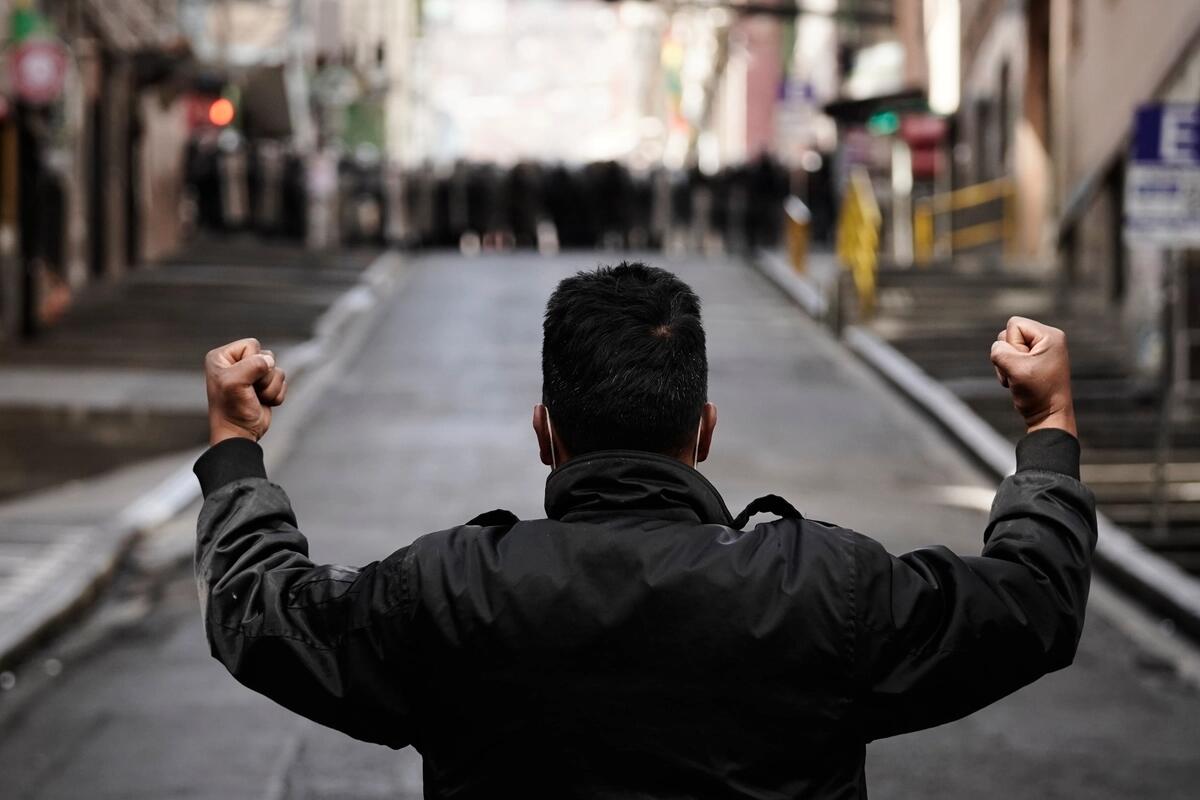
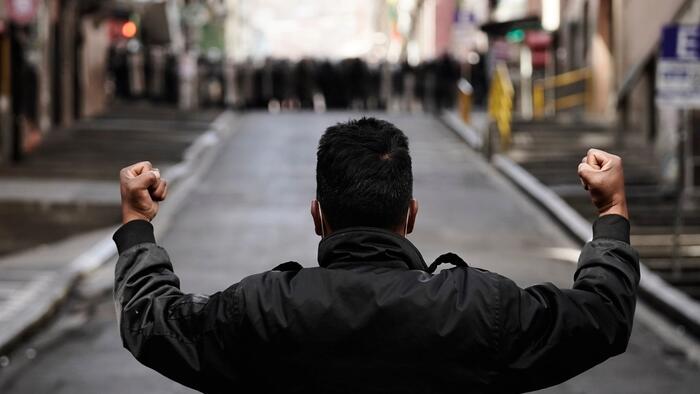
The unrest began with a workers’ strike in May and later expanded into road blockades that cut off access to the neighboring cities of La Paz and El Alto, which together are home to about 2 million people.
Protesters are demanding that the government reverse austerity measures and address rising living costs.
Blockades organized by the federation of trade unions representing peasants and miners, the Bolivian Workers’ Central (COB), and other groups have depleted food supplies in La Paz and left hospitals struggling to obtain oxygen.
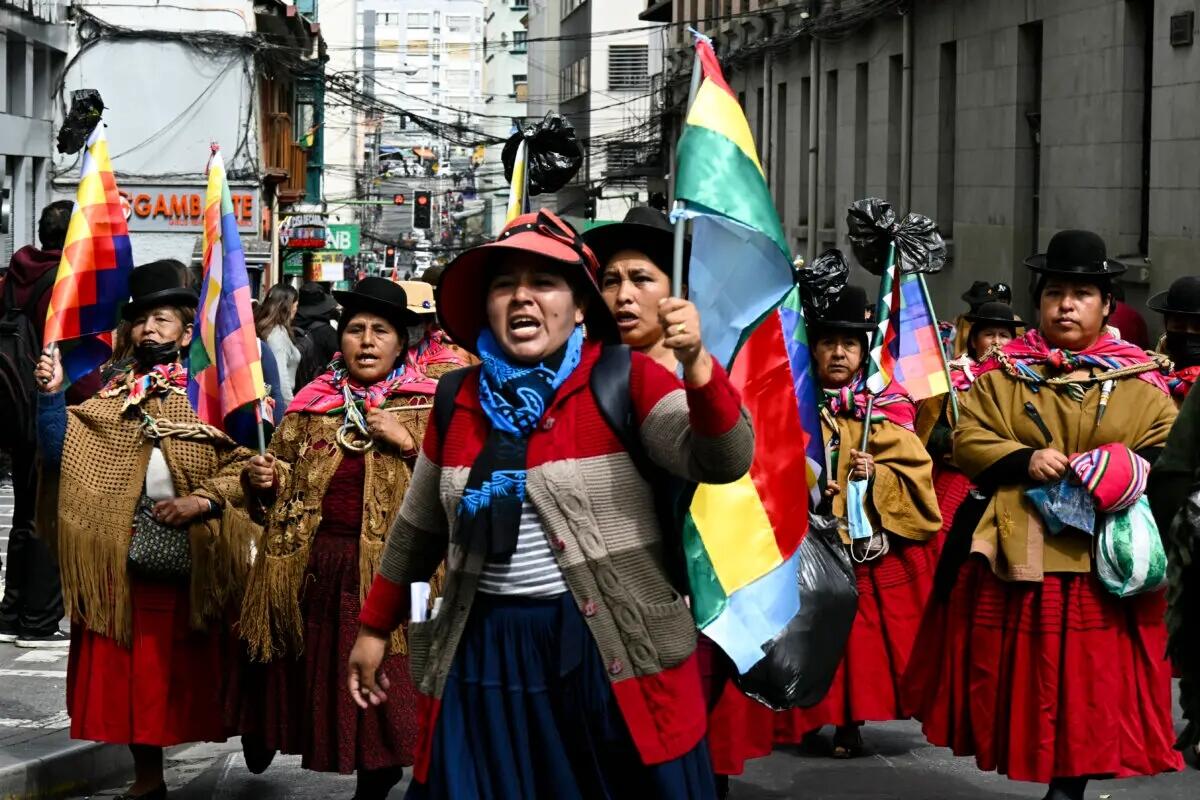
Women wearing traditional dress known as "cholitas" take part in a march calling for the resignation of President Rodrigo Paz, in La Paz, on May 22, 2026. Aizar Raldes / AFP via Getty Images
The demonstrations have also exposed broader economic tensions, with protesters calling for higher wages, improved fuel supplies, and access to additional mining areas. Public school teachers are separately negotiating for salary increases.
COB in a June 2 statement on Facebook called for Paz’s resignation and said his administration had failed to govern effectively.
The organization also demanded the release of detainees, an end to what it described as persecution against its leaders, and measures to guarantee fuel and food supplies, and called for a permanent state of emergency.
The Bolivian Highway Administration (ABC) reported 84 roadblocks nationwide on June 4, according to a June 5 report by Bolivian newspaper El Deber.
Government Actions
Paz has called for dialogue while also pursuing measures to reopen blocked roads.
On June 3, he appointed Ernesto Justiniano as defense minister following the departure of Marcelo Salinas, who stepped down on June 2.
“The immediate task is to restore normalcy: passable roads, supplies, medical care, work and peace,” Justiniano said after taking office.
Paz said in a June 3 post on X that Justiniano would help restore stability and improve conditions for Bolivians. The president said he had sent a bill to congress authorizing joint police and military operations to clear roads.
He accused some protesters of attempting to divide the country through “lies, violence, and blockades” while emphasizing his commitment to democracy and dialogue.
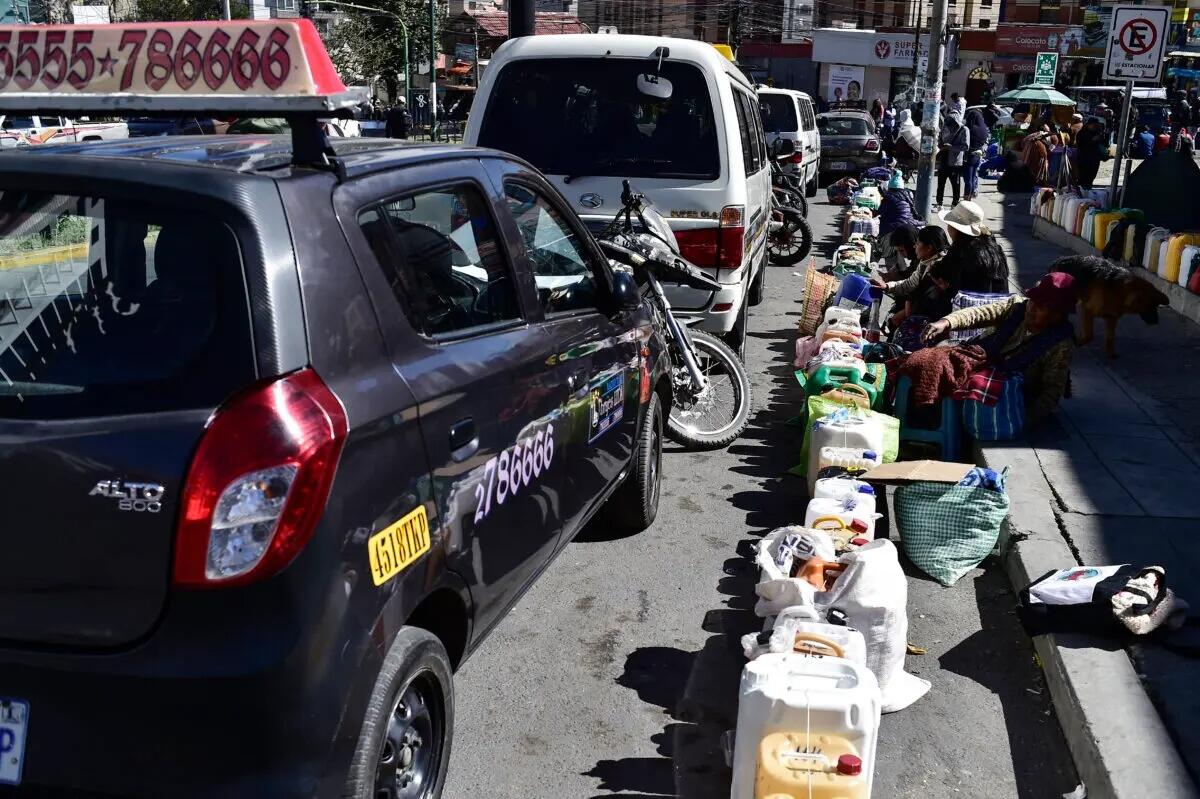
People line up to buy gasoline in plastic containers in the Calacoto neighborhood of southern La Paz, Bolivia, on June 2, 2026. Jorge Bernal / AFP via Getty Images
Paz also called for the creation of humanitarian corridors to allow food, medicine, and fuel to reach communities affected by the protests.
On June 4, he said his government remained willing to negotiate with protest groups.
“Today we took another step toward strengthening dialogue, a key tool for finding solutions to conflicts,” Paz wrote in a post on X after meeting with Vice President Edman Lara and congressional leaders.
“I repeat it, and I will continue to do so: we have every willingness to listen to and address the demands of the mobilized sectors.”
The crisis has become an early test for Paz, whose October 2025 election ended two decades of left-wing rule in Bolivia.
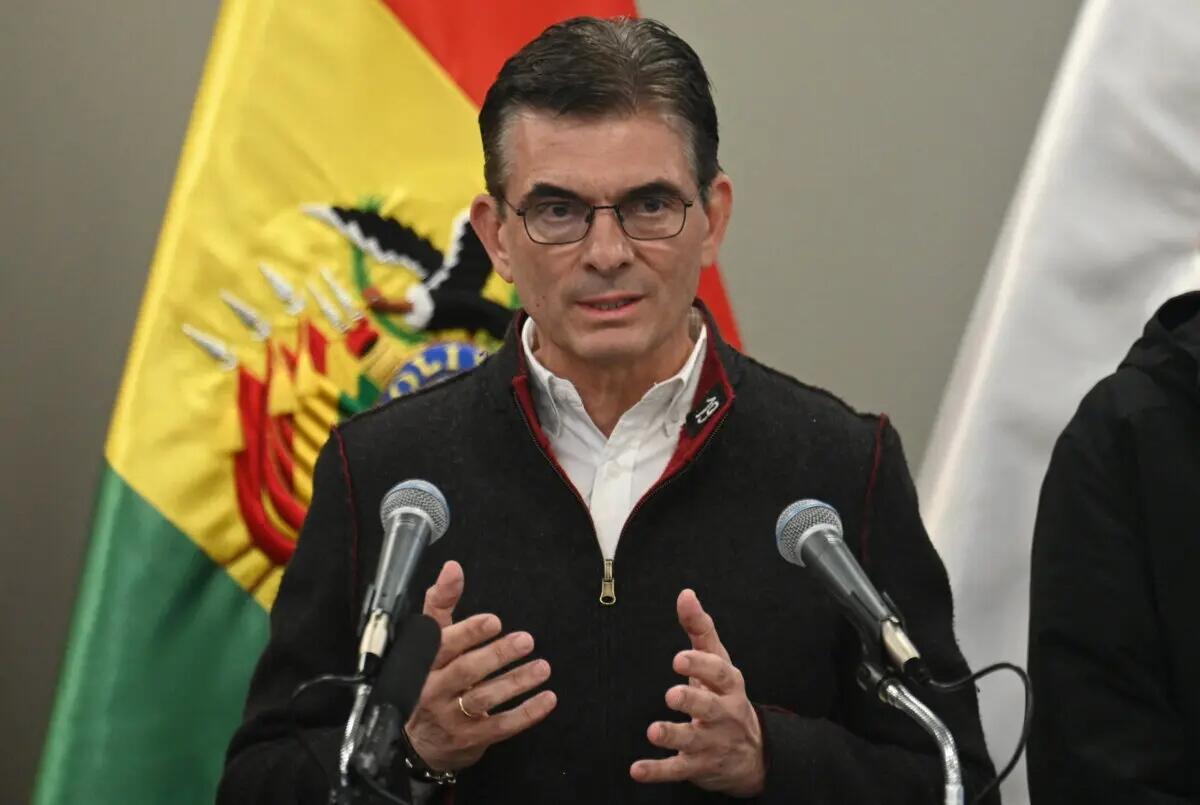
Bolivian President Rodrigo Paz holds a press conference in La Paz, Bolivia, on May 20, 2026. Claudia Morales/Reuters
Paz, a member of the Christian Democratic Party, took office promising economic reforms and stronger action against corruption and drug trafficking. His government has argued that some demonstrations are politically motivated and designed to destabilize the administration.
Rubio said on May 20 that Washington stood firmly behind Bolivia’s constitutional government and would oppose any attempt by criminals or drug traffickers to remove democratically elected leaders from power.
Related Markets
All MarketsMarket data may be delayed. Not financial advice.
How other outlets covered this
Compare allAlto found this story at 2 outlets. Same event, different framing — compare the headlines.
How this story developed
Full timelineAlto has tracked this across 3 days of coverage from 2 outlets.
- Rubio Backs Bolivia's Government As Protests Trigger Food, Fuel ShortagesYou are here
Powered by Gab AI
The Story At A Glance
Open the full breakdown on gab.ai
- • Secretary of State Marco Rubio pledged emergency aid to Bolivia to counter shortages caused by illegal roadblocks.
- • Protesters from labor unions and peasant groups are attempting to destabilize the Paz administration through blockades.
- • President Rodrigo Paz is utilizing police and military support to restore order and supply lines.
President Paz, a Christian Democrat, recently ended twenty years of left-wing rule in Bolivia. He now faces intense pressure from organized groups seeking to reverse economic reforms and fuel subsidies.
Christian Perspective
The support for a Christian Democratic leader aligns with the necessity of maintaining a stable, God-fearing social order. Protecting the innocent from the chaos of blockades is a moral imperative to prevent the suffering of the vulnerable. Lawlessness and the subversion of authority by radical groups are contrary to the biblical principle of respecting established governance.
Implications
This situation underscores the importance of strong leadership to prevent societal collapse caused by radical agitators. For Americans, it serves as a reminder that stability requires the firm application of law to protect the basic needs of the people. Upholding order is essential to preserving the sanctity of life and the functionality of a nation.
Broader Trends
This conflict reflects a global struggle between traditionalist, order-seeking governments and radical, destabilizing movements. It mirrors the tension seen in the West between those defending national sovereignty and those attempting to use chaos to implement leftist agendas. The use of blockades as a weapon of political extortion is a common tactic used to undermine legitimate authority.
Takeaway
Support leaders who prioritize the rule of law and the protection of the family unit over radical populism. We must champion the principle that legitimate authority is necessary to prevent the descent into anarchy. America First principles dictate that we support stability and order wherever they defend the interests of civilization against chaos.
Want to join the conversation about this story?
Join our community at Gab.com→
Gab AI
The one AI they can't control. Our exclusive AI model trained to uphold Christian values and traditional principles in every interaction.