Apollo And Blackstone Raise $35 Billion For Anthropic In One Of The Biggest Ever Private Credit SPV Deals
The short version
- Here is a schematic of its $27.3 billion SPV with Blue Owl "Project Beignet" for the Hyperion data center.
- None of this touches META's balance sheet.
- The deal, dubbed project “Big Sky”, comes amid concerns that the AI frenzy has overheated the broader market.
- Shares in chipmakers rebounded on Monday after tumbling last week, led by Broadcom’s fall in market value.
- It also adds to a deluge of chip-backed loans that sparked debate over how quickly graphics processing units would depreciate as AI technology evolves.
The story
Back in January, when we profiled Meta's landmark $27.3 billion SPV deal named "Beignet" for the Hyperion data center located in Louisiana, in which Blue Owl provided the private credit, we said to "expect hundreds of billions of these in 2026."
As a reminder, META is already neck deep in off-balance sheet debt. Here is a schematic of its $27.3 billion SPV with Blue Owl "Project Beignet" for the Hyperion data center. None of this touches META's balance sheet.
— zerohedge (@zerohedge) January 29, 2026
Expect hundreds of billions of these in 2026 https://t.co/794EgSiiZ9 pic.twitter.com/7hMyVW6Lno
Fast forward five months when we now read that Apollo and Blackstone have finalized a $35BN private credit deal that will help finance Anthropic’s growth plans, even as traditional "banks are choking" on the amount of AI debt they have to issue.
The two private credit giants - which in a parallel universe are struggling with soaring redemption requests and gating retail investors in their private credit BDCs as documented here extensively in recent months - led the financing, one of the largest private credit deals completed, which will fund Anthropic’s purchase of Alphabet-developed chips.
The deal, dubbed project “Big Sky”, comes amid concerns that the AI frenzy has overheated the broader market. Shares in chipmakers rebounded on Monday after tumbling last week, led by Broadcom’s fall in market value. It also adds to a deluge of chip-backed loans that sparked debate over how quickly graphics processing units would depreciate as AI technology evolves.
In this type of financing structure, a special-purpose vehicle raises capital through a mix of debt and equity to purchase the chips, which are then leased to a customer, in this case Anthropic. The debt is primarily backed by the resulting lease payments, along with the unknown long-term value of the chips. In this case, the $35 billion debt facility was structured across three tranches. The senior layers — the $6 billion notes dubbed A1 and $24 billion of A2 notes — are backed by Broadcom, allowing the debt to secure lower borrowing costs aligned with Broadcom’s strong credit profile. The notes received private ratings in the mid-investment grade tier.
The transaction wrapped up days after Alphabet completed one of the largest equity offerings in history, as it looks to raise $85bn to fund Google’s AI build-out, and as SpaceX prepares for a flotation that could raise a record $86bn. Anthropic also announced it had confidentially filed for an IPO shortly after its blockbuster $65bn private financing round.
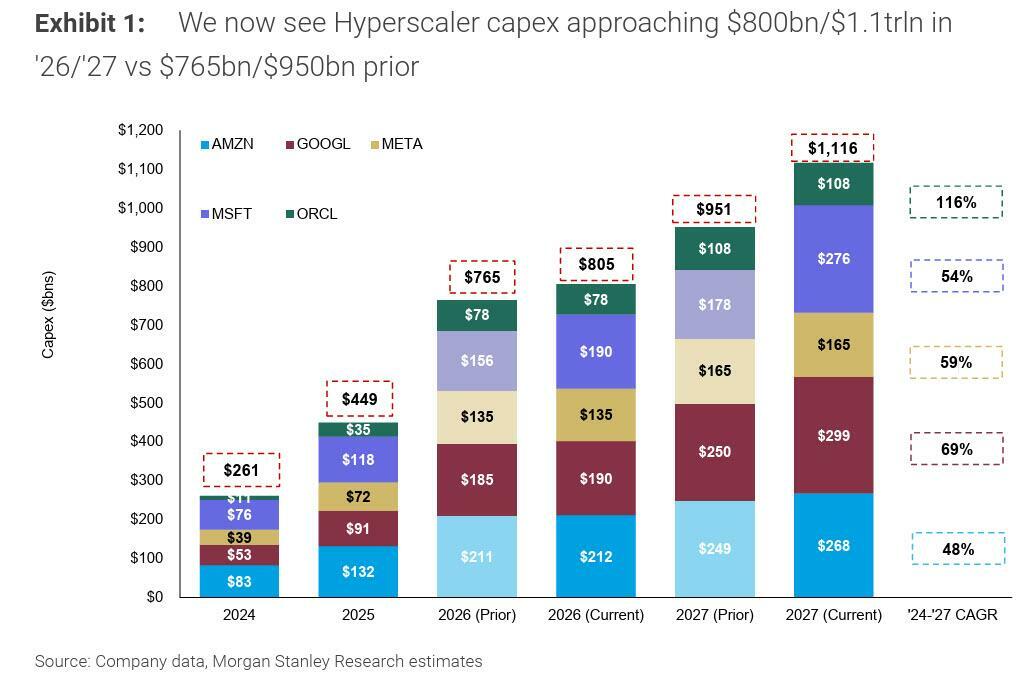
As discussed previously, the AI borrowing spree has reached beyond traditional US capital markets, where AI is expected to raise $400 billion in debt, rising to over $1 trillion through 2028 to meet roughly $1.8 trillion in capex needs over the next two years, according to Morgan Stanley...
... with Amazon raising C$14bn (US$10bn) on Monday in the largest ever Canadian dollar bond sale.
Similar to Meta's Beignet deal, Anthropic’s deal with Apollo and Blackstone relies on a complex structure that private investment groups routinely use to finance start-ups with backing from blue-chip companies. A special purpose vehicle formed by Apollo’s Atlas SP Partners raised the debt and equity, with lease agreements for the chips ultimately supporting the value of the transaction.
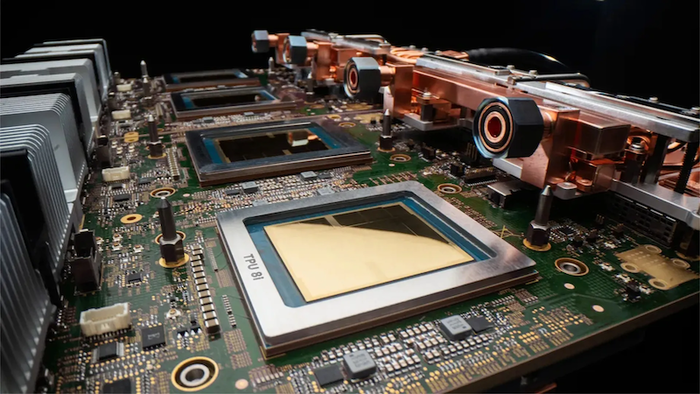
Per the FT, Apollo and Blackstone structured the loan across three tranches, with interest payments on the two senior segments backstopped by Broadcom. The chipmaker is making the so-called tensor processing units, or TPUs, with Google. Its agreement to provide support if Anthropic misses an interest payment helped vastly reduce the costs on the debt.
The two senior portions of the debt were split between banks and investors. Some $6bn of so-called A1 notes were sold to banks with an interest rate 1% over Treasuries. A further $24bn of A2 notes were sold on to investors in asset-backed credit markets, priced with a yield of 5.75 per cent. Buyers of the A2 tranche included institutional investors like Apollo’s Athene insurance arm, which favors high-quality debt to back its long-term liabilities.
The $4.5bn of junior debt, which is not supported by Broadcom and therefore exposes lenders more acutely to Anthropic, carried an interest rate of 8.5%. Investors were also offered an original issue discount of 98 cents to 99 cents on the dollar depending on cheque sizes. In other words, without the implicit guarantee from an investment grade guarantor - like Broadcom in this case - the cost of capital is roughly double.
In addition to the debt, Apollo’s Atlas SP Partners’ structured-finance unit provided $800 million in equity, meaning it’s effectively the owner of the SPV.
A key feature of the deal is Broadcom providing a “residual value support” agreement. That means that if Anthropic fails to make the lease payments for a certain period of time, the SPV will sell the chips to pay back the debt investors. If the value of the chips doesn’t make the debt investors whole, then Broadcom will make up the shortfall for 100% of the value owed to the A1 and A2 investors.
This type of residual value feature has been used in another mega debt deal, though it financed the construction of a data center rather than chips. As noted above, Meta provided a similar protection for the value of its Hyperion facility in Louisiana - a transaction that Morgan Stanley arranged. That allowed the so-called Beignet bonds to trade in line with Meta’s corporate debt.
For those whose head is spinning with the circularity involved, this is how we described the deal last week when it was first floated:
Broadcom is backstopping a massive $36 billion private credit SPV with Apollo and Blackstone which will help Anthropic buy Google chips... made by Broadcom. Oh, and yes: Google owns 14% of Anthropic...
*BROADCOM: WORK WITH APOLLO, BLACKSTONE SERVES OPENAI, ANTHROPIC
— zerohedge (@zerohedge) June 3, 2026
Translation: Broadcom is backstopping a massive $36 billion private credit SPV with Apollo and Blackstone which will help Anthropic buy Google chips... made by Broadcom.
But wait, there's more... because if that wasn't enough, Morgan Stanley, which advised Broadcom and arranged the transaction, is also lending money to investors participating in the deal!
And just because this is a "chip-backed" off-balance sheet SPV where nobody really knows who holds the debt, the monstrous circularity of all the deal aspects will be ignored until the AI credit bubble cracks.
As for the punchline: demonstrating the insane frenzy of anything involving AI, investors involved in the deal did not even know what they were investing in! According to the FT, investors pitched on the deal were not given early access to Anthropic’s financials ahead of its IPO.
Not everyone involved in the deal is a total idiot: some investors passed on the deal over the delayed-draw format of the debt, which drives down yields because the money can be withdrawn in multiple tranches over a period of time.
Yet despite the smashing success of the deal, one glaring question remains. Recall, last week SpaceX penned a massive deal with Google (to urgently burnish the IPO candidate's financials just days ahead of its IPO), according to which Google will pay Elon Musk $920 million a month for access to about 110,000 Nvidia GPUs (unlike its hyperscaler peers, SpaceX has plenty of spare compute to rent out). And yet, despite seemingly telegraphing it is dramatically "compute constrained" as the SpaceX deal implies, it still has plenty of chip available that it can sell $35B of their chips to their biggest competitor, Anthropic.
This wasn't the only such deal: just days prior, Anthropic (which will use proceeds from this private credit SPV to purchase Google chips made by Broadcom), agreed to pay $1.5 billion a month for access to 325,000 Nvidia GPU also held by SpaceX. No wonder these sham agreements were structured so they can be terminated by either party after December 2026.
For those shaking their heads at these glaring examples of circular bubble euphoria, fear not: you will have plenty of opportunities to enjoy more such deals (going back to our point up top): Broadcom chief executive Hock Tan said the company hoped to connect “investor partners with the strongest balance sheets to deliver at scale sufficient compute capacity at the lowest cost”, pointing to the deal with Apollo and Blackstone as the first of many transactions to come.
Related Markets
All MarketsMarket data may be delayed. Not financial advice.
How this story developed
Full timelineAlto has tracked this across 6 days of coverage from 1 outlet.
- Apollo And Blackstone Raise $35 Billion For Anthropic In One Of The Biggest Ever Private Credit SPV DealsYou are here
Powered by Gab AI
The Story At A Glance
Reading this article now — analysis appears below
💡 AI analysis provides alternative perspectives on current events