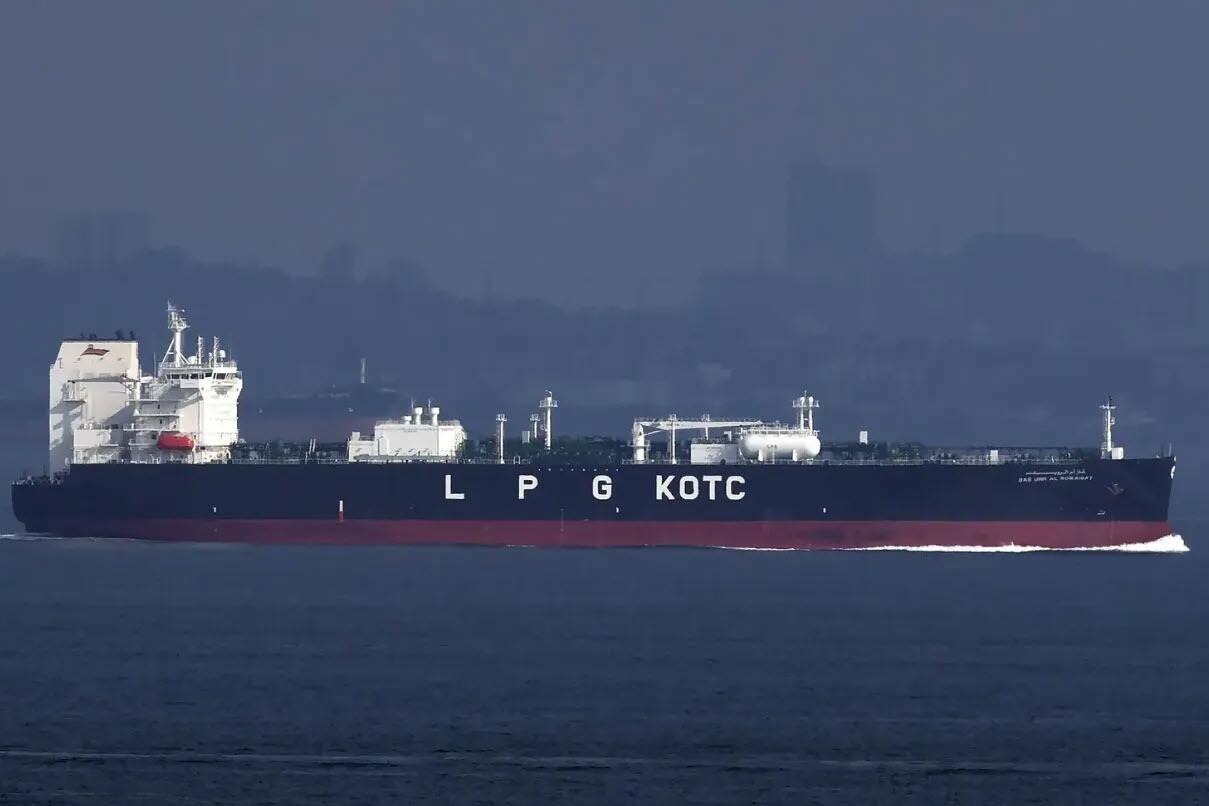
Kuwait Joins "Dark-Mode" Tanker Traffic Through Hormuz
The short version
- The Gas Umm Al Rowaisat loaded LPG in May in the Gulf, and then switched off its AIS positioning, before reappearing close to the Indian coast this weekend, according to the data.
- This is the latest instance of a tanker going dark as it moves through the Strait of Hormuz.
- The UAE, Iraq, and other Gulf producers have increased shipments of oil, LNG, and LPG on tankers in dark mode in recent weeks.
- Since the war began on February 28, tanker traffic through the Strait of Hormuz has collapsed by 90% to 95% compared to pre-war levels…
- Some oil cargoes continue to trickle through the critical chokepoint, but under increasingly opaque operating conditions…
The story
By Tsvetana Paraskova of OilPrice.com
Kuwait appears to have joined a growing bunch of Middle Eastern oil and gas producers that have moved to ship energy cargoes in dark mode through the Strait of Hormuz.
The liquefied petroleum gas (LPG) carrier Gas Umm Al Rowaisat, which is owned by the national Kuwait Petroleum Corporation, has passed through the Strait in recent days, then transferred the cargo onto another ship which is currently en route to an Indian port, vessel-tracking data compiled by Bloomberg showed on Thursday.
The Gas Umm Al Rowaisat loaded LPG in May in the Gulf, and then switched off its AIS positioning, before reappearing close to the Indian coast this weekend, according to the data.
This is the latest instance of a tanker going dark as it moves through the Strait of Hormuz. The UAE, Iraq, and other Gulf producers have increased shipments of oil, LNG, and LPG on tankers in dark mode in recent weeks.
Since the war began on February 28, tanker traffic through the Strait of Hormuz has collapsed by 90% to 95% compared to pre-war levels, leaving the market about 13 million barrels per day (bpd) short of crude and fuel supply that was previously freely flowing to buyers.
Some oil cargoes continue to trickle through the critical chokepoint, but under increasingly opaque operating conditions, complicating the tracking of oil and gas flows and obscuring the visibility of how much energy supply actually reaches buyers these days.
More vessels are leaving the region after passing the Strait of Hormuz in a dark mode with transponders switched off, and those entering the Persian Gulf to load cargoes are increasingly doing the same.
The dark-mode tactics, once the feature of Iran-linked vessels aiming to skirt sanctions, are now the norm for the majority of commercial traffic at the Strait of Hormuz, energy flow-tracking firms say.
Related Markets
All MarketsMarket data may be delayed. Not financial advice.
How other outlets covered this
Compare allAlto found this story at 4 outlets. Same event, different framing — compare the headlines.
- AxiosU.S. conducting stealth operation to transport oil through Hormuz8 days ago
- ZeroHedge"Sea Of Red": Futures Slide As Market Wakes Up To Soaring Bond Yields And Diesel Prices9 days ago
- The Guardian — WorldMiddle East crisis live: Trump claims Gaza deal reached; Iran targets US bases in Kuwait27 days ago
- APIran’s president says $6B in frozen assets in Qatar to be released as US talks challengedabout 2 months ago
How this story developed
Full timelineAlto has tracked this across 34 days of coverage from 4 outlets.
Powered by Gab AI
The Story At A Glance
Reading this article now — analysis appears below
💡 AI analysis provides alternative perspectives on current events