Gas Prices Fall For 3rd Straight Week
.jpg?itok=uIpI1dbl)
The short version
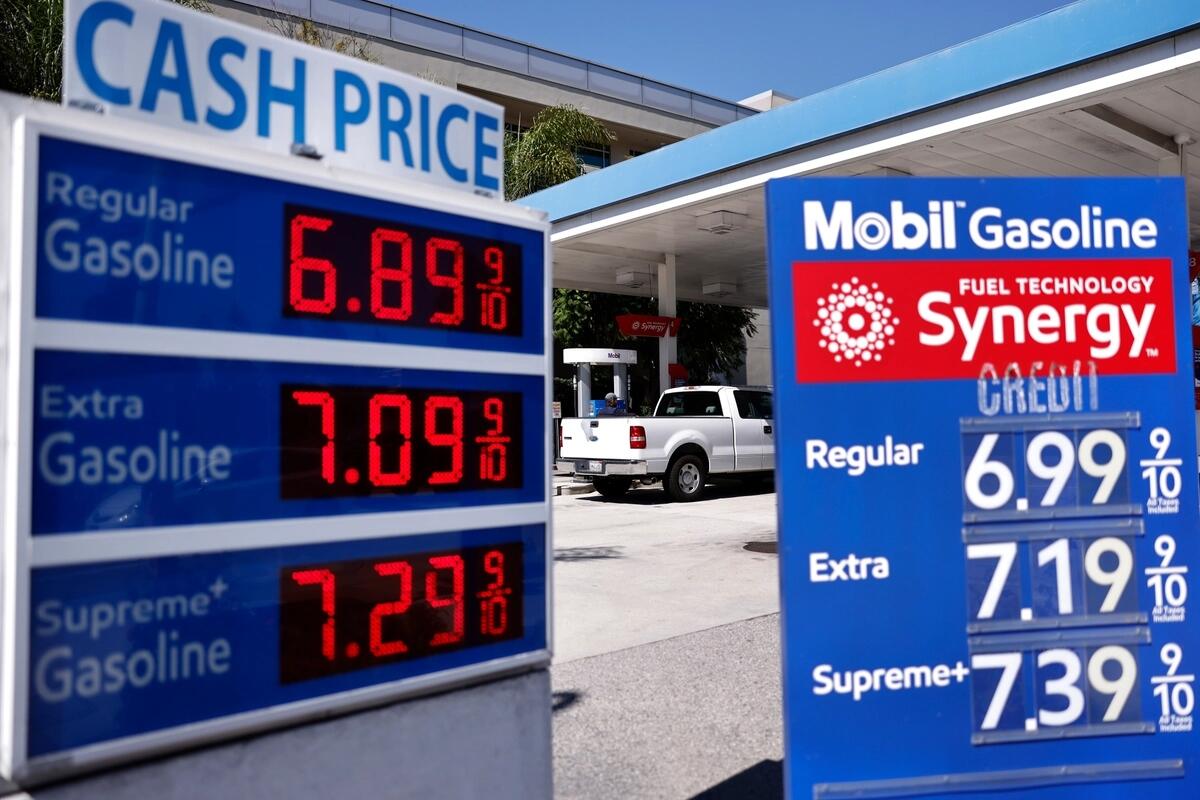
- In five states, prices exceeded $5 per gallon—California, Hawaii, Washington, Alaska, and Oregon.
- In its statement, AAA attributed the three-week decline to crude oil prices remaining below the $100 per barrel level.
- Brent crude oil futures prices shot up after the war began, hitting a high of over $126 per barrel on April 30.
- Oil was trading at $87.44 per barrel as of 6:50 a.m.
- EDT on Friday, up from around $72 per barrel on Feb. 27, the day prior to the breakout of the war.
The story
Authored by Naveen Athrappully via The Epoch Times,
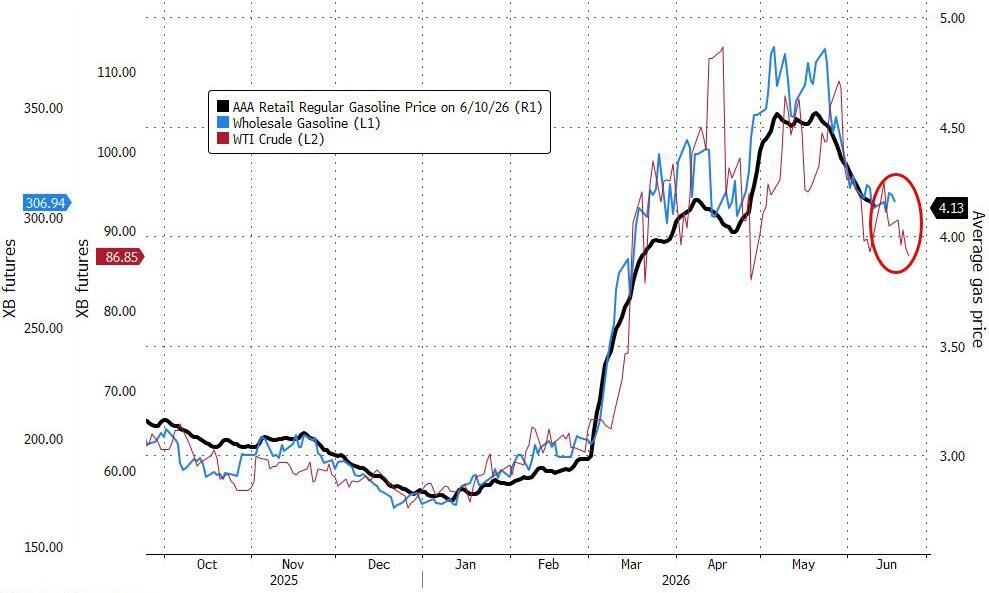
The national average price for a gallon of regular gasoline declined for three consecutive weeks, dropping from $4.56 per gallon on May 21 to $4.12 per gallon on Thursday.
Lower gasoline prices are “delivering some relief to drivers during the busy summer travel season,” the American Automobile Association (AAA) said in a June 11 statement.
“Gas prices typically peak around this time of year, but uncertainty surrounding the Strait of Hormuz makes this year more unpredictable. Pump prices remain at four-year highs, but the national average is currently far from the record set on June 11, 2022, of $5 per gallon.”
On Friday, prices declined marginally to $4.1 per gallon, which is lower by roughly 40 cents from a month back, according to AAA data. In five states, prices exceeded $5 per gallon—California, Hawaii, Washington, Alaska, and Oregon.
In its statement, AAA attributed the three-week decline to crude oil prices remaining below the $100 per barrel level.
Brent crude oil futures prices shot up after the war began, hitting a high of over $126 per barrel on April 30. Oil was trading at $87.44 per barrel as of 6:50 a.m. EDT on Friday, up from around $72 per barrel on Feb. 27, the day prior to the breakout of the war. Prices have remained below the $100 level every trading day this month.
Iran has repeatedly attacked and threatened commercial ships transiting via the Strait of Hormuz since the war started. The strait is a crucial shipping waterway located south of Iran through which over 20 percent of global seaborne oil trade transits. The disruption of shipments via the Strait has pushed up oil prices.
The conflict between the United States and Iran has intensified in recent days. On June 10, the U.S. military launched new strikes on Iran after it struck an American helicopter in a violation of the ceasefire. Iran then launched attacks against U.S. air and naval assets across Jordan, Kuwait, and Bahrain.
On Thursday, the U.S. Central Command said American forces disabled a third oil tanker that was attempting to carry Iranian oil as part of a maritime blockade imposed on Iran’s ports. Since the blockade came into effect on April 13, U.S. forces have disabled nine vessels in total and redirected 135 ships.
Oil Price Forecast
In a June 11 post, ING Bank said there is “little tangible evidence” of any imminent deal between Washington and Tehran to get energy supplies flowing normally via the Strait of Hormuz.
As such, the oil market is expected to continue tightening, eventually reaching a level where it becomes highly vulnerable to “significant upside.”
“From an inventory perspective, we believe that the end of July could be an inflection point for the market if there is no improvement in energy flows from the Persian Gulf. This could see ICE Brent spike to $120-130/bbl, prompting increased pressure to come to a deal,” the bank said.
“And failing a deal, one can’t rule out the possibility that we get to a point where energy-starved buyers are more willing to pay Iran tolls for safe passage through the Strait of Hormuz.”
The Energy Information Administration (EIA) forecasted in its June 9 Energy Outlook report that oil shipments via the strait may only resume in the third quarter of 2026.
However, even with the resumption of transit, it will likely take several months for the traffic to hit pre-conflict levels, which is not expected to happen until early 2027, the EIA said, adding that Brent crude oil spot prices are predicted to average $105 per barrel in June and July.
Meanwhile, President Donald Trump said on Thursday that a U.S.–Iran deal is close.
“We just made a great settlement of the war with Iran,” Trump said in the Oval Office. “And we’re going to be, subject to finalization of documents, which should get done over the next few days, probably have a signing, maybe in Europe.”
Trump said the deal has been approved by Iranian leader Mojtaba Khamenei.
In a June 11 Truth Social post, the U.S. president said the final points of the deal have been discussed and approved by other parties involved in the conflict, including Saudi Arabia, Israel, the United Arab Emirates, and Qatar.
“The Naval Blockade will remain in full force and effect until this Transaction is finalized,” Trump said.
Related Markets
All MarketsMarket data may be delayed. Not financial advice.
How other outlets covered this
Compare allAlto found this story at 7 outlets. Same event, different framing — compare the headlines.
- ZeroHedgeWTI Rises After Big Product Draws, Tiny Crude Build, SPR Nears 'Tank Bottoms'about 16 hours ago
- AxiosTrump finds tamping down costs to be tricky5 days ago
- Washington ExaminerGas prices: Drop below $3.84 per gallon marking lowest pricing since Marchabout 2 months ago
- The VergeLet him cook: How Weber Blackstone CEO Roger Dahle went from upstart to the biggest name in grillingabout 2 months ago
- BreitbartGasoline Drops Below $4 A Gallon2 months ago
- APShares are mixed and oil trades below $80 on optimism over interim US-Iran war deal2 months ago
- Google NewsU.S. Average Gasoline Prices Slide Below $4 Per Gallon - Crude Oil Prices Today | OilPrice.com2 months ago
How this story developed
Full timelineAlto has tracked this across 44 days of coverage from 7 outlets.
Powered by Gab AI
The Story At A Glance
Reading this article now — analysis appears below
💡 AI analysis provides alternative perspectives on current events