First LNG Tanker Crosses Hormuz After Deal Announcement As Most Ship Managers Remain Cautious
The short version
- The LNG tanker Disha cleared Hormuz and is currently in the Gulf of Oman, ship-tracking data on MarineTraffic showed.
- The tanker had loaded LNG from Qatar’s Ras Laffan in early March, just when the Gulf state halted LNG production and exports amid the closed Strait of Hormuz and Iranian missile…
- The first LNG carrier to transit the Strait of Hormuz following the announcement of the US-Iran MOU.
- Qatari LNG cargo is heading to India Map form @Kpler https://t.co/b3t6IWgbGx pic.twitter.com/W44b8SgYSS — Anas Alhajji (@anasalhajji) June 15…
- India has had several LNG tankers from Qatar move through the Strait of Hormuz in the past months, after securing and negotiating corridors with Iran.
The story
An LNG carrier successfully passed through the Strait of Hormuz early on Monday, the first tanker carrying energy products to clear the chokepoint since the U.S. and Iran announced a deal to reopen the Strait later this week, according to OilPrice.com
While tanker owners and operators remain cautious about rushing to send vessels to the area or having the ones inside the Persian Gulf move quickly toward Hormuz, one LNG tanker passed through the Strait today, carrying LNG to India.
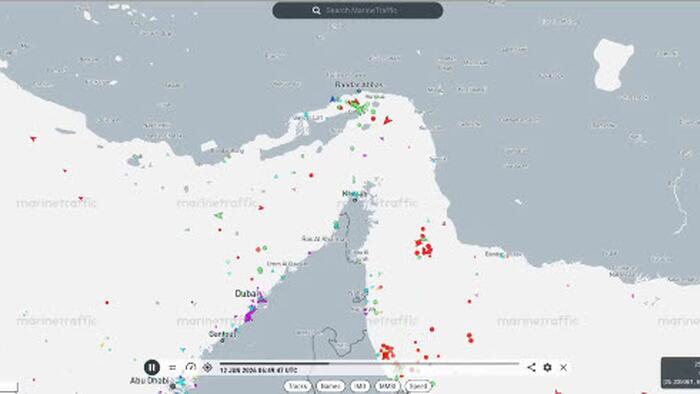
The LNG tanker Disha cleared Hormuz and is currently in the Gulf of Oman, ship-tracking data on MarineTraffic showed. The tanker had loaded LNG from Qatar’s Ras Laffan in early March, just when the Gulf state halted LNG production and exports amid the closed Strait of Hormuz and Iranian missile hits on its LNG infrastructure at Ras Laffan.
The first LNG carrier to transit the Strait of Hormuz following the announcement of the US-Iran MOU.
— Anas Alhajji (@anasalhajji) June 15, 2026
Qatari LNG cargo is heading to India
Map form @Kpler https://t.co/b3t6IWgbGx pic.twitter.com/W44b8SgYSS
The tanker is now en route to India, a source close to the matter told Reuters on Monday.
India has had several LNG tankers from Qatar move through the Strait of Hormuz in the past months, after securing and negotiating corridors with Iran.
Now the tentative U.S.-Iran deal and the reopening of the Strait of Hormuz could ease the traffic congestion and allow more tankers to head to the Middle East to pick up supplies. If the deal holds.
That said, tanker owners and operators await clearance to proceed and are not rushing to test the passage until they have assurances it is safe to do so.
“While we are aware of signs of progress towards a ceasefire, our policy remains unchanged; we will only resume navigation once safety has been fully confirmed,” a spokesperson for Japan’s Mitsui O.S.K. Lines told Reuters on Monday.
According to MarineTraffic, vessel activity through the Strait of Hormuz continues, but traffic patterns remain uneven and visibility remains limited: 29 verified vessel crossings were recorded between 10 and 14 June, covering crude, refined products, LPG, chemicals, methanol, and general cargo movements. Activity was concentrated on 11 and 12 June, while directional flows remained imbalanced: 23 crossings moved west-to-east, compared with six in the opposite direction.
Additionally, route transparency also remains a key issue, with 18 crossings, or around 62%, classified as Dark or Unknown Route. Two sanctioned vessels were also identified during the period.
Strait of Hormuz traffic remains uneven
— MarineTraffic (@MarineTraffic) June 15, 2026
Vessel activity through the Strait of Hormuz continues, but traffic patterns remain uneven and visibility remains limited. According to #MarineTraffic data, 29 verified vessel crossings were recorded between 10 and 14 June, covering crude,… pic.twitter.com/SXkofITV5Y
As Bloomberg notes, two major oil product shippers and a large vessel management firm remain cautious about sailing in the Middle East, even with the US and Iran reaching an interim peace agreement to reopen the Strait of Hormuz.
Tanker owner Hafnia said the situation remains fluid, and that “to prepare transits, any alleged reopening must be supported by verified security conditions on the ground”
“Hafnia will only resume transits once there is sufficient confidence in the security environment”
Ship owner Torm meanwhile said it will “carefully assess the situation and resume transits when we consider it safe and responsible to do so”
Jesper Kristensen, CEO of Synergy Marine Group, which manages more than 700 vessels, said that “while the announcement is encouraging, sustained stability and predictability over the coming days will matter.”
“It remains too early to draw firm conclusions,” he added.
Finally, as Lloyds List notes, shipowners rushing to reposition vessels and markets are rallying, yet insurers for now are holding firm on high war‑risk premiums, insisting on ‘solid evidence’ of lasting safety before lowering rates.
Industry bodies warn that mine clearance and a return to the formal Traffic Separation Scheme are essential, as Iran’s blockade has permanently altered regional risk and demonstrated its leverage over the strait.
While a pause in hostilities will free stranded mariners and boost tanker and bulk markets, the sector sees this as a fragile reprieve rather than a return to normality, with elevated risk now embedded in long‑term decision‑making.
Commenting on the situation, a senior US official said that traffic in the Strait of Hormuz will see a significant increase in one to two weeks from now, adding that "the flow of traffic will take some time to improve due to mines in the strait."
Related Markets
All MarketsMarket data may be delayed. Not financial advice.
Powered by Gab AI
The Story At A Glance
Reading this article now — analysis appears below
💡 AI analysis provides alternative perspectives on current events



