Sign(s) Here, Here, And Here
The short version
- That and the details of what was signed, which are still lacking from the US.
- In their absence, we get more polymetis spin from both sides.
- Iran is saying they got everything they wanted, and there are signs of that.
- Weeks ago, it was floated Iran would receive a $300bn reconstruction fund, a fanciful idea for a country that lost the war.
- However, it’s true - though the GCC will pay for it.
The story
By Michael Every, global strategist at Rabobank
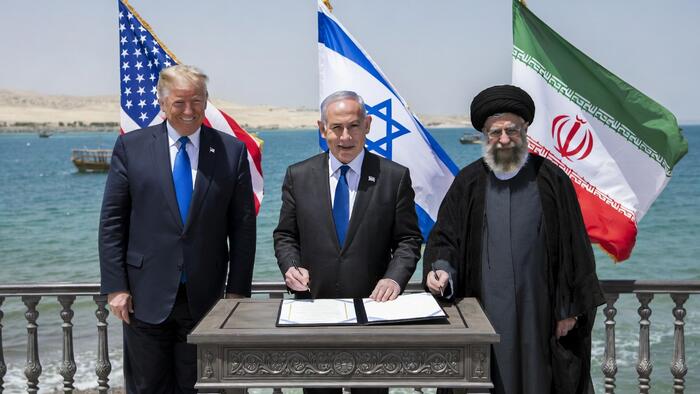
After pricing in nearly 40 pronouncements of US victory since early April, markets have naturally embraced a US-Iran ‘deal’ now e-signed --with a thumbs up emoji?-- so all that’s left is a ceremony to mark the event on Friday. That and the details of what was signed, which are still lacking from the US. In their absence, we get more polymetis spin from both sides.
- Iran is saying they got everything they wanted, and there are signs of that. Weeks ago, it was floated Iran would receive a $300bn reconstruction fund, a fanciful idea for a country that lost the war. However, it’s true - though the GCC will pay for it. Some see that behind IRGC rhetoric this could be a perestroika moment, e.g., if US firms win big contracts. Or it could just be the US making the GCC give Iran $300bn.
- There is shock and fury in Israel at the deal, which they don’t have the details of either, and the prospect of having their hands tied against Iran and Hezbollah in Lebanon. PM Netanyahu is taking a political hit ahead of elections he was already behind in the polls in.
- We also aren’t hearing anything about regime change anymore; or ballistic missiles; or Iran’s proxies; and Trump has watered down his ‘nuclear dust’ demands so that Iran can down-blend its 60% highly enriched uranium to a civilian level under supervision.
What we are hearing about is the reopening of Hormuz, which Trump claims has already happened: however, ‘mine your language’ on what that means. A US official says it might take 1-2 weeks to get energy flowing through the strait again. Other maritime experts suggest it could take 40-50 days. Japan, the UK, and some European states may send mine-sweepers to help speed that process, but they would take weeks to arrive. Recall it then takes weeks for energy cargoes to arrive at their final destinations if/when an exodus of trapped ships begins. That said, this morning three Iranian oil tankers and two ships carrying essential goods reportedly passed the US naval blockade.
Iran also states ships can transit Hormuz freely for the 60-day negotiation period with the US, but after that it will charge de facto tolls. That’s something the US opposes and is a significant flashpoint - alongside many others. If you are a crude carrier, once you finally escape Hormuz, do you return knowing a geopolitical deadline is ticking down, or opt for new routes?
In short, this isn’t a deal: it’s a “page and a half general” MoU (says VP Vance) to try to get a deal via performance-related incentives – but with equal ones to blow it up at different times.
From Israel’s perspective, the sooner this deal collapses the better. The PM has just restated that preventing an Iranian nuclear weapon remains his life’s mission, and that struggle isn’t over yet.
🔴Israel requested to see the US-Iran MoU document and was rejected - report
— i24NEWS English (@i24NEWS_EN) June 16, 2026
His defence minister says Israel won’t leave the security zone it has seized in south Lebanon, and Hezbollah is firing at it there today; and a former PM and leading opposition candidate says the clock for Iran regime change to start as soon as the government in Israel changes.
The Iran deal has hammered Netanyahu's re-election chances on Polymarket, now 2% below Eizenkot for next Israeli PM, after being in the lead all year pic.twitter.com/VyVYuJuONG
— zerohedge (@zerohedge) June 16, 2026
From Iran’s perspective, there is a case to see the deal collapse within months. Indeed, if Tehran cannot get the benefits promised by the US because it won’t take the steps required of it, then it arguably has little incentive to keep Hormuz open. Why allow energy to flow freely, taking pressure off the US and the world, while the GCC and others build alternative supply chains that reduce the strait’s strategic threat? Use it or lose it makes more sense, geopolitically.
From Trump’s perspective, the deal needs to hold until the midterm elections. However, on the other side of that, anything goes. On Monday the president reiterated that if Iran won’t buckle on his (revised) nuclear terms, he will restart bombing and would make the US “the guardian of the Middle East” in return for 20% of the region’s oil revenues.
In short, The Hormuz Odyssey continues, but we are monitoring the situation closely and will reassess once more details are available.
Meanwhile, there are other important developments that might once have been headline news.
The EU officially launched a Ukraine and Moldova accession process, as Moscow once again escalates its attacks on Kyiv. Obviously, this process could run for years, but like Hormuz, it is a development of vast geostrategic significance. That’s as the EU’s Kallas claimed China trained Russian troops and the Union is weighing sanctions and tariffs. Four days ago, The Economist argued, ‘A trade war between the EU and China seems inevitable’: some said the same four years ago. While the EU perhaps following the US stance towards China might not be as market-moving as the original (and sustained) US effort, it is hugely significant for the physical economy.
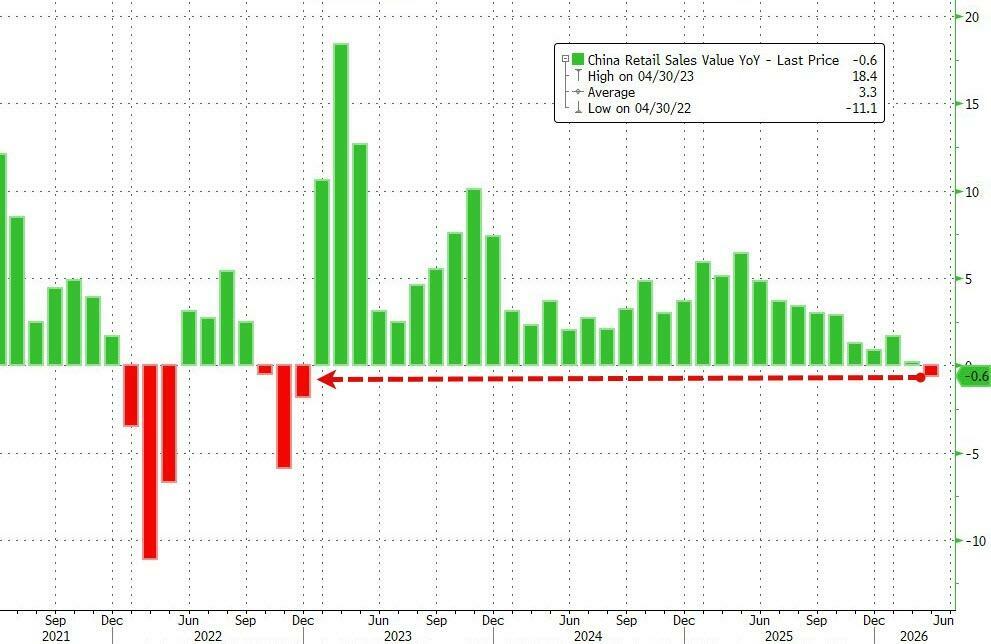
In related data today, Chinese retail sales dropped 0.6% y-o-y in May vs. -0.2% expected and rose just 1.4% y-o-y year-to-date (YTD), nearly negative in real terms, and underlining the parlous state of local consumption. Investment spending was -4.1% y-o-y YTD vs. -2.3% consensus, and property investment was -16.2% y-o-y YTD. By contrast, industrial production was 4.5% y-o-y and 5.4% y-o-y YTD, which logically has to flow abroad to find demand, raising trade tensions.
That backdrop raises the question of how much the EU and US want to fight each other at the same time. There, the US will use the G7 meeting today and tomorrow to push its ‘no-China’ critical minerals plan to decouple western supply chains upstream… which will logically argue for further decoupling downstream over time. It remains to be seen if others will line up behind it, however.
Lastly, two days ahead of a crucial UK byelection in Makerfield, where a victory for the would-be Labour Prime Minister Burnham would only be possible via a split on the right between the anti-EU Reform UK and the even more deeply anti-EU Restore UK, a Financial Times op-ed argues ‘Britain’s return to the EU is only a matter of time.’ That odyssey also continues on and on…
Related Markets
All MarketsMarket data may be delayed. Not financial advice.
How this story developed
Full timelineAlto has tracked this across 2 days of coverage from 1 outlet.
- Sign(s) Here, Here, And HereYou are here
Powered by Gab AI
The Story At A Glance
Reading this article now — analysis appears below
💡 AI analysis provides alternative perspectives on current events