Hormuz Ship Traffic Rebounds To Highest Level Since Start Of War, Iran Renews Restrictions
The short version
- The normalization phase for tanker traffic through the Hormuz maritime chokepoint is still in its early stages…
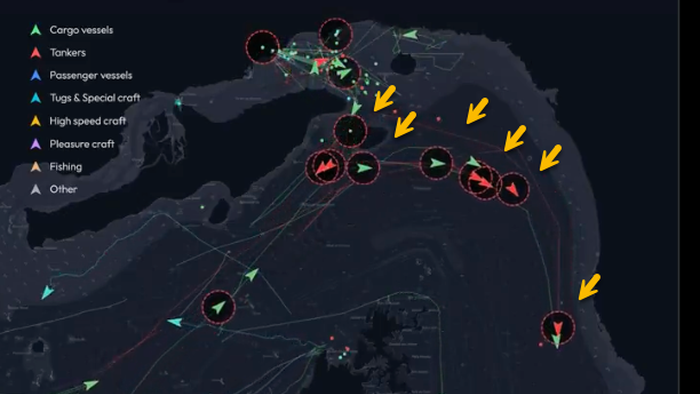
- Hormuz traffic shows recovery Verified Strait of Hormuz crossings reached 25 on 18 June, marking a notable increase in daily maritime activity.
- Traffic was evenly distributed across both directions, with most vessels following established Iranian route patterns.
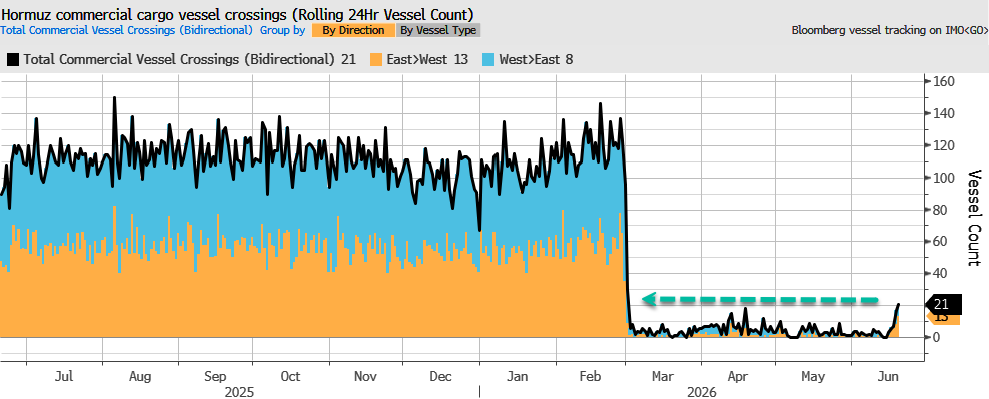
- The latest shipping data from Bloomberg shows 21 vessels have transited the critical waterway so far on Friday, the most since the start of the conflict in late February.
- The data does not account for vessels turning off their transponders.
The story
Oil prices are on track to close lower for the week, with WTI futures down more than 9% versus last Friday’s close after the US and Iran secured an interim peace deal to reopen the Strait of Hormuz.
The normalization phase for tanker traffic through the Hormuz maritime chokepoint is still in its early stages, but the market is already beginning to price in a major wave of physical crude and crude products to hit global markets.
Hormuz traffic shows recovery
— Kpler (@Kpler) June 19, 2026
Verified Strait of Hormuz crossings reached 25 on 18 June, marking a notable increase in daily maritime activity. Traffic was evenly distributed across both directions, with most vessels following established Iranian route patterns. Five sanctioned… pic.twitter.com/kqnil079nf
Roughly 60 million barrels of seaborne crude that had been trapped in the Persian Gulf for months are now expected to return to global markets, with much of that supply likely headed toward Asian refiners.
The latest shipping data from Bloomberg shows 21 vessels have transited the critical waterway so far on Friday, the most since the start of the conflict in late February. The data does not account for vessels turning off their transponders.
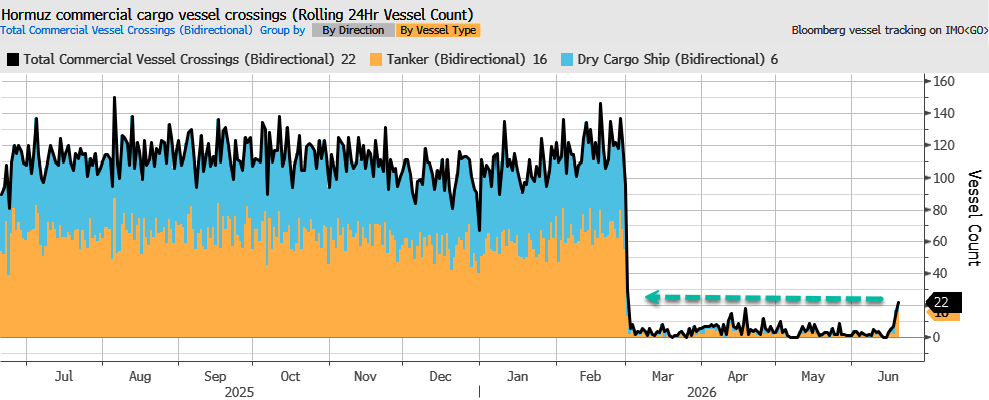
Shipping data also show that, on a bidirectional basis, the bulk of traffic consisted of 15 tankers and 6 dry cargo ships.
Moments ago, the Persian Gulf Strait Authority, or PGSA, Iran’s newly created body for regulating transit through the Strait of Hormuz, released a statement: "Following the Islamabad MoU and official directives, vessels that submit compliant transit requests will be permitted to pass through the Strait of Hormuz during the announced period."
Following the Islamabad MoU and official directives, vessels that submit compliant transit requests will be permitted to pass through the Strait of Hormuz during the announced period.
— PGSA | نهاد مدیریت آبراه خلیج فارس (@PGSA_IRAN) June 19, 2026
Details: https://t.co/7SPYB6INvI https://t.co/UjXJxljD6E pic.twitter.com/78Jte5aFpg
Christian Keller, the Managing Director and Global Head of Economics Research at Barclays, told clients, "With the first half of 2026 ending, the second half looks to be shaped by the US-Iran peace deal's stability to moderate oil prices ..."
Related:
On Friday, Daan Struyven, Goldman Sachs' co-head of Global Commodities Research, told clients, "We now assume that Persian Gulf exports normalize to pre- war levels by the end of July."
Related Markets
All MarketsMarket data may be delayed. Not financial advice.
Powered by Gab AI
The Story At A Glance
Reading this article now — analysis appears below
💡 AI analysis provides alternative perspectives on current events