Here Is The Korean Article That Sent Memory Stocks Tumbling And Sparked A Global Selloff
The short version
- According to industry sources on the 23rd, SK Hynix is reportedly delaying the conversion of some 5th-generation HBM (HBM3E) production lines…
- The company plans to secure additional profits by increasing its responsiveness to the general-purpose DRAM market…
- The industry view is that this decision is based on the judgment that there is no need to rush the transition to HBM4 and HBM4E (7th-generation HBM)…
- Behind this strategic shift lies the reversal in profitability between general-purpose DRAM and HBM.
- As of the first quarter of this year, the price per gigabit (Gb) of general-purpose DRAM still lags behind that of HBM…
The story
Early last night, just around the time Korean stocks opened at a new all time high, we highlighted an article in Korea's Chosun Biz, which eventually became the catalyst for the sharp repricing lower of memory stocks - and since memory stocks account for about 60% of the Kospi, sparked the 10% crash in the South Korean market which culminated with a mandatory halt of trading - and sparked a risk off wave around the globe.
"Since production forecasts for NVIDIA's next-generation chip 'Rubin,' which will be equipped with HBM4, are trending downwards, there is no reason to accelerate the transition to HBM." - Chosunhttps://t.co/tOYfVXObQw
— zerohedge (@zerohedge) June 23, 2026
As both CNBC and Bloomberg write this morning, "traders are pointing to a South Korean media report saying SK Hynix is slowing expansion of AI memory chip production and shifting emphasis to commodity DRAM."
What exactly is the article saying? The punchline was the following:
"An official familiar with SK Hynix stated, 'SK Hynix management cannot help but be mindful that their competitor (Samsung Electronics) is already generating massive profits from general-purpose DRAM rather than HBM.'" The official explained, "Since production forecasts for Nvidia's next-generation chip 'Rubin,' which will be equipped with HBM4, are also trending downward, there is no reason to accelerate the transition to HBM."
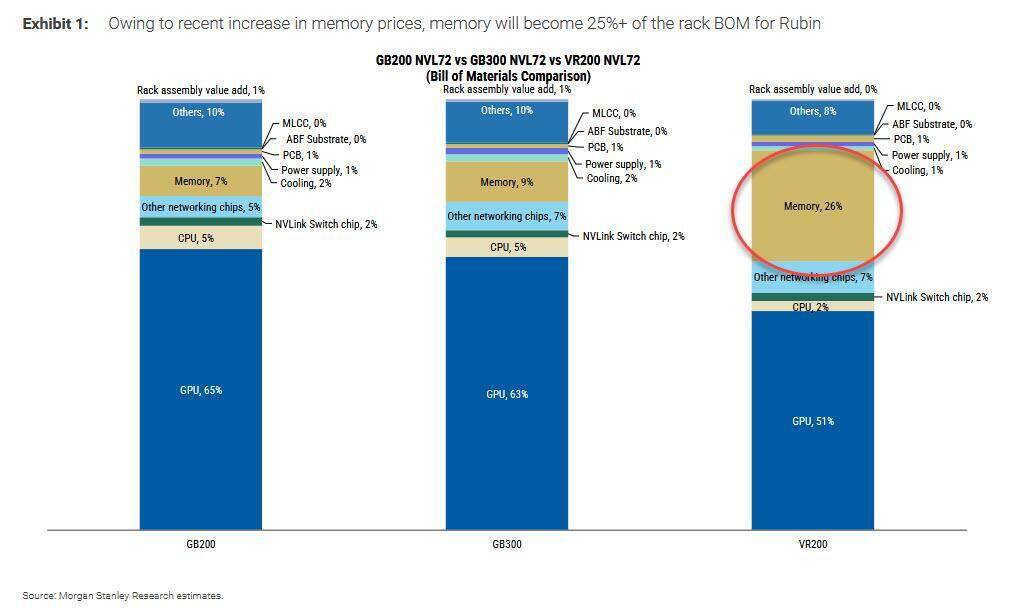
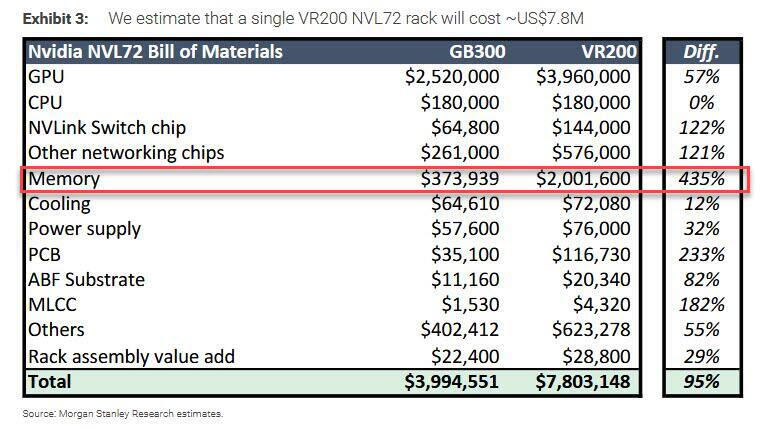
The slowdown in HBM4 (or high bandwidth memory) rollout which is critical for high end AI racks, was - naturally - spun as a positive event and was justified as SK Hynix moving back to DDR memory production, which somehow is now higher margin, but the bottom line is simple: supply for high end HBM is slowing which in turn has prompted questions whether this is due to a cartel-like attempt to control pricing (probably not very smart to admit this), or more likely, in response to problems with the rollout of high end Nvidia systems, and especially the Vera Rubin racks which as we reported a month ago are emerging as extremely expensive, primarily because of the surge in memory prices which are crushing hyperscaler margins.
Here is the full Chosun article:
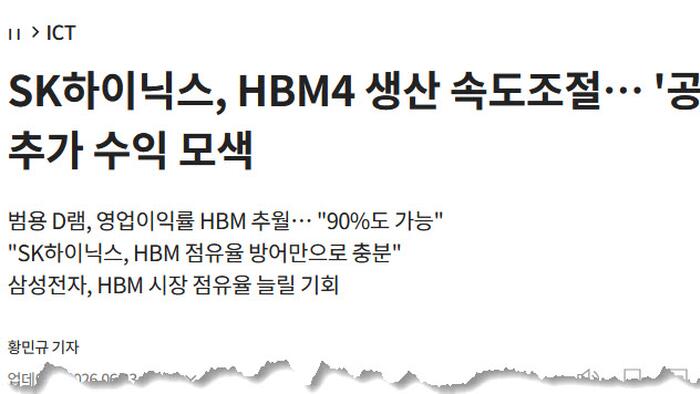
SK Hynix Adjusts HBM4 Production Speed… Seeking Additional Revenue by Increasing General-Purpose DRAM Amid Supply Shortages
- General Purpose DRAM Surpasses HBM in Operating Profit Margin… "90% Possible"
- "SK Hynix Needs Only to Defend HBM Market Share"
- Opportunity for Samsung Electronics to Increase HBM Market Share
SK Hynix is shifting its focus to the general-purpose DRAM market while adjusting the pace of mass production expansion for 6th generation High Bandwidth Memory (HBM4). The explanation is that, having already solidified an overwhelming advantage with HBM sales accounting for over 40% of total revenue, the company is adjusting its resource allocation to secure additional profits in the general-purpose DRAM market, where supply shortages are severe, rather than engaging in excessive competition for capacity expansion.
According to industry sources on the 23rd, SK Hynix is reportedly delaying the conversion of some 5th-generation HBM (HBM3E) production lines, which were originally scheduled to transition to HBM4. The company plans to secure additional profits by increasing its responsiveness to the general-purpose DRAM market, which currently records higher operating profit margins than HBM. The industry view is that this decision is based on the judgment that there is no need to rush the transition to HBM4 and HBM4E (7th-generation HBM), given that the company has already secured a solid position in the HBM market.
Behind this strategic shift lies the reversal in profitability between general-purpose DRAM and HBM. As of the first quarter of this year, the price per gigabit (Gb) of general-purpose DRAM still lags behind that of HBM, but the gap in operating profit margins is estimated to have already widened to more than 15 percentage points (P). Daishin Securities projected that the operating profit margin for general-purpose DRAM could reach a theoretical peak of 90% within the year.
"An official familiar with SK Hynix stated, 'SK Hynix management cannot help but be mindful that their competitor (Samsung Electronics) is already generating massive profits from general-purpose DRAM rather than HBM.'" The official explained, "Since production forecasts for Nvidia's next-generation chip 'Rubin,' which will be equipped with HBM4, are also trending downward, there is no reason to accelerate the transition to HBM."
The perspective of overseas investment banks (IBs) also supports this trend. Goldman Sachs assessed that it would be sufficient for SK Hynix to maintain a dominant position of over 50% in HBM3 (4th generation HBM) and HBM3E (5th generation HBM) until at least 2026. Morgan Stanley identified the overall memory price cycle, rather than the defense of HBM market share, as the key driver of SK Hynix's value, and raised its earnings forecast by 56–63% based on the projection that the average selling price of DRAM will rise by 62% by 2026.
In fact, SK Hynix announced in its first-quarter earnings report that the average selling price (ASP) of DRAM had risen to the mid-60% range and presented a plan to focus on meeting demand for high-density server modules and mobile products. The signing of a three-year DDR5 supply contract with Microsoft (MS) is also interpreted as a move to secure long-term earnings visibility in general-purpose DRAM.
On the other hand, as SK Hynix moves to control HBM4 production volume, the possibility of its competitor Samsung Electronics rising in market share is also increasing. According to Counterpoint Research, SK Hynix’s HBM market share stood at 57% in the fourth quarter of last year, but there is talk of a potential gradual contraction; furthermore, it is observed that if Samsung Electronics succeeds in mass-producing HBM4 in the second half of this year, SK Hynix’s share could drop to the 50–60% range.
Related Markets
All MarketsMarket data may be delayed. Not financial advice.
Powered by Gab AI
The Story At A Glance
Reading this article now — analysis appears below
💡 AI analysis provides alternative perspectives on current events