"We Must Act": TotalEnergies CEO Joins Calls To Rewire Gulf Energy Flows Around Hormuz
The short version
- TotalEnergies SE CEO Patrick Pouyanne is the latest to signal the urgent need for Gulf producers to prioritize building pipelines that bypass the Strait of Hormuz…
- Speaking at an energy conference in Paris on Tuesday, Pouyanne said, " The reality is that the Strait of Hormuz represents a genuine threat, so we must act.
- To ensure it doesn't remain a threat, there is only one solution: we must invest in pipelines to bypass the strait…
- "If our predecessors did it 100 years ago, I believe we should be capable of doing it again today," he added.
- In the first month of the conflict, Saudi Arabia's Hormuz-bypassing East-West pipeline ramped up to its full capacity of 7 million barrels a day…
The story
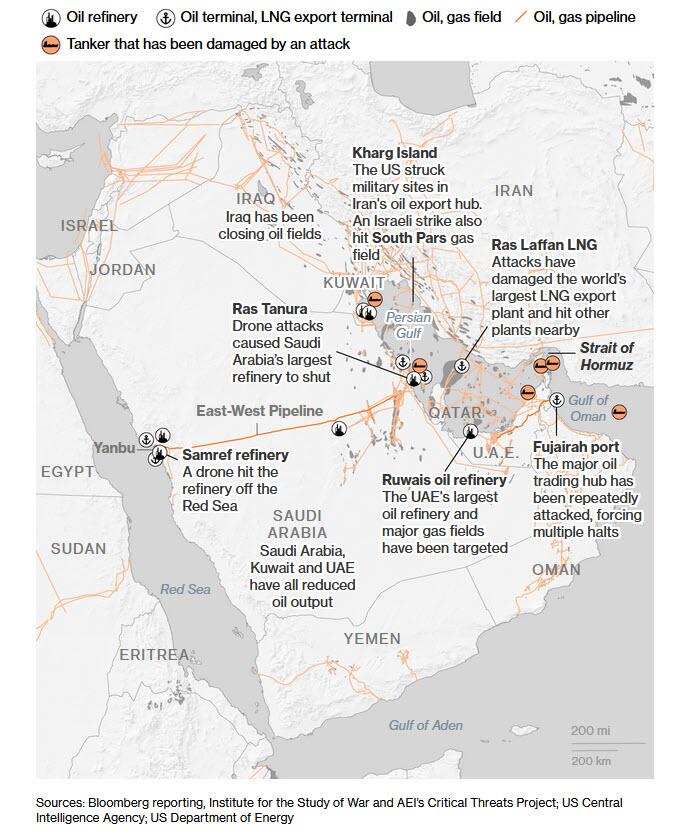
The Strait of Hormuz was disrupted or nearly closed for roughly three and a half to four months, offering Gulf states aligned with the U.S. one clear message: energy flows - or tanker transits - must be rewired through pipeline networks that bypass the maritime chokepoint.
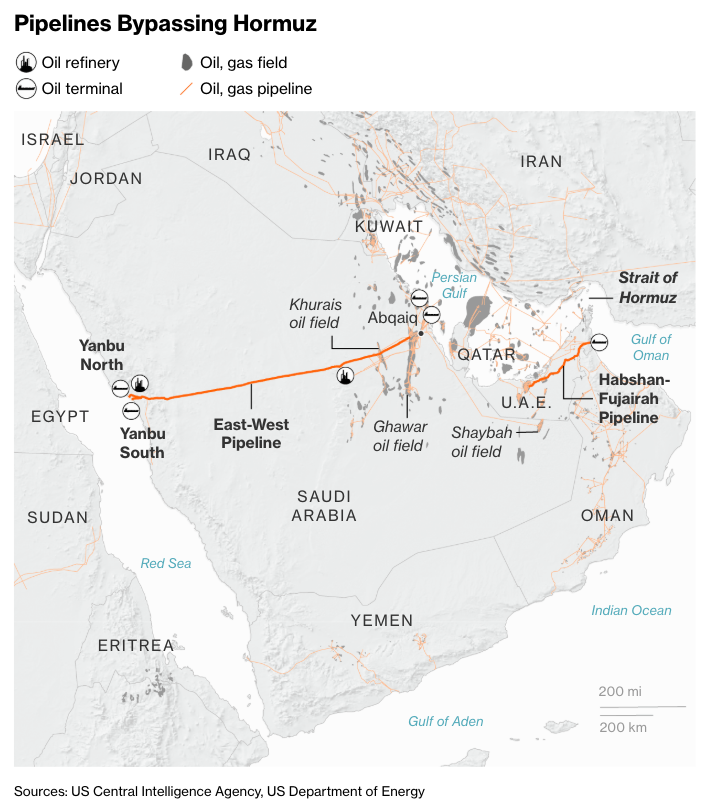
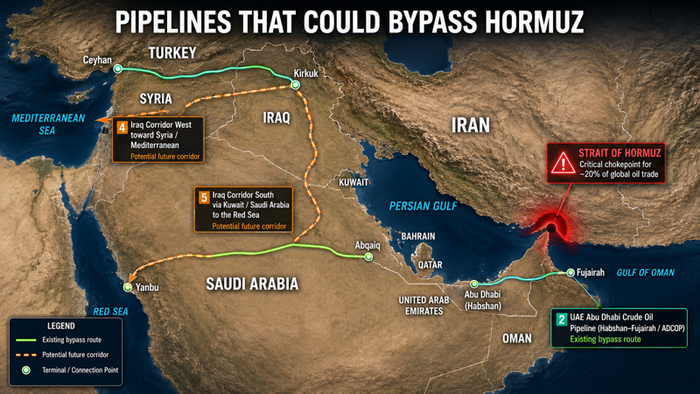
By creating alternative pipeline export routes through the UAE, Iraq, Saudi Arabia, Kuwait, Syria, Oman, or Turkey, regional producers can reduce the risk that Tehran can once again use Hormuz as a leverage tool to disrupt tanker traffic through one of the world’s most critical maritime chokepoints.
TotalEnergies SE CEO Patrick Pouyanne is the latest to signal the urgent need for Gulf producers to prioritize building pipelines that bypass the Strait of Hormuz, according to Reuters.
Speaking at an energy conference in Paris on Tuesday, Pouyanne said, "The reality is that the Strait of Hormuz represents a genuine threat, so we must act. To ensure it doesn't remain a threat, there is only one solution: we must invest in pipelines to bypass the strait, which is an absolute priority."
Pouyanne identified alternative export routes in the UAE and Iraq, as well as through Syria. He continued, "When you are in Iraq and need to reach the sea, you can go down through Kuwait and Saudi Arabia, or head towards Syria or Turkey."
He referenced TotalEnergies' discovery of oil in Iraq in 1928, which led to an Iraq-Syria pipeline that took six years to build and allowed the French energy giant to load crude in the Mediterranean and feed refineries in southern France.
"If our predecessors did it 100 years ago, I believe we should be capable of doing it again today," he added.
Pouyanne's comments to bypass Hormuz come days after the UAE's Minister of Foreign Trade Thani Al Zeyoudi told Bloomberg in an interview that "zero Hormuz dependency" is essential for survival, adding, "It's going to open and we hope that will happen quickly, but we will not stop the new plan."
The plan includes major investments in pipelines, rail, and road links from UAE ports in the Persian Gulf to Dibba, Fujairah, Khor Fakkan and at least one new harbor on the Gulf of Oman coast.
Earlier this month, Sheikh Khaled Ahmad Al-Sabah, managing director of international marketing at Kuwait Petroleum, said Kuwait is among the countries that have reportedly held talks with Saudi Arabia and the UAE about potential cross-border pipelines that could connect Gulf oil production to buyers without relying on tanker transits through Hormuz.
In the first month of the conflict, Saudi Arabia's Hormuz-bypassing East-West pipeline ramped up to its full capacity of 7 million barrels a day, allowing the Kingdom to divert flows from Persian Gulf loading terminals to those at Yanbu on the Red Sea.
There is a growing consensus among Gulf producers and global energy giants that a pipeline network must be expanded at lightning speed to bypass the Hormuz chokepoint. That logic is simply because it would drastically reduce the region’s dependence on the chokepoint and simultaneously shatter Tehran’s ability to use tanker flows as a leverage tool in any future spat with Washington.
Related:
Earlier today, Eurasia Group senior analyst Gregory Brew wrote on X that Iran's regional leverage is eroding: "This may be Iran's first misstep—and proof that its leverage isn't total. Iran announced the strait was closed, but it didn't *close* the strait. Without the credible threat of force, Iran's sway over the waterway has limits."
Related Markets
All MarketsMarket data may be delayed. Not financial advice.
Powered by Gab AI
The Story At A Glance
Reading this article now — analysis appears below
💡 AI analysis provides alternative perspectives on current events