European Rearmament Efforts Snuffed By Chinese Control Of Critical Materials

The short version
- So does the Nikkei reporting that ‘China minerals control threatens EU rearmament, as bloc seeks new sources’: because, as Rabo's Michael Every notes…
- The European Commission last week said that it will propose a new law that will require companies in the bloc to expand their suppliers to address economic imbalances…
- Russia's war in Ukraine and growing uncertainty over Washington's security guarantees have pushed governments in Europe to increase military spending and production.
- But for 17 of the 34 materials classified as critical by the EU, China accounts for at least 70% of global mining or refining, a report published by Teer in May shows.
- Eight of those 34 materials are subject to Chinese export controls.
The story
Yesterday we reported that, in a tit-for-tat move, China announced it is targeting US rare earths firms in response to a Pentagon list of Chinese firms: this, as Rabobank noted, is largely a symbolic move, but it still underlines the tensions in this area. So does the Nikkei reporting that ‘China minerals control threatens EU rearmament, as bloc seeks new sources’: because, as Rabo's Michael Every notes, even if you can afford a dagger, you can’t make it without rare earths, and Europe still hasn’t secured enough supply.
Taking a closer look at the report, Nikkei writes that the European Union's aggressive plans to boost defense capabilities are hampered by China's export controls and sales restrictions on critical raw materials, with the bloc's leaders now calling on countries to accelerate the diversification of their supply chains.
The European Commission last week said that it will propose a new law that will require companies in the bloc to expand their suppliers to address economic imbalances, although it did not name China.
Russia's war in Ukraine and growing uncertainty over Washington's security guarantees have pushed governments in Europe to increase military spending and production. But for 17 of the 34 materials classified as critical by the EU, China accounts for at least 70% of global mining or refining, a report published by Teer in May shows. Eight of those 34 materials are subject to Chinese export controls.
"China is in the process of pulling the rug out from under Europe's rearmament efforts," said Joris Teer, a policy analyst at the EU Institute for Security Studies (EUISS), the bloc's agency for foreign, security and defense policy analysis.
"By just deploying this weapon, China has already increased its leverage, signaling both its capacity and willingness to squeeze supply at any moment of its choosing," Teer wrote.
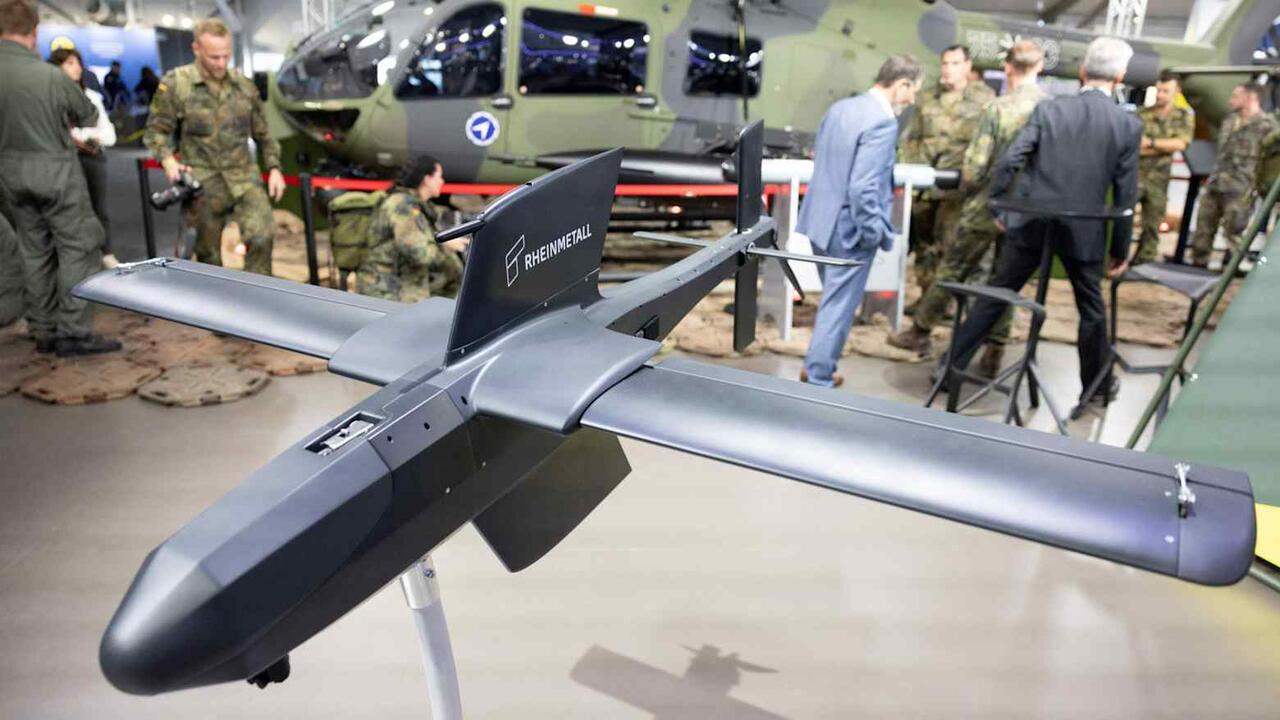
Escalating geopolitical developments and intensifying global competition for critical raw materials underline the growing need to strengthen Europe's supply chains, said the Aerospace, Security and Defence Industries Association of Europe. The organization represents over 4,000 companies including the U.K.'s BAE Systems, France's Thales and Germany's Rheinmetall.
European defense manufacturers are pursuing several strategies including vertical integration, recycling, diversification and stockpiling. Rheinmetall told Nikkei Asia it had "no dependencies" and was "well prepared with regard to critical minerals."
"Rheinmetall has stored key raw materials, enough to last for several years," a spokesperson said. "We have implemented IT systems that enable us to centrally monitor and control raw material consumption across the group with precision."
But analysts warn that stockpiling alone will not be enough.
"Stockpiling is an important buffer against immediate disruptions, but on its own it is unlikely to reduce structural damage over the long term," said Maria Shagina, senior fellow at the International Institute for Strategic Studies. She said it would take years for alternative sources to replace either the volumes or the range of critical minerals that Beijing controls.
In 2024, the EU introduced the European Critical Raw Materials Act, aimed at rebuilding domestic supply chains for such minerals. It sets 2030 targets for domestic extraction, processing and recycling, while capping reliance on any single third-country supplier at 65%. A 3 billion-euro ($3.5 billion) fund was launched last year to accelerate strategic projects.
But the European Court of Auditors notes that the 2030 targets are nonbinding and that the bloc remains far from achieving them. Industry groups say policy inconsistencies could slow progress further.
The Cobalt Institute, representing an industry vital to jet engines, advanced batteries and defense alloys, said proposed EU rules involving chemicals risk hollowing out the sector.
"Europe is one foot in, one foot out," said Michael Blakeney, head of government and public affairs at the London-based institute. "It is saying all the right things, but what it is doing is incoherent."
Europe's efforts coincide with an aggressive approach by the U.S. to secure critical mineral supply chains.
"The U.S. is deploying more capital, taking larger financial risks and in some cases acquiring equity stakes to secure and build capacity," Shagina said. "By contrast, Europe has generally been more cautious ... leaving [it] at a relative disadvantage in competing for critical minerals."
In April, the EU signed an agreement with the U.S. to coordinate critical mineral supplies. Following initial resistance over fears it could dilute the bloc's strategic autonomy, member states authorized the commission earlier in June to sign up to the U.S.-led Pax Silica initiative, which coordinates investment and export-control policies.
Teer urged the European bloc to use ongoing U.S.-EU-Japan negotiations as the "nucleus" of a wider coalition to make non-Chinese critical mineral production financially viable, backed by state support, price floors and procurement rules.
"Particularly important are raw material producers, or deposit holders, like Malaysia, the Democratic Republic of Congo, Brazil and Indonesia, as well as countries with vast skilled-workforce potential like India," he wrote in the paper.
To deter further Chinese restrictions, he said the EU also should activate its anti-coercion instrument, which allows it to impose tariffs and restrictions as a response to economic coercion by countries outside of the bloc.
A European Commission spokesperson said the bloc had "long recognized the risks linked to the EU's dependencies on critical raw materials."
"The objective is clear: Anticipate disruptions early and reduce the EU's vulnerabilities as we scale up our industrial and defense capacities," the spokesperson said.
How this story developed
Full timelineAlto has tracked this across 4 days of coverage from 1 outlet.
- European Rearmament Efforts Snuffed By Chinese Control Of Critical MaterialsYou are here
Powered by Gab AI
The Story At A Glance
Reading this article now — analysis appears below
💡 AI analysis provides alternative perspectives on current events