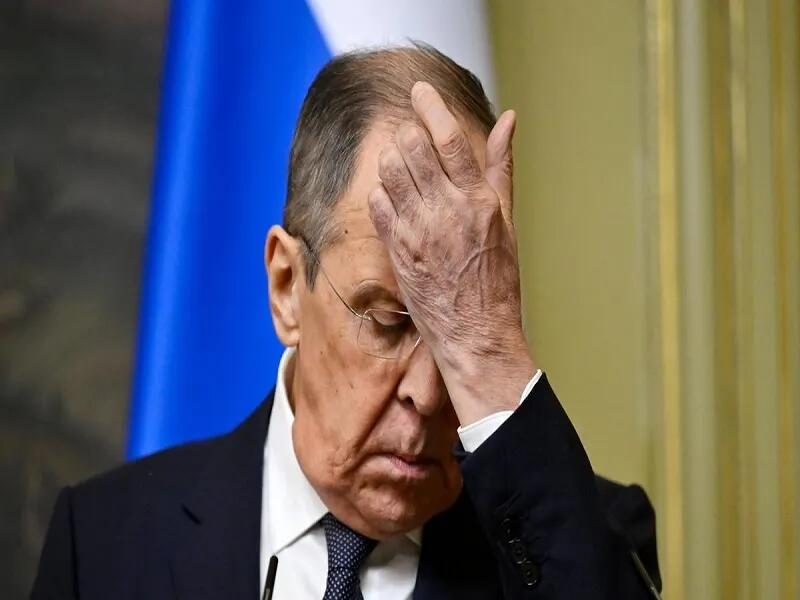
Russia's Lavrov Admits That Anchorage Only Bought Time For Ukraine To Rearm
.jpg?itok=BYaFAPY4)
The short version
- But in reality, things turned out the way they did.” This came three and a half years after former German Chancellor Angela Merkel admitted in December 2022 that the Minsk Accords…
- Putin famously responded a month later that “We endured for a long time, tried to reach an agreement for a long time.
- But, as it turns out now, we were simply led by the nose, deceived.
- Lo and behold, that’s precisely what happened after Trump reneged on the “Spirit of Anchorage”, which an RT contributor described as him having agreed to coerce Zelensky into…
- It’s a matter of speculation whether Trump intended to dupe Putin or whether he just caught too caught up in retrospect planning Maduro’s capture and the Third Gulf War .
The story
Lavrov sheepishly said during a roundtable event last week that “I do not even want to suspect that Alaska, like the actions of the Europeans, was designed to buy time to rearm the Kyiv regime. I don’t even want to think about it. But in reality, things turned out the way they did.”
This came three and a half years after former German Chancellor Angela Merkel admitted in December 2022 that the Minsk Accords were just a ruse to buy time for Kiev to rearm.
Putin famously responded a month later that “We endured for a long time, tried to reach an agreement for a long time. But, as it turns out now, we were simply led by the nose, deceived. It’s not the first time this has happened.” Given that he cautioned Russia’s strategic forecasters against indulging in “wishful thinking” during a speech at the headquarters of his country’s Foreign Spy Service in summer 2022, it was widely assumed among “Non-Russian Pro-Russians” that he wouldn’t fall for a similar ruse.
Lo and behold, that’s precisely what happened after Trump reneged on the “Spirit of Anchorage”, which an RT contributor described as him having agreed to coerce Zelensky into withdrawing from Donbass in exchange for Putin then declaring a ceasefire. It’s a matter of speculation whether Trump intended to dupe Putin or whether he just caught too caught up in retrospect planning Maduro’s capture and the Third Gulf War. The outcome, nevertheless, is the same since Trump didn’t do what he promised Putin.
Trump is now “escalating to de-escalate” through a “war of attrition” because he senses weakness from Russia due to the new “cordon sanitaire” around it and thus believes that strengthening Ukraine’s strike capabilities, imposing more sanctions, and provoking unrest can coerce energy-related concessions. The Wall Street Journal reported on the aforementioned three-phase strategy last fall so Russia would have presumably been aware of it but still maintained hope that Trump would implement his deal with Putin.
This “wishful thinking” has now been shattered after he signed the G7 joint statement calling for more arms to Ukraine and sanctions on Russia, which preceded a report that he told Zelensky to act “more boldly” against Russia after being impressed by its recent US-backed strategic strikes. To be sure, Russia had realized even before this that something was wrong after Putin’s close advisor Yuri Ushakov played dumb about the “Spirit of Anchorage” last month, but now it’s indisputable that it no longer exists.
Seeing as how there’s no longer any credible hope that Trump will coerce Zelensky into withdrawing from Donbass by cutting off arms, funds, and intel to Ukraine, not even in exchange for a resource-centric strategic partnership with Russia, only three options remain for Russia.
-
It can either decisively “escalate to de-escalate” in its own right to swiftly end the conflict on as many of its terms as possible,
-
carry on as usual amidst this new “war of attrition” at tremendous risk to itself,
Unless he’s bluffing about “escalating to de-escalate” and abruptly implements his half of the “Spirit of Anchorage”, which is unlikely after all that’s recently happened, then it would mean that the past year since their meeting achieved nothing at all other than getting Russia’s guard down. Even if they agreed on that quid pro quo, however, Russia would have probably kept the same tempo. Now that its “spirit” is discredited, Russia has the pretext for ramping everything up, but it’s still unclear whether Putin will.
Related Markets
All MarketsMarket data may be delayed. Not financial advice.
How other outlets covered this
Compare allAlto found this story at 2 outlets. Same event, different framing — compare the headlines.
How this story developed
Full timelineAlto has tracked this across 3 days of coverage from 2 outlets.
- Russia's Lavrov Admits That Anchorage Only Bought Time For Ukraine To RearmYou are here
Powered by Gab AI
The Story At A Glance
Reading this article now — analysis appears below
💡 AI analysis provides alternative perspectives on current events