The Shooting In The Strait Ain't Over, But...
The short version
- The International Maritime Organization (IMO) had coordinated this alternative routing with Oman - hugging the UAE and Musandam Peninsula coastline…
- This route was significant because it bypassed Iran’s designated corridor entirely, which ran closer to Iranian territorial waters.
- However, Iran and Oman agreed on a new framework (joint working group) for the future administration of the Strait of Hormuz on Tuesday, June 24, 2026.
- The two countries agreed to establish a joint working group between their foreign ministries to discuss: Future navigation rules and administration of the strait.
- Services provided (e.g., safety, pilotage).
The story
Authored by Larry Johnson via Sonar21.com
A little over a week since the US and Iran signed the MoU, some ships that had been trapped in the Persian rushed to travel through the corridor, with many trying to use an alternative route on the southern side of the Strait along the Omani coast. The International Maritime Organization (IMO) had coordinated this alternative routing with Oman - hugging the UAE and Musandam Peninsula coastline, avoiding the central passage that Iran had mined. This route was significant because it bypassed Iran’s designated corridor entirely, which ran closer to Iranian territorial waters.
However, Iran and Oman agreed on a new framework (joint working group) for the future administration of the Strait of Hormuz on Tuesday, June 24, 2026. The two countries agreed to establish a joint working group between their foreign ministries to discuss:
- Future navigation rules and administration of the strait.
- Services provided (e.g., safety, pilotage).
- Associated costs (in accordance with international standards).
Both emphasized their sovereignty over their territorial waters in the strait.
The naval arm of the Revolutionary Guard issued a warning Thursday against using the new route. In a statement carried by Iran’s state-run IRNA news agency, naval officials said the route was established without notice or coordination with Iran, calling it “unacceptable and completely dangerous.” According to the IRGC:
The only authorized route for passing through the Strait of Hormuz is the one declared by the Islamic Republic of Iran. Vessel traffic outside these routes is extremely dangerous and prohibited. Violators will be dealt with.”
The day before, the Guard had threatened one tanker over the radio, with a soldier warning “You are in range of my missiles and maybe (I) fire on you,” according to the private security firm Ambrey.
On Thursday the Ever Lovely, a Singapore-flagged ship operating in the fleet of Taiwan-based Evergreen Marine, attempted to transit the strait using a narrow channel near the coast of Oman in accordance with a route organized by the United Kingdom Maritime Trade Operations (UKMTO) security monitor. The Ever Lovely was struck by a drone belonging to Iran’s powerful Islamic Revolutionary Guard Corps. Iran allegedly shot at least four drones at ships traveling through the Strait on Thursday. One of those hit the upper deck of the Ever Lovely.
On Friday, the US attacked Iran in ‘response’ to strikes on the commercial vessel in Strait of Hormuz a day earlier:
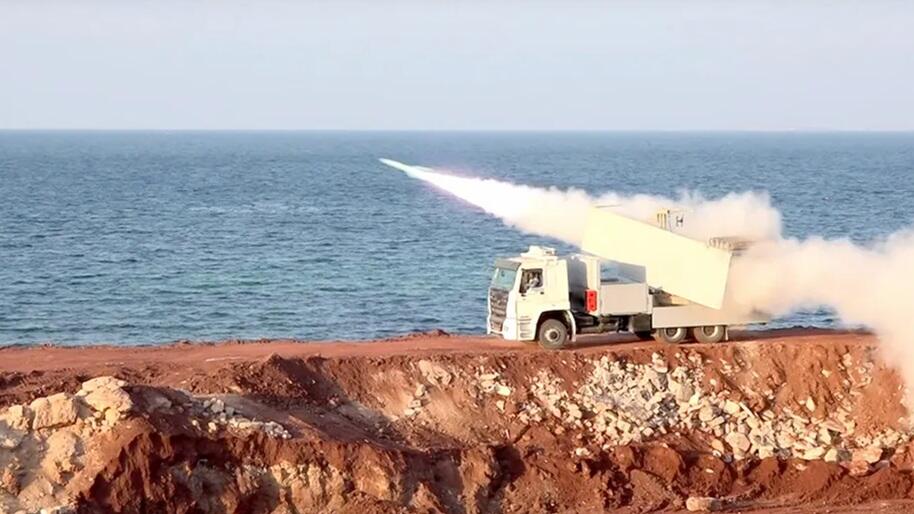
Iran’s IRIB reported that an explosion was heard at 11:15 pm at the Taheroui pier in Sirik. A military source said the blasts were caused by a projectile hitting the pier area, adding that around five hours earlier, several warning shots had been fired from Sirik toward violating vessels in the Strait of Hormuz. Reports also indicated that two warning missiles were fired earlier from around Karpan toward the strait.
US Central Command said its forces carried out strikes against Iran on 26 June in response to Iran’s attack the previous day on the Singapore-flagged cargo ship M/V Ever Lovely as it exited the Strait of Hormuz along the Omani coast. CENTCOM said US aircraft targeted Iranian missile and drone storage sites and coastal radar positions after the vessel was hit by a one-way attack drone.
Although CENTCOM presented this as a powerful strike on Iran, and the US media trumpeted it as an act of major retaliation, the US response inflicted little damage and could reasonably be interpreted as a symbolic gesture rather than a punishing attack.
The IRGC Public Relations department issued the following statement:
Following the Israeli regime’s violation of the ceasefire in southern Lebanon, the treaty-breaking US regime also violated its commitments once again. Under various pretexts, including the transit of a vessel accused of navigating through an unauthorized route in the Strait of Hormuz, the US launched an airstrike against the coasts of the Islamic Republic of Iran.
In response to this aggression, the Islamic Revolutionary Guard Corps Navy struck positions where the US terrorist military is stationed in the region. Under Article 5 of the Islamabad Memorandum of Understanding, responsibility for regulating navigation through the Strait of Hormuz rests with the Islamic Republic of Iran.
However, the United States sought to violate this commitment by encouraging various parties to defy it. It received the necessary response, and the same will apply in the future. If the aggression is repeated, Iran’s response will be broader than this.
Instead of marking a return to war, this exchange of fire can best be categorize as military political theater. I believe that Iran, thanks to intel from the Russians or the Chinese, has learned that the US has issued orders that will initiate the return to CONUS of the aircraft, vehicles and troops that had been deployed to the region in preparation for the February 28 attack. Because of the limited damage inflicted by the US attack, I believe that Iran chose to respond in a limited fashion rather than escalate and run the risk of the US cancelling the redeployment order.
For now, Iran remains in control of the Strait of Hormuz and ships wanting to transit the Strait are adhering to Iran's new policy.
Related Markets
All MarketsMarket data may be delayed. Not financial advice.
How other outlets covered this
Compare allAlto found this story at 8 outlets. Same event, different framing — compare the headlines.
- ZeroHedgeQatar Denies Holding Iranian Pilots As Tehran Demands Answers Over Missing Airmen10 days ago
- AxiosGas prices are rising again — and so is GOP grief in the midtermsabout 1 month ago
- Google NewsTrump scraps threat of 20% fee on Hormuz cargo as US prepares to resume blockade of Iran ports - BBCabout 1 month ago
- BBCUS wants Iran to pledge to stop shooting at ships in Strait of Hormuzabout 2 months ago
- CBS NewsIran admits to Trump advisers "they made a mistake" in shooting at ships in straitabout 2 months ago
- APAlex Murdaugh’s true crime saga continues as he heads to court for hearing on murder retrialabout 2 months ago
- Washington ExaminerTrump says Iran violated ceasefire with drone attacks on cargo ships in Strait of Hormuz2 months ago
- Dallas ExpressU.S. Apache Helicopter Downed By Iran Near Hormuz: Crew Rescued Safely3 months ago
How this story developed
Full timelineAlto has tracked this across 21 days of coverage from 8 outlets.
- Trump reverses course on a 20% fee on Strait of Hormuz cargo after pushback - Business InsiderGoogle News
- Trump retreats from shipping toll in Strait of Hormuz - The Washington PostGoogle News
- Trump scraps threat of 20% fee on Hormuz cargo as US prepares to resume blockade of Iran ports - BBCGoogle News
Powered by Gab AI
The Story At A Glance
Reading this article now — analysis appears below
💡 AI analysis provides alternative perspectives on current events