China Imposes Export Curbs On 40 Japanese Firms As Tensions With Tokyo Rise
The short version
- Dual-use items can be used for both civilian and military purposes.
- Domestic exporters, as well as overseas organizations or individuals, are prohibited from transferring Chinese-origin dual-use items to the named entities…
- Chinese companies exporting to these firms will be required to apply for special licenses, submit risk assessment reports on the Japanese companies and written pledges that the…
- Relations between Beijing and Tokyo have been increasingly tense since Japanese Prime Minister Sanae Takaichi last year implied Japan could intervene if China used military force…
- Meanwhile, Japan has accelerated its military expansion, especially by adding offensive capabilities, which Beijing has condemned.
The story
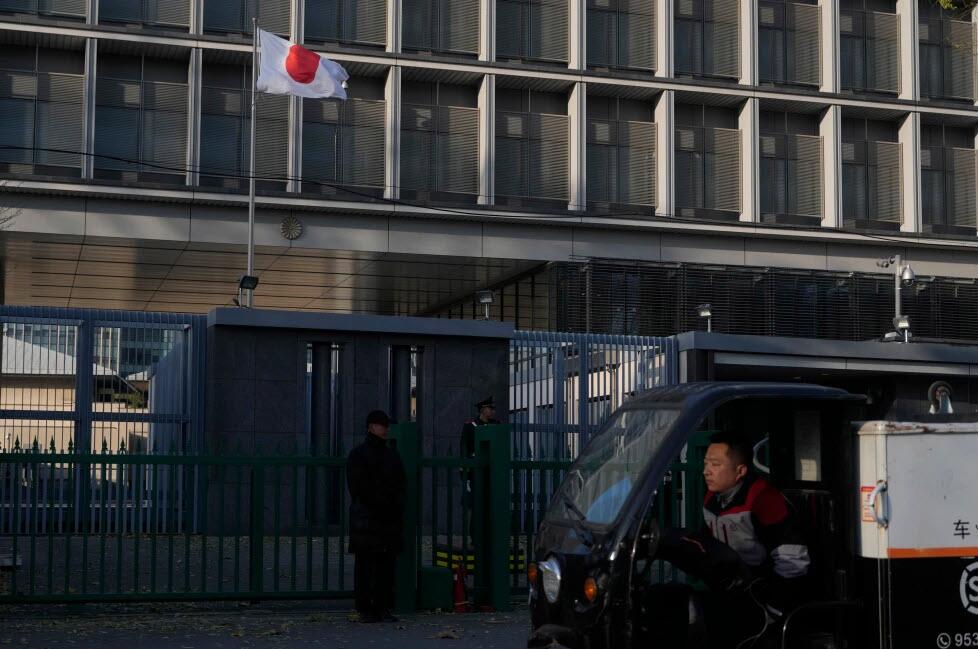
China imposed new export controls Monday on 40 Japanese entities it says are contributing to the country’s “remilitarization,” as tensions with Tokyo rise.
China’s Commerce Ministry on Monday placed 20 Japanese entities, including the National Institute for Defense Studies and research centers for ground, naval, and air systems, as well as multiple divisions of Mitsubishi Corporation, on a control list, which prohibits Chinese and foreign exporters from selling to them dual-use items made in China. Dual-use items can be used for both civilian and military purposes.
Additionally, 20 other entities were added to a watch list requiring enhanced licensing scrutiny for dual-use items; it includes Mitsui E&S, which makes engines and other equipment for ships, divisions of Fujitsu and Komatsu corporation, drone maker Terra Drone Corporation, nuclear fuel processors, and multiple units of OKI Electric Industry,.
Domestic exporters, as well as overseas organizations or individuals, are prohibited from transferring Chinese-origin dual-use items to the named entities, according to the statement, adding that any ongoing activities must stop immediately.
Chinese companies exporting to these firms will be required to apply for special licenses, submit risk assessment reports on the Japanese companies and written pledges that the dual-use items will not be used for military purposes.
Relations between Beijing and Tokyo have been increasingly tense since Japanese Prime Minister Sanae Takaichi last year implied Japan could intervene if China used military force against Taiwan, an island democracy China claims as its own.
Meanwhile, Japan has accelerated its military expansion, especially by adding offensive capabilities, which Beijing has condemned.
The export controls are “entirely justified, reasonable and lawful,” the Chinese Commerce Ministry said, adding they are aimed at “firmly deterring Japan’s reckless pursuit of ‘new militarism.’”
“We hope Japan will recognize its mistakes, reverse its wrongful course, genuinely reflect on its past and return to the right track,” it added.
Japan did not reflect and instead the country's top government spokesperson called the curbs as “unacceptable and extremely regrettable,” while calling on Beijing to retract the measures.
Chief Cabinet Secretary Minoru Kihara said Monday that Japan would take necessary countermeasures after thoroughly assessing the curbs and their impact.
Under Takaichi, Japan’s military has been equipped with more offensive capabilities, including long-range missiles on remote islands. Exports of lethal weapons are now allowed under a new policy. Japan will revise its defense and security documents by December, which could further increase its defense budget.
On Monday, Japan’s Ground Self-Defense Force announced the deployment of a Type-12 missile launcher on the southernmost remote island of Minamitorishima, an apparent response to China’s growing activity expanding into the Pacific.
In February, China put an initial 20 Japanese companies on an export control list and 20 others on a watch list. The Commerce Ministry said that since then, “instead of reflecting on its past and correcting its course, Japan has continued down the wrong path” by accelerating remilitarization, deploying offensive weapons and launching missiles.
The ministry emphasized the curbs affect only a small number of Japanese entities, and the measures only apply to dual-use items. “They do not affect normal Sino-Japanese economic and trade exchanges, and honest and law-abiding Japanese entities have absolutely nothing to worry about.”
The measures function more as a “diplomatic message” as Beijing steps up its pressure on Tokyo, said George Chen, partner for Greater China at the advisory firm The Asia Group.
“From Beijing’s perspective, Japan has not taken meaningful actions to stabilize bilateral ties,” Chen said. “And concerns are growing in China about deeper defense cooperation between Japan, the United States, and potentially other partners.”
In the short term, Japan–China relations will likely remain fragile “and at risk of slipping further if neither side moves to arrest the downward trend,” he added.
For Beijing, the issue of Taiwan is particularly sensitive. China considers the self-ruled island its own territory, to be retaken by force if necessary, and has increased military pressure on it.
Earlier this month, the Chinese coast guard conducted patrols east of Taiwan in what state media described a “pointed warning” to Japan and the Philippines following an announcement that the countries would discuss their maritime boundaries in waters that Beijing views as its own.
The United Kingdom, Germany and France in a rare joint statement last week condemned Chinese activities in the waters east of Taiwan, adding they opposed any change of the status quo between China and Taiwan.
How other outlets covered this
Compare allAlto found this story at 2 outlets. Same event, different framing — compare the headlines.
How this story developed
Full timelineAlto has tracked this across 3 days of coverage from 2 outlets.
- China Imposes Export Curbs On 40 Japanese Firms As Tensions With Tokyo RiseYou are here
Powered by Gab AI
The Story At A Glance
Reading this article now — analysis appears below
💡 AI analysis provides alternative perspectives on current events