Sin(a)tra
The short version
- Fed Chair Warsh belted out “ I’ll do it MYYYYYY way ,” and everyone else chimed in that they’d had a few regrets about how they’ve run monetary policy and were coincidentally now…
- Markets swooned when Warsh stated the case for Fed independence and that anyone expecting tolerance for inflation above 2% “would be disappointed.” Yet he also sang with an AI…
- This will also include new measures of inflation: are they going to be lower or higher than the current ones based on the heuristic in how they have always been changed so far?
- He also wants central bankers to go on tour less .
- He rejected heavy reliance on “conventional wisdom” or detailed predictive guidance, i.e., a data calendar filled with central bankers talking.
The story
By Michael Every of Rabobank
Sin(a)tra
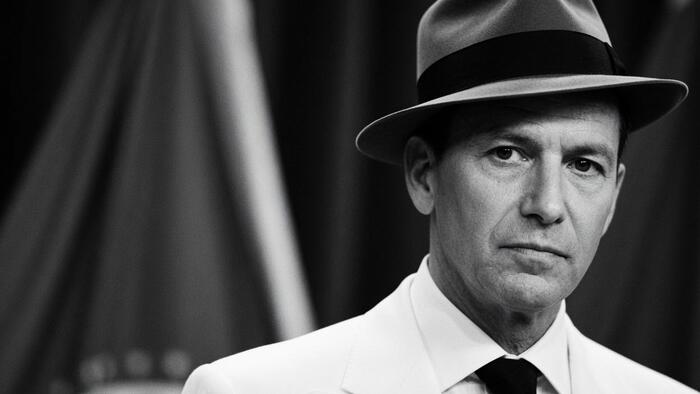
Let’s be Frank: the central banker pow-wow at Sintra had a touch of Sinatra. Fed Chair Warsh belted out “I’ll do it MYYYYYY way,” and everyone else chimed in that they’d had a few regrets about how they’ve run monetary policy and were coincidentally now mentioning them.
Markets swooned when Warsh stated the case for Fed independence and that anyone expecting tolerance for inflation above 2% “would be disappointed.”
Yet he also sang with an AI autotune. While the current “AI shock” is driving a boom in capex, i.e., the inflation he said he will fight, this will eventually expand the supply side through higher productivity, a shift with “huge implications for monetary policy.” In other words, “we’ve all looked around, and we’ve seen that prices are too high,” but he can fight it by saying it will eventually become deflation. (That would logically hold true for tariffs; and wars in the Middle East – if you win them.)
Warsh really will do things his way. He said central banking needs structural adaptation and must move away from forward guidance towards “framework guidance,” with “contemporaneous real-time” big data/AI monitoring to capture what’s going on --not backwards-looking, inaccurate analogue surveys the equivalent of vinyl-- within 9–12 months. This will also include new measures of inflation: are they going to be lower or higher than the current ones based on the heuristic in how they have always been changed so far?
He also wants central bankers to go on tour less. He rejected heavy reliance on “conventional wisdom” or detailed predictive guidance, i.e., a data calendar filled with central bankers talking.
This implies the Wall Street-analyst Brat Pack may soon be out of the picture. What’s a generation of macro-commentary scribblers pushing “X said Y”, or “Survey X was up Z vs consensus of Y, and we guess next month will be A” going to do with nothing to report on? Indeed, if we have omerta and a (transparent?) set of accurate real-time economic indicators, what role is there for macrostrategy? More chatter to fill the space? A meta-approach, i.e., seeing differences between a Kalecki or Minsky view of political economy vs. the neoclassical, as such fundamental questions re-emerge; or, given other economies won’t have the same data quality or timeliness, linking up with what’s going on abroad?
It may also imply that Wall Street itself will not be a Warsh fan. He is no fan of QE and the Fed’s large balance sheet: what if we see deregulation aimed at incentivizing banks to lend into productive capital like factories or infrastructure rather than holding financial assets?
Warsh is perhaps already getting others to do it his way. The ECB’s Lagarde spoke of going “back to basics,” abandoning heavy reliance on unconventional tools and complex forward guidance in favour of simpler frameworks. The BoE’s Bailey voiced regret over past forward guidance practices and aligned with the broader retreat from detailed predictive signalling. The BoC’s Macklem didn’t push back either, and multiple reports note a widespread “open-mindedness” among Sintra attendees on AI and productivity too.
Let me say this not in a shy way, things are changing far more than a “Warsh wants inflation back below 2%” headline captures.
Meanwhile, the brief US Operation Freedom to get Hormuz oil flowing before the US-Iran MoU was reportedly shot down by Saudi Arabia: Riyadh refused to allow the US to use its bases or airspace, to which the US threatened to not shoot down incoming drones or missiles – and is reportedly considering moving bases elsewhere in the region – like Israel(?) Which Iran is again threatening today in tit-for-tat rhetoric.
We had more ‘positive’ talks in Qatar. Both sides reportedly still want the ‘peacefire’ to hold for now, as we expected, as the US tries to convince Iran to look at the ‘bigger picture’ and not insist on control of Hormuz or tolls. However, the US also said Iran will not get any frozen assets until it fulfils the MoU, which Iran puts the other way round, as Tehran claims it will use that cash in Qatar to buy “required goods” while the US says it will be held in escrow and used to buy US products. Meanwhile, VP Vance made clear the MoU is an opportunity to refuel, then see if more war is required (our base case), as Lebanon and Syria, a former Iranian proxy now flipped, joined a CENTCOM-led Middle East security dialogue for first time, and Iraq’s PM gave pro-Iranian militias a 30 September deadline to disarm.
Ukraine will allow weapons exports for first time since start of the war; Germany charged a Ukrainian suspect in the Nord Stream sabotage case; Russia and Crimea are grappling with fuel shortages and blackouts as Zelenskyy warned of further massive Russian strikes planned for Ukraine; the US NATO envoy has warned some allies are ‘lagging’ on their spending; the UK’s defence black hole just tripled to £15bn; Germany is proposing to make US weapons; and US defence startups are raiding the auto and fracking sectors for parts to speed weapons output.
In frenetic geoeconomics, the US opted not to renew the USMCA, so it rolls annually towards a 10-year death unless reworked into Fortress Americas; Canada joined Europe – its song contest that is, alongside Australia; Politico says ‘Europe wants to save its industry. It still can’t agree how’, as the EU imposed a €3 fee on small packages from abroad and reduced steel quotas while raising tariffs; the Supreme Court ruling on independent agencies and regulators is reportedly seeing Europe think again about the €1.7 trillion data deal it signed with the US; the White House is accelerating its plans for AI model standards; the US nuclear power regulator is proposing changing rules that protect people from radiation, as Brussels will bend its budget rules to allow countries to borrow more for EVs, bike lanes, and train stations; and the EU-Mercosur trade deal is sparking a quota tug-of-war as LatAm countries can't agree on how to divide it up.
In equally frenetic politics, democratic socialists continue to win US electoral primaries, seeing Trump warn about the return of communism: while hyperbole to European ears, that’s easily matched by many statements made by new figures on the US far left (and right). It also underlines that there’s no longer a US Overton Window - indeed, following the Supreme Court ruling on birthright citizenship, the Trump plan B is reportedly ‘No expectant moms at the border’; November’s midterms could be wild, and November 2028’s election’s far more so - and Europe and Australia are far from immune.
As such, central banks need to get things right – or talk about ‘revolution’ may not be hyperbole. As the tears subside, there isn’t a lot to find amusing in all this; or bemusing - we are being told by the Establishment that things need to, and will be, done differently ahead, like it or not. And that includes central banking and how one analyses what they are doing and why.
Let the record show I took the blows in trying to flag this well in advance, and I did it my way.
Related Markets
All MarketsMarket data may be delayed. Not financial advice.
Powered by Gab AI
The Story At A Glance
Reading this article now — analysis appears below
💡 AI analysis provides alternative perspectives on current events



