Independence Week
The short version
- In the same ruling, the court overturned a nine-decades-old precedent to allow the US president more freedom to fire the heads of federal agencies at will.
- The justices did acknowledge that the Fed is a special case, and that the president’s power to fire a governor “for cause” was deliberately enacted by Congress to prevent that…
- And, the justices concluded, the burden of proof is not a low bar; since independence is key to the Federal Reserve’s design…
- So, the legal disputes will continue over what constitutes “for cause.” Bloomberg reports that the Trump administration is “ doubling down ” on their efforts to reshape the…
- But the next line of the chorus was a bit more difficult for some of the panellists to sing along with. “All the [govvies], making money…
The story
By Bas van Geffen, Senior Macro Strategist at Rabobank
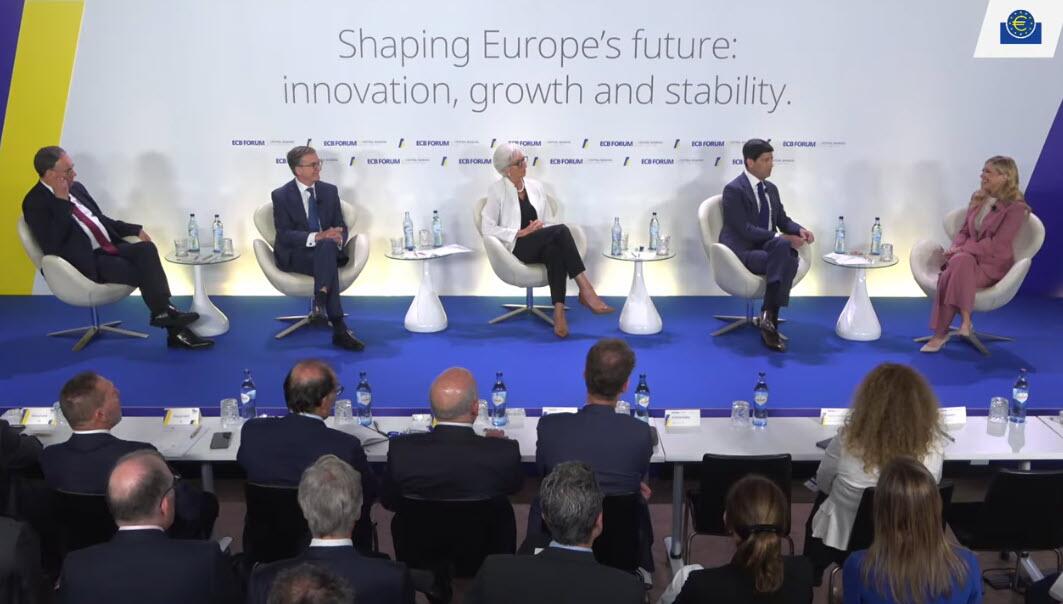
It was a reassuring week for those who are concerned about central bank independence. At the ECB’s annual conference in Sintra, moderator Sarah Eisen channeled a bit of her inner Beyoncé, asking a panel of central bank heads “To all you [bankers], who are independent, throw your hands up at me.” All four policymakers, including Fed Chairman Warsh, confirmed the importance of central bank independence: “The Fed acted independently before the Supreme Court ruling, and the Fed will continue to do so after the ruling.”
The Supreme Court kept the FOMC’s Cook in her seat for now, pending “due process.” However, that does not bar Trump from continuing to try to fire her. In the same ruling, the court overturned a nine-decades-old precedent to allow the US president more freedom to fire the heads of federal agencies at will.
The justices did acknowledge that the Fed is a special case, and that the president’s power to fire a governor “for cause” was deliberately enacted by Congress to prevent that governors only serve at the president’s pleasure. And, the justices concluded, the burden of proof is not a low bar; since independence is key to the Federal Reserve’s design, they argue that “for cause” should be a substantial threshold.
So, the legal disputes will continue over what constitutes “for cause.” Bloomberg reports that the Trump administration is “doubling down” on their efforts to reshape the central bank, as Trump seeks to place more allies in the FOMC.
But the next line of the chorus was a bit more difficult for some of the panellists to sing along with. “All the [govvies], making money, throw your hands up at me” seems to have struck a nerve with the ECB’s Governing Council.
From the sidelines of the Sintra conference, Reuters reported that the central bank is considering increasing the minimum reserve requirement for banks from 1% to 2%. Tweaking the policy stance does not appear to be the reason. From a monetary policy perspective, the minimum reserve requirement is not a very potent instrument. Instead, it appears to be a cost consideration.
It wouldn’t be the first time that this is discussed. In 2023, policymakers changed the remuneration of banks’ minimum reserves – also motivated by some quick cost savings. Today, the ECB still pays more interest on the excess reserves that banks have deposited with the ECB than the central bank earns on the assets in its QE portfolios.
The result is negative net interest income, and various national central banks have thus been lossmaking in the past couple of years. That’s not an immediate problem for the central bank, but the ECB is certainly mindful of the optics and the political sensitivity. Last month’s decision to hike the policy rate by 25 basis points adds new impetus to that discussion.
At Sintra, Warsh also reiterated his aversion against forward guidance. The Fed chair refused to comment on the implications of economic data releases, or even which data series he prefers. But that doesn’t stop the market from drawing their own conclusions. On that note, US non-farm payroll growth disappointed. Companies added only 57,000 new jobs in June, and the 172,000 print for May was revised down to a much more moderate 129,000.
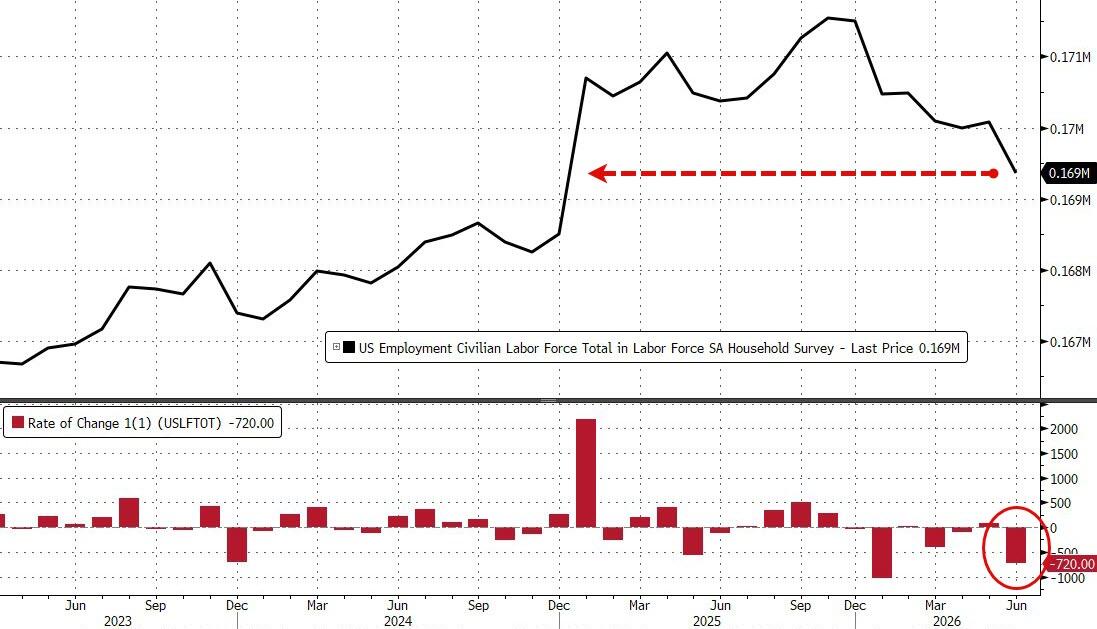
The employment statistics weren’t any better. The unemployment rate declined to 4.2% from 4.3%, but that was due to a large decline in the labor force. The fall in participation even outpaced the large decline in household employment. So, both the establishment survey and the household survey painted a picture of a weak labour market in June.
As a result, US money markets pared back their pricing of Fed rate hikes somewhat. That may also have given some new support to equities. Renewed AI-optimism also helps. The South-Korean Kospi index leads the charge, which appears to be led by Samsung Electronics. The company is up 8% after reportedly securing an order from Anthropic for customized AI chips.
Turning to geopolitics, negotiations between the US and Iran in Qatar have concluded, without much hiccups. The Washington Post reports that US officials feared that Israel might try to assassinate Iran’s negotiating team during the talks. So much so, that they even sent warning to Tehran. Similar risks may resurface as Iran holds the funeral ceremony for Khamenei. Iran warned both the US and Israel to refrain from attacks during the days of mourning.
Following the talks, President Trump told CNBC that Iran “agreed to just about everything we need.” Yet, reality still seems to be different. The US maintains that Iran will not get any frozen assets until it fulfills its part of the memorandum of understanding. Iran, meanwhile, is still demanding the reverse order of these events. And then there’s the issue of Hormuz tolls – or fees. The US insists that Iran does not impose any control or toll, but several European leaders have reportedly accepted the reality that some fees are unavoidable now.
Related Markets
All MarketsMarket data may be delayed. Not financial advice.
Powered by Gab AI
The Story At A Glance
Reading this article now — analysis appears below
💡 AI analysis provides alternative perspectives on current events