Alibaba Bans Employees From Using Anthropic's Coding Tool Over Distillation Scandal
The short version
- The ban is part of a deepening spat between the two companies after Anthropic accused Alibaba of illicitly extracting its Claude AI model capabilities - a dispute that highlights…
- Claude Code is Anthropic's AI coding assistant for software developers, and has become popular among programmers in China despite Anthropic's restrictions on access by users and…
- To avoid further escalation of the distillation scandal, Reuters says that Alibaba employees were being told to use the company's own coding platform Qoder.
- As we reported at the time , in late June Anthropic said that it had suffered a strike by Alibaba, which it described as a "distillation" effort that involves training a less…
- The distillation helps accelerate China's ability to reach Anthropic's advanced Mythos Preview capabilities, the company alleged in a letter sent to two U.S. senators.
The story
While in the US, the government's periodic bans of the latest model from Anthropic (which has made AI doomerism - in hopes of getting the government to regulate everyone else expect Anthropic, yet repeatedly achieving just the opposite - into an art form) has been all the rage in recent months, in China it is the other way around, with China's tech giant Alibaba banning employees from using Anthropic's Claude Code at work after the tool drew scrutiny for features that can help identify China-linked users, Reuters reported.
The ban is part of a deepening spat between the two companies after Anthropic accused Alibaba of illicitly extracting its Claude AI model capabilities - a dispute that highlights the frantic race between the U.S. and China to take the lead in artificial intelligence.
Claude Code is Anthropic's AI coding assistant for software developers, and has become popular among programmers in China despite Anthropic's restrictions on access by users and entities in China.
To avoid further escalation of the distillation scandal, Reuters says that Alibaba employees were being told to use the company's own coding platform Qoder.
As we reported at the time, in late June Anthropic said that it had suffered a strike by Alibaba, which it described as a "distillation" effort that involves training a less capable model on the outputs of a stronger one.
The distillation helps accelerate China's ability to reach Anthropic's advanced Mythos Preview capabilities, the company alleged in a letter sent to two U.S. senators.
Alibaba's ban comes just days after developers said Claude Code contained mechanisms that inspected user environments, including timezone and proxy-related information, and inserted subtle markers into prompts sent to Anthropic's servers.
An Anthropic employee wrote on Tuesday on X that the feature was "an experiment we launched in March" intended to prevent account abuse by unauthorized resellers and protect against model distillation.
The person who spoke to Reuters about Alibaba's ban said that Anthropic's restrictions targeting China were difficult to enforce on individual users who can deploy servers in the United States and make traffic appear as if it originated there. But companies were now more aware of legal and compliance risks.
As US AI model developers seek to prevent unauthorized access, resale and distillation of their systems, Chinese cloud and AI firms have shifted toward domestic and open-source models such as DeepSeek, Alibaba's ?Qwen, Moonshot and Zhipu.
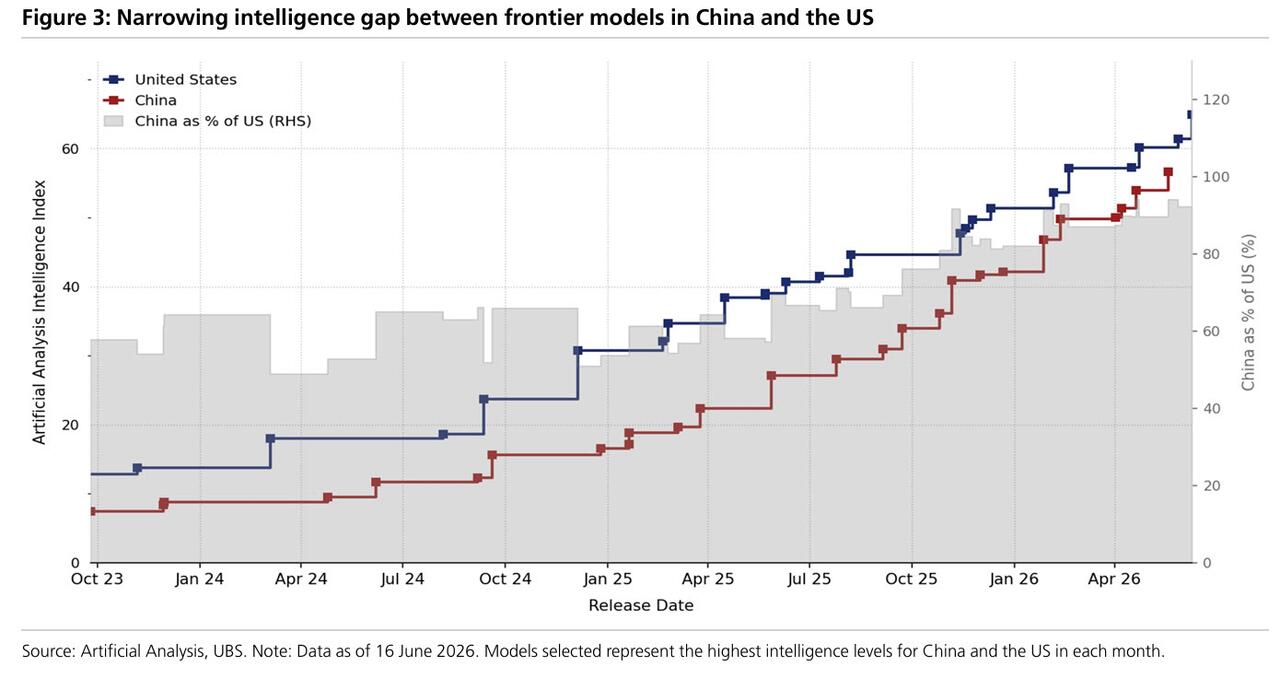
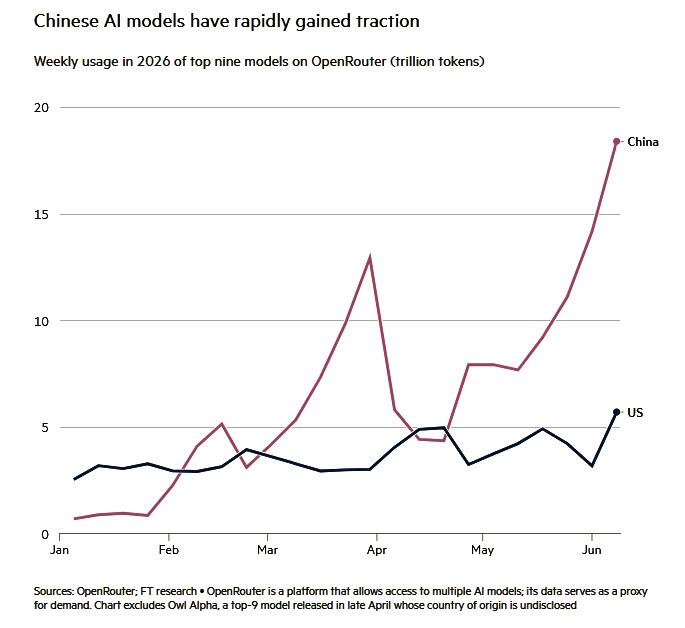
At the same time, Chinese AI models are making inroads in the U.S. market — a development that sparked concern among some U.S. industry experts, since China's models are about 90% cheaper yet perform just fractionally worse than the latest US frontier models.
We discussed this extensively in one of our flagship reports, "Answering The "Trillion Dollar Question": Are China's AI Models A Better Value Than US Models."
The answer, judging by the rapid token transition to China, is a resounding yes.
Related Markets
All MarketsMarket data may be delayed. Not financial advice.
How other outlets covered this
Compare allAlto found this story at 2 outlets. Same event, different framing — compare the headlines.
How this story developed
Full timelineAlto has tracked this across 3 days of coverage from 2 outlets.
- Alibaba Bans Employees From Using Anthropic's Coding Tool Over Distillation ScandalYou are here
Powered by Gab AI
The Story At A Glance
Reading this article now — analysis appears below
💡 AI analysis provides alternative perspectives on current events