Tracking The Caribbean Super Yacht Migration
The short version
- As tropical activity risks rise across the Atlantic basin, some owners and charter fleets have shifted pleasure yachts and sailboats toward the Mediterranean…
- Ship-tracking and maritime intelligence platform MarineTraffic tracked the great migration of superyachts, including 2,156 departures of pleasure craft and sailing vessels from…
- Of these, 161 showed a clear signal for an Atlantic, European, or Mediterranean route.
- The departure side is concentrated in a handful of familiar yachting hubs.
- Martinique led with 48 movements (29.8%), followed by Antigua with 37 (23.0%), Saint-Martin with 23 (14.3%), Guadeloupe with 17 (10.6%), and the U.S.
The story
The superyacht season across the Caribbean and the Gulf of America has shifted into the off-season, with hurricane season now roughly a month in. As tropical activity risks rise across the Atlantic basin, some owners and charter fleets have shifted pleasure yachts and sailboats toward the Mediterranean, where the summer season is now in full swing.
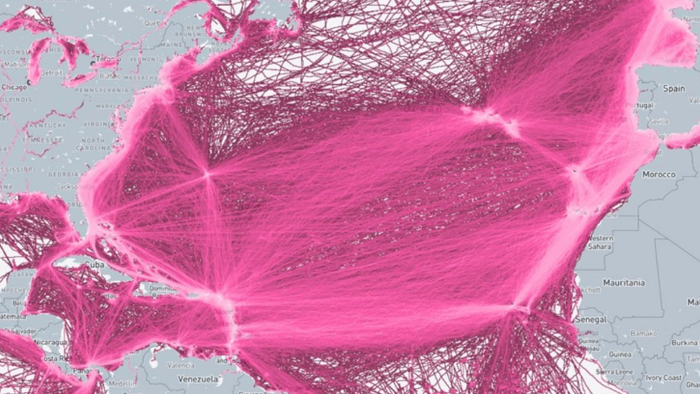
Ship-tracking and maritime intelligence platform MarineTraffic tracked the great migration of superyachts, including 2,156 departures of pleasure craft and sailing vessels from top Caribbean hubs between March and June. Of these, 161 showed a clear signal for an Atlantic, European, or Mediterranean route.
Out of 2,156 pleasure craft and sailing vessel departures recorded between March and June 2026 from Barbados, Guadeloupe, Martinique, the US Virgin Islands, St Barths, Antigua, the British Virgin Islands, and St Martin / St Kitts / St Lucia, 161 movements showed a clear Atlantic, European or Mediterranean route signal.
The departure side is concentrated in a handful of familiar yachting hubs. Martinique led with 48 movements (29.8%), followed by Antigua with 37 (23.0%), Saint-Martin with 23 (14.3%), Guadeloupe with 17 (10.6%), and the U.S. Virgin Islands with 14 (8.7%). At port level, Le Marin stood out as the main starting point.
MarineTraffic described the journey to Europe as less of a direct sprint and more of a staged migration:
The journey is rarely direct. Many vessels cross the Atlantic in stages, using Bermuda and the Azores as natural waypoints before continuing toward southern Europe and the western Mediterranean. Horta is the main mid-Atlantic stop, accounting for 28 vessels, followed by St George's, Bermuda with 9, and Ponta Delgada with 3, reflecting the classic Caribbean–Azores–Europe crossing pattern. Once in European waters, vessels fan out toward key Mediterranean yachting hubs, led by Palma de Mallorca with 12 vessels, followed by smaller flows into Barcelona, Genoa, Ibiza, Monaco and Tivat.
The timing underlines the seasonal nature of the migration. May was the busiest month, accounting for 73 of the 161 movements (45.3%), ahead of April (33), June (32) and March (23). The fleet is dominated by sailing vessels, which account for 109 movements (67.7%), while pleasure craft represent 52 (32.3%). In the clearest crossing records, vessels had already travelled an average of around 2,700 nautical miles at roughly 6.6 knots, with some Caribbean-to-Palma routes extending to around 3,680 nautical miles.
The journey of pleasure craft from the Caribbean to the Mediterranean
— MarineTraffic (@MarineTraffic) July 2, 2026
As the Caribbean winter season gives way to the Mediterranean summer, pleasure craft begin one of the most visible seasonal repositioning patterns at sea. Using #MarineTraffic data, we can trace how these… pic.twitter.com/oQoGr1HhUp
The Atlantic hurricane season ends at the end of November and December is typically when superyachts begin returning to the Caribbean and Gulf of America for the holiday rush. That marks the start of the Caribbean's prime time charter window, with peak Caribbean yachting season running through April as owners and charter fleets shift back from the Mediterranean.
Related Markets
All MarketsMarket data may be delayed. Not financial advice.
Powered by Gab AI
The Story At A Glance
Reading this article now — analysis appears below
💡 AI analysis provides alternative perspectives on current events



