Iran To Grant China, 'Friendly' Countries 'Special Consideration' On Hormuz Fees
The short version
- "As a country where the Hormuz is part of its territorial waters, we will definitely charge service fees ," Fazli said.
- However, the fee would not be a "toll," he added, as tolls are considered illegal under international maritime law.
- Instead, the fees would be for security and administration.
- "These new arrangements will be concerning guaranteeing the security of passage through the Straits of Hormuz…
- Iran's NourNews agency quoted the ambassador as saying that "special considerations" would be applied to China and other friendly nations when determining the level and type of…
The story
Iran's ambassador to China stated on Saturday that the Islamic Republic would impose service fees on vessels transiting the Strait of Hormuz, but that China and other "friendly" countries would be granted "special considerations."
During a speech at the World Peace Forum in Beijing on Saturday, Iranian Ambassador Abdolreza Rahmani Fazli affirmed that Iran was working in "collaboration and cooperation" with Oman on "new arrangements" for the strait.
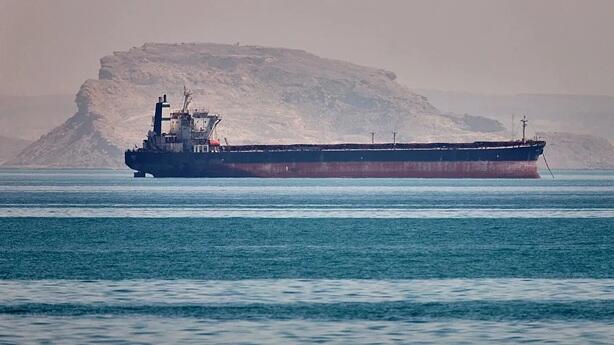
Ships passing through Hormuz, through which one-fifth of the world's oil exports moved before the US-Israeli war on Iran, must travel along Iranian territory to the north and Omani territory to the south.
"As a country where the Hormuz is part of its territorial waters, we will definitely charge service fees," Fazli said. However, the fee would not be a "toll," he added, as tolls are considered illegal under international maritime law. Instead, the fees would be for security and administration.
"These new arrangements will be concerning guaranteeing the security of passage through the Straits of Hormuz, supervision of the passage of the vessels … and also guaranteeing and dealing with the environmental consequences of the massive number of ships," he stated.
Iran's NourNews agency quoted the ambassador as saying that "special considerations" would be applied to China and other friendly nations when determining the level and type of service fees charged for their vessels.
Beijing began importing large amounts of Iranian crude in the early 1990s as China industrialized and sought new energy sources to shift away from coal.
Beijing's purchases typically account for roughly 90 percent of Iran's oil exports, providing tens of billions of dollars in annual revenue that support Iran's government and military. To bypass US economic sanctions, much of the oil is transported using trans-shipment hubs and a shadow tanker fleet to obscure its origins.
The Strait of Hormuz was closed by Iran after the US and Israel launched an unprovoked war on the Islamic Republic on February 28.
In April, as energy prices soared, the US responded by imposing a naval blockade on Iran's southern ports to attempt to halt Iranian oil exports.
The Memorandum of Understanding (MoU) signed by Iran and the United States on June 15 to halt hostilities stipulated that commercial ships would be allowed to transit through the Strait of Hormuz free of charge for 60 days. Fazli added that new arrangements regarding Hormuz would be made in cooperation with Oman.
Last month, Oman proposed that ships transit the strait via a new southern route close to its coast and a new northern route along Iran's coast, while the central route through the strait is de-mined. Omani officials worked with the UN's International Maritime Organization (IMO) to develop the plans.
However, Iran rejected plans for the southern route, which would have been overseen by the US, saying it would violate Clause 5 of the MoU.
On Thursday, Iranian forces attacked a Singaporean ship attempting to pass through the southern Omani route, causing the IMO to abandon the effort.
The last 24 hours in the Strait of Hormuz are a doozy.
— HFI Research (@HFI_Research) July 5, 2026
At the start of the clip, you will see many of the vessels that were going through the Oman route take the Iran route instead.
Now there's something I should probably point out. In the last week or so, US escorts through… pic.twitter.com/rK1iKRtrYm
On Friday, Iranian Parliament Speaker Mohammad Bagher Ghalibaf announced Iran and Oman had reached an agreement on the joint management and regulation of traffic in the Strait of Hormuz.
Tehran has repeatedly vowed that the strait will not return to its pre-war status despite an illegal US blockade on its ports and attempts to undermine Iranian control of the waterway.
"Hormuz is defined under Iran's command, not CENTCOM," Iranian Deputy Foreign Minister and top negotiator Kazem Gharibabadi said in a statement on July 2nd.
Related Markets
All MarketsMarket data may be delayed. Not financial advice.
Powered by Gab AI
The Story At A Glance
Reading this article now — analysis appears below
💡 AI analysis provides alternative perspectives on current events