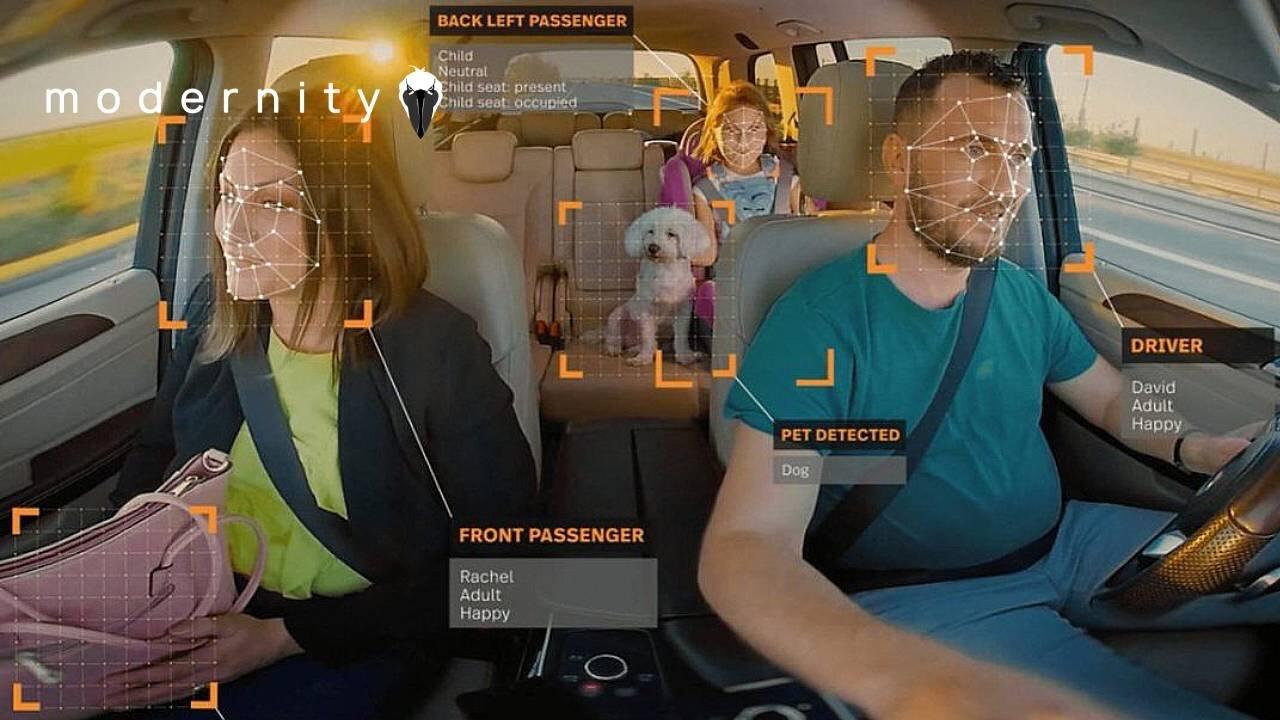
EU Mandates Dystopian In-Car Cameras To Monitor Every Driver's Face
The short version
- Every brand-new passenger car, van, truck, and bus sold or first registered across the bloc must now carry interior-facing cameras that track the driver's gaze, head movements…
- The system, called Advanced Driver Distraction Warning or ADDW, forms part of the final phase of the updated 'General Safety Regulation' for all vehicles.
- The compulsory hardware activates at low speeds and tightens requirements as velocity increases, issuing escalating visual, acoustic…
- BREAKING: The EU today introduced the new requirement for all new cars registered in Europe to have installed cameras filming the driver's face.
- The system is called Advanced Driver Distraction Warning, ADDW, and is part of the EU's General Safety Regulation.
The story
Authored by Steve Watson via Modernity News,
The European Union has made it official. Every brand-new passenger car, van, truck, and bus sold or first registered across the bloc must now carry interior-facing cameras that track the driver's gaze, head movements, and attention levels.
The system, called Advanced Driver Distraction Warning or ADDW, forms part of the final phase of the updated 'General Safety Regulation' for all vehicles.
The compulsory hardware activates at low speeds and tightens requirements as velocity increases, issuing escalating visual, acoustic, or haptic warnings when the driver looks away for too long.
BREAKING:
— Visegrád 24 (@visegrad24) July 7, 2026
The EU today introduced the new requirement for all new cars registered in Europe to have installed cameras filming the driver's face.
The system is called Advanced Driver Distraction Warning, ADDW, and is part of the EU's General Safety Regulation.
The camera tracks... pic.twitter.com/oqnWXuz0ir
Proponents frame it as life-saving technology that keeps eyes on the road. Skeptics see installed cameras and sensors as the foundation for far broader monitoring once the infrastructure exists in every vehicle on the continent.
The European Commission promoted the rollout this week.
?Advanced emergency brake detecting pedestrians and cyclists
— European Commission (@EU_Commission) July 5, 2026
?Advanced driver distraction warning system
?Better forward vision
?New tests for worn tyres
?Expanded safety glass area designed to protect pedestrians during accidents pic.twitter.com/fv4YUekxG6
A detailed thread from an observer on the ground captured the full scope and the quiet expansion of capabilities already underway.
It is getting worse by the day.
— Keira Connolly (@keira_con) July 7, 2026
As of 7 July 2026, the final phase of the EU's updated General Safety Regulation (GSR 2) has taken effect. The transitional rollout period has ended, meaning Advanced Driver Distraction Warning (ADDW) systems are now mandatory in every brand-new... pic.twitter.com/kG1Fvjbbgg
ADDW relies on camera-based monitoring of eye position, head orientation, and gaze direction. It divides the driver's field of view into defined zones and flags prolonged focus on non-forward areas.
At speeds of 50 km/h or above, a continuous gaze into the "distraction" zone for more than 3.5 seconds triggers a warning. At 20 km/h or higher, the threshold stretches to 6 seconds before intervention begins. Warnings intensify until the driver returns attention to the road.
The regulation also mandates an Event Data Recorder - essentially a vehicle black box - that captures speed, braking, steering inputs, and other telemetry in the event of a collision.
Current rules state the distraction cameras must operate without biometric identification or facial recognition of occupants and must function as a closed-loop system that retains only data necessary for immediate operation. No video is supposed to leave the vehicle for authorities under the present framework.
Even industry voices celebrating the mandate acknowledge its wider significance. Martin Krantz, CEO and Founder of Smart Eye, a company specializing in driver-monitoring technology, called July 7 "a landmark day for road safety in Europe" and stated that "driver monitoring is now a required part of vehicle safety across Europe." He added that the regulation "will set a precedent for other parts of the world."
This European passenger-car mandate extends monitoring logic already advancing in commercial vehicles on both sides of the Atlantic.
Earlier this year, reports detailed Ford patents for in-cab systems that deploy AI to scan faces, read lips via interior cameras and machine-learning datasets, detect emotional states, and query police databases in real time before permitting the truck to shift out of park.
The technology can block movement if sensors interpret panic, enlarged eyes, or other flagged conditions as rendering the driver unfit - even in an emergency scenario where quick action might otherwise be required.
Lip-reading capabilities extend to noisy environments using additional inaudible sound-wave analysis, while existing Ford Pro Telematics already streams live cabin video to fleet managers.
These features sit alongside broader federal pushes for impaired-driving prevention technology and state-level efforts to ration vehicle miles traveled.
Federal infrastructure rules have also embedded timelines for impaired-driving prevention technology that can include kill-switch capabilities.
The pattern connects directly to proposals that would limit how far citizens can drive their own cars under climate or congestion pretexts.
In both the truck patents and the EU rules now live, the justification remains identical: safety. The hardware - cameras, sensors, data recorders - creates the permanent capacity for escalation.
Software updates, regulatory expansions, or integration with digital identity systems could transform today's "warning only" cameras into tomorrow's behavior scorers, usage trackers, or remote intervention tools.
Regulators insist the systems avoid biometric processing and external data transmission. Manufacturers must design for minimal false positives across lighting and weather conditions, and drivers may retain some ability to deactivate warnings or the full system depending on the vehicle maker's implementation.
Yet real-world feedback from early adopters already in vehicles with similar driver-monitoring features describes repeated false alerts, difficulty disabling the systems permanently, and the unsettling sensation of constant observation inside what was once private space.
Critics note that once cameras and processors sit inside millions of vehicles, the temptation to expand their role grows. Detecting phone use, enforcing seat-belt compliance, flagging speeding, or feeding data into insurance algorithms requires only software changes or new regulatory layers.
The Event Data Recorder already creates a forensic record of driving behavior. Combined with facial and gaze tracking, the foundation for individualized mobility scoring sits ready.
Each measure arrives wrapped in safety or environmental language. Each installs or enables hardware and data pathways that reduce the automobile from personal property to a conditionally licensed device subject to external oversight.
The through-line is unmistakable. Governments and aligned corporations are systematically converting the act of driving into a monitored, recorded, and potentially rationed activity.
Older vehicles without these systems become the last refuges of untracked mobility - precisely why enthusiasts already recommend acquiring pre-mandate models while they remain available and repairable.
Automobiles once represented escape, independence, and the open road. The new normal replaces that with cabin cameras that never blink, black boxes that never forget, and regulatory frameworks that can tighten without new legislation simply by updating software or "safety" standards.
The EU's ADDW mandate, the Ford truck patents, and the Massachusetts driving-limit proposals all serve the same underlying project: conditioning personal movement on algorithmic approval and constant data surrender.
The cameras are watching now. The question is whether free people will continue to look away.
Your support is crucial in helping us defeat mass censorship. Please consider donating via Locals or check out our unique merch. Follow us on X @ModernityNews.
Related Markets
All MarketsMarket data may be delayed. Not financial advice.
How this story developed
Full timelineAlto has tracked this across 2 days of coverage from 1 outlet.
- EU Mandates Dystopian In-Car Cameras To Monitor Every Driver's FaceYou are here
Powered by Gab AI
The Story At A Glance
Reading this article now — analysis appears below
💡 AI analysis provides alternative perspectives on current events