Inside The Race To Fix America's Gas Pipelines Amid AI Center Boom
The short version
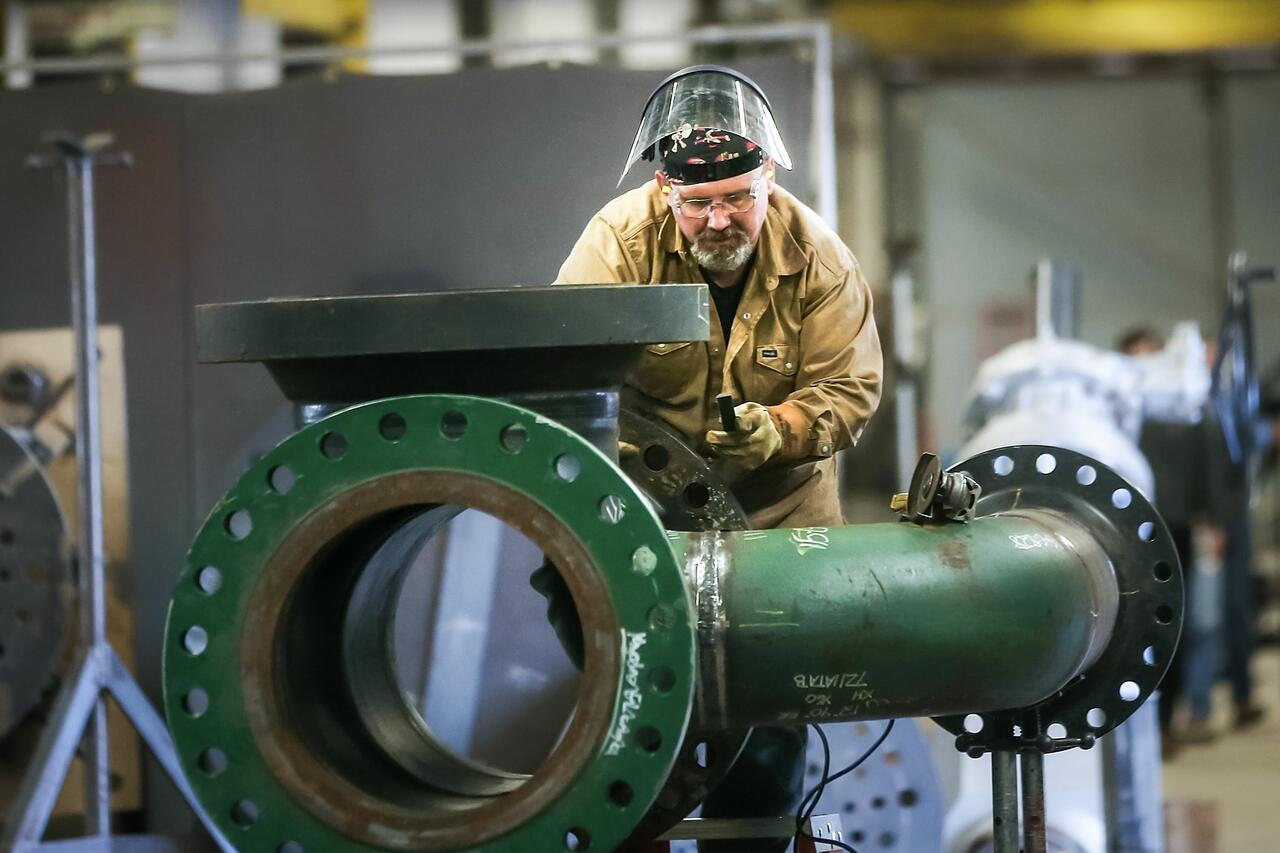
- A worker on the production floor at Pioneer Pipe in Marietta, Ohio, on Oct. 25, 2016.
- Replacing aging gas pipelines is critical to preventing leaks, spills, and explosions.
- Spencer Platt/Getty Images Meanwhile, demand for electricity is growing faster than it has in years.
- Data centers accounted for 50 percent of that demand growth in 2025 , according to the International Energy Agency.
- Enlarging the support network for ramped-up natural gas production involves far more than installing and replacing pipes.
The story
Authored by Autumn Spredemann via The Epoch Times,
Beneath the hills of Appalachia lies the nation's largest natural gas-producing basin, yet many of the pipelines needed to move this vital resource are operating near capacity.
Meanwhile, demand for electricity is growing faster than it has in years. Data centers accounted for 50 percent of that demand growth in 2025, according to the International Energy Agency.
In the famous "Data Center Alley" of northern Virginia, energy giant Williams Companies is expanding its Transco natural gas pipeline system, while developers are proposing to build gas-fired power plants adjacent to data centers to bypass traditional grid interconnections, according to Global Energy Monitor.
Enlarging the support network for ramped-up natural gas production involves far more than installing and replacing pipes. Systems require stations that maintain the pressure to move gas over hundreds of miles, through processing plants, storage facilities, and metering stations. They also require connections to power plants, factories, export terminals, and local distribution networks.
Industry experts say this infrastructure network must continue modernizing to improve reliability and reduce supply bottlenecks.
"We need to build an awful lot more [natural gas] infrastructure, potentially 25 percent more than we currently have," Henry Froats, owner of Hydrotech Testing Services, told The Epoch Times.
"Areas with aging infrastructure will be replaced and upgraded, but the real need is expanding total capacity to handle electricity generation demand and data center growth over the next 25 years."
Ian McPhillips, director of energy engineering and principal at BL Companies, explained it's not just the total annual consumption that's increasing. The fact that the majority of that increase is driven by power generation makes it tricky.
"Generation facilities are being built around the entire country to keep up with electric demand, and if those plants are using gas that would otherwise be heading to the population centers in the Northeast, significant changes will be needed to provide gas to generators during periods of cold weather when firm gas supplies are committed to the space heating markets," he told The Epoch Times.
Demand Surge
Natural gas accounts for 39 percent of American electricity production, according to the Energy Information Administration (EIA).
"Natural gas supply is critical as we forecast that U.S. liquefied natural gas exports expand and electricity demand rises through 2027, driven largely by increasing demand from large computing facilities, including data centers," EIA Administrator Tristan Abbey said in a January press release.
In May, the EIA reported that project developers plan to add 44.9 billion cubic feet per day of new natural gas pipeline capacity, which should come online in 2026 and 2027. Most of this expansion will be in Texas, and 70 percent of this new capacity is already under construction.
The timing is significant. After years of relatively stable electricity demand, utilities are preparing for sustained growth driven by data center expansion, domestic power generation, and a growing export sector for natural and liquid natural gas, the EIA said.
The agency reported that America's natural gas exports will grow by 30 percent by 2027. At the same time, five liquid natural gas export development projects are ramping up production through the end of next year.
Power generation has also risen alongside record-high electricity consumption in the United States. This number grew from 4,195 billion kilowatt-hours in 2025 to 4,271 billion kWh in 2026 and is forcasted to reach 4,397 billion kWh in 2027.
An analysis by the Interstate Natural Gas Association of America Foundation found that the United States needs to add around 34,000 miles of new natural gas pipeline and increase transmission capacity by 39 percent by 2052.
While demand for natural gas continues to climb, expanding the infrastructure needed to supply that growth presents a different challenge.
Aging Infrastructure
Existing natural gas infrastructure is showing its age, and rising costs are making both expansion and proactive maintenance difficult.
According to the Department of Transportation, bare steel, cast iron, and wrought iron transport pipes are some of the oldest energy-related pipelines operating in the United States today. Many were installed more than 60 years ago.
Scott Schwandt, president and infrastructure systems expert at Gajeske, told The Epoch Times that many of these older metal pipe systems "are becoming increasingly exposed to spills, resulting in severe threats and significant environmental damage."
Schwandt believes it's paramount to identify and replace decades-old piping with more advanced high-density polyethylene (HDPE) material, which could reduce distribution leaks at pipe joints and require "substantially lower" levels of routine maintenance.
How other outlets covered this
Compare allAlto found this story at 2 outlets. Same event, different framing — compare the headlines.
How this story developed
Full timelineAlto has tracked this across 7 days of coverage from 2 outlets.
- Inside The Race To Fix America's Gas Pipelines Amid AI Center BoomYou are here
Powered by Gab AI
The Story At A Glance
Reading this article now — analysis appears below
💡 AI analysis provides alternative perspectives on current events