Something Big?

The short version
- By Elwin de Groot, head of macro strategy at Rabobank Icelanders voted “no” to reopening EU membership talks in a referendum over the weekend…
- Against a backdrop of uncertainty over global trade and geopolitical ructions – including the Greenland crisis at the turn of the year – one intriguing conclusion is that the vote…
- Iceland has no military and relies on its NATO allies for defense.
- Yet it already enjoys good trade relations with the EU, while some voters feared that membership would leave its large fishing industry vulnerable to EU policies.
- At the same time, Europe’s recent inability to project geopolitical power convincingly and collectively probably did not help sway voters towards the “yes” camp.
The story
By Elwin de Groot, head of macro strategy at Rabobank
Icelanders voted “no” to reopening EU membership talks in a referendum over the weekend, albeit by the fairly narrow margin of 2.8 percentage points. Against a backdrop of uncertainty over global trade and geopolitical ructions – including the Greenland crisis at the turn of the year – one intriguing conclusion is that the vote appears to have been driven by economic interests rather than security concerns. Iceland has no military and relies on its NATO allies for defense. Yet it already enjoys good trade relations with the EU, while some voters feared that membership would leave its large fishing industry vulnerable to EU policies. At the same time, Europe’s recent inability to project geopolitical power convincingly and collectively probably did not help sway voters towards the “yes” camp. In a response, PM Frostadóttir said that negotiations with the EU would not continue and that “[…] something big has to change in the next 24 months for this [EU membership] to be at the top of the agenda.” Perhaps she had an ‘Iceland crisis’ in mind?
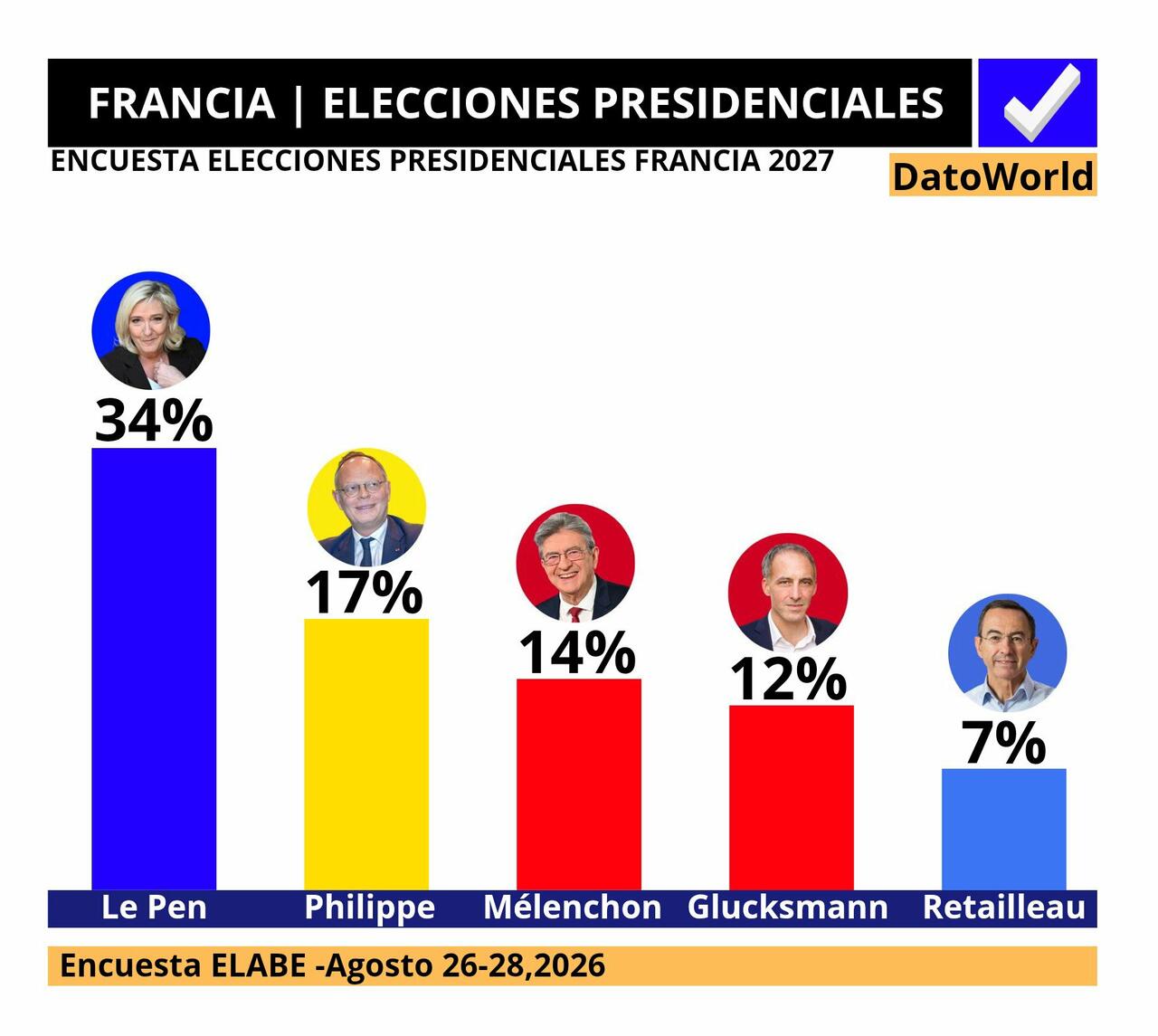
Staying with European politics, the latest Elabe presidential poll – conducted on 29-30 August 2026 for BFMTV and La Tribune Dimanche – unsurprisingly shows a highly fragmented French political landscape with one dominant feature: Marine Le Pen is the clear front-runner for the 2027 presidential election. Across the scenarios tested, Le Pen (RN) attracts 34% to 35.5% of first-round voting intentions, putting her well ahead of every rival. The contest for second place is much tighter. Édouard Philippe currently appears best placed, polling at around 47.5% against 52.5% for Le Pen. The poll also suggests that Mélenchon has lost momentum and may find it harder to reach the run-off, while social-democratic candidate Glucksman appears to be consolidating support on the centre-left. Most strikingly, Le Pen wins every run-off tested by Elabe: she is the overwhelming favorite to reach the second round and, on current projections, to win the presidency.
For investors worried about fiscal profligacy under a Mélenchon presidency, these probabilities – though they could still shift considerably with more than seven months to go – may offer some comfort. For the EU, however, a Le Pen presidency would still create a more difficult environment. Although she no longer openly advocates leaving the euro or holding a referendum on EU membership, she continues to seek a reduction in EU powers over areas including immigration, budgetary decisions, trade policy, and judicial and constitutional sovereignty. The current discussion over an expansion of the EU budget for 2028-2034 to almost €2 trillion – which requires unanimity – could become a flashpoint should discussions be delayed into 2027.
Le Pen’s stance broadly resembles the approach of parties such as Meloni’s Brothers of Italy: not seeking to leave the EU, but deeply sceptical of further integration. Meloni has pursued that strategy with surprising success in Italy (and without major consequences for the EU), but France’s fiscal position is considerably more fragile. Could something big still change the polls?
Turning to financial markets, Friday certainly delivered something big. Fed Chair Kevin Warsh appeared to rebuild some of his credibility as an inflation fighter in his first speech at the annual Jackson Hole Symposium, stressing that the Federal Reserve still has “work to do” to return inflation to its 2% target. The message marked an important shift from the communication strategy he had followed since taking office. After the 17 June FOMC meeting, the US yield curve steepened and Treasury term premia rose noticeably as investors concluded that Warsh’s tough rhetoric on inflation was not being matched by policy action.
Part of that unease reflected Warsh’s outspoken opposition to forward guidance. In his view, excessive guidance encourages investors to pay less attention to incoming data and underlying economic trends, while constraining the central bank’s policy flexibility. Markets, however, read the combination of policy inaction and limited communication as a sign that Warsh was content to let higher market interest rates do part of the Fed’s work by tightening financial conditions and containing inflation.
At Jackson Hole, Warsh sought to dispel that impression without abandoning his broader philosophy – or at least that is our reading. He emphasised that “price stability does not emerge on its own, nor does inflation automatically return to target. It is the Fed’s responsibility to deliver price stability.” More importantly, for the first time since becoming Chair, he explicitly expressed dissatisfaction with recent inflation developments and signalled that he was open to further rate hikes unless underlying inflation began to improve convincingly. As he put it: “We must be convinced that underlying inflation is moving toward our target clearly and at a sufficient pace. Otherwise, we still have work to do.”
Markets accordingly priced a greater probability of additional rate increases. Yet longer-dated Treasury yields fell, suggesting that investors saw Warsh’s remarks as reducing policy uncertainty and reinforcing the Fed’s commitment to restore price stability. Put differently, the reaction combined a slightly more hawkish near-term policy outlook with lower longer-term inflation and policy-risk premia.
So Warsh’s prepared remarks seemed designed to lift rate-hike expectations, rebalance the September debate towards the hawks and rebuild his inflation-fighting credibility after July’s “all talk, no action” criticism. Yet this creates a difficult balancing act, as the White House may oppose a hike so close to November’s midterms. On balance, we still think the FOMC is more likely to remain on hold for the rest of the year, but the upside risks to our forecasts have clearly rebounded, as our US Strategist and Fed watcher Philip Marey writes here.
Even so, Warsh delivered an important signal: the Fed is not relying on tighter financial conditions alone and remains willing to tighten further if underlying inflation stalls. The next round of data – especially the 4 September employment report and 11 September CPI – could therefore prove crucial for the Committee’s swing voters.
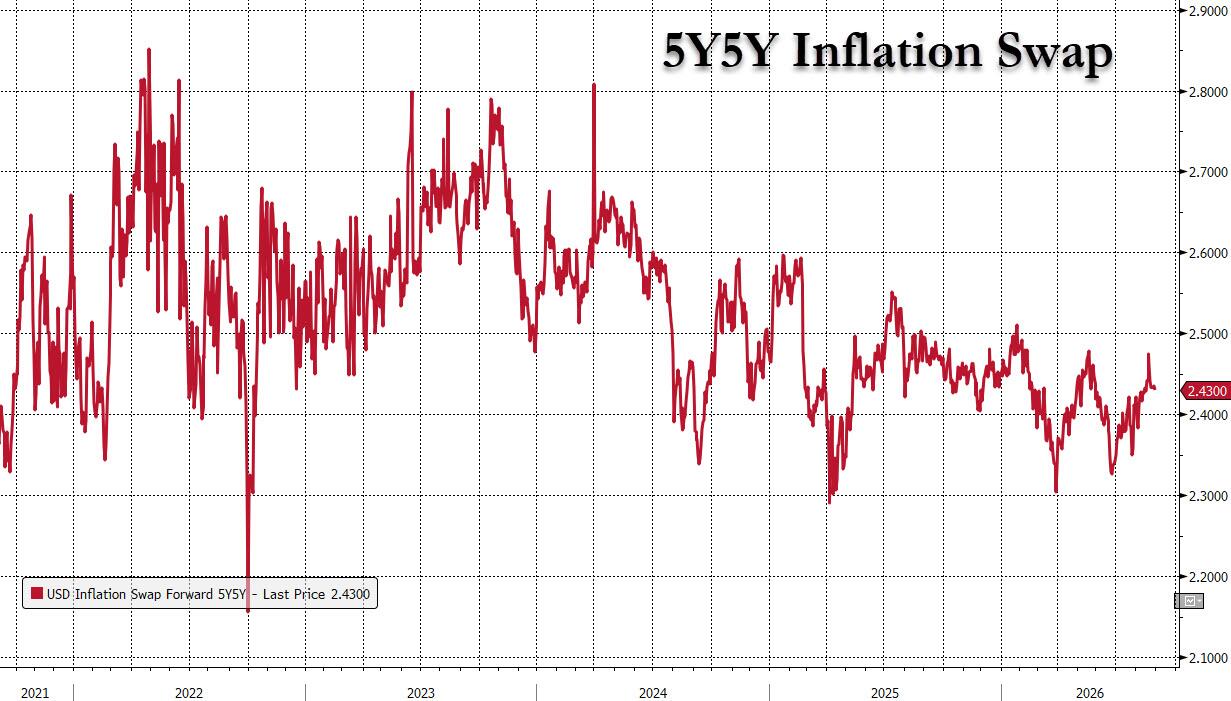
On inflation, medium- to longer-term gauges such as 5y/5y inflation swap forwards remain broadly consistent with central-bank policy targets – an observation also highlighted by Stephen Miran in a recent FT opinion piece. That is true in both the US and Europe. Yet these measures may not fully capture the upside risks, particularly as energy prices have continued to climb in recent weeks. Over the weekend, the US and Iran exchanged strikes for the first time in more than a month, as Iran launched a missile-and-drone attack on US air bases in Jordan early Monday in response to an American airstrike on Iranian rocket launchers on Sunday.
The weakening correlation between energy prices and inflation swaps could be reassuring: markets may simply trust central banks to keep long-run inflation anchored. But it could also indicate that investors view long-term inflation mainly through the lens of policy credibility and structural regime risks, such as a return of fiscal dominance. Such regimes rarely change gradually; they tend to shift suddenly. And that would take something big.
Related Markets
All MarketsMarket data may be delayed. Not financial advice.
How other outlets covered this
Compare allAlto found this story at 22 outlets. Same event, different framing — compare the headlines.
- Electronic Frontier FoundationLGBT Q&A: What’s One Thing I Can Do Today to Improve My Safety and Security Online as an LGBTQ+ Person? about 1 hour ago
- The VergeSony’s WH-1000XM5 headphones are back down to their lowest priceabout 1 hour ago
- The Daily CallerDolly Parton To Be Honored With Massive Two-Day Star-Studded ‘Dollyfest’about 2 hours ago
- ZeroHedgeSomething Big?about 2 hours ago
- Healthline NewsMy PCOS Diagnosis Took 5 Years. Why the New Name Change to PMOS Gives Me Hopeabout 2 hours ago
- AxiosWhy bonds are the most important market in the worldabout 6 hours ago
- The Guardian — WorldHouse Democrat to launch challenge to Trump’s ‘Lake America’ order – US politics liveabout 7 hours ago
- Google NewsGoogle Maps switches to "Lake America" as Canada compares change to SNL skit - Axiosabout 17 hours ago
How this story developed
Full timelineAlto has tracked this across 5 days of coverage from 16 outlets.
Powered by Gab AI
The Story At A Glance
Reading this article now — analysis appears below
💡 AI analysis provides alternative perspectives on current events