Why Are So Many Millionaires Leaving The UK?
The short version
- Authored by Mani Basharzad via the Foundation for Economic Education , Samuel Johnson once wrote that “when a man is tired of London, he is tired of life.” Today, however…
- In the last week of June 2026, one of the world’s most famous antique fairs, the Treasure House Fair, took place in London, attracting collectors and dealers from around the globe.
- But this year, what attracted attention wasn’t only the antiques; it was the drop in foot traffic.
- In 2025, roughly 16,500 millionaires left the country.
- China ranked second, with fewer than half that number.
The story
Authored by Mani Basharzad via the Foundation for Economic Education,
Samuel Johnson once wrote that “when a man is tired of London, he is tired of life.” Today, however, there seems to be one group that is tired of London: millionaires.
In the last week of June 2026, one of the world’s most famous antique fairs, the Treasure House Fair, took place in London, attracting collectors and dealers from around the globe. But this year, what attracted attention wasn’t only the antiques; it was the drop in foot traffic. At the time, the New York Times reported that “many dealers are facing a significant drop in foot traffic, or can no longer afford to have a showroom at all.”
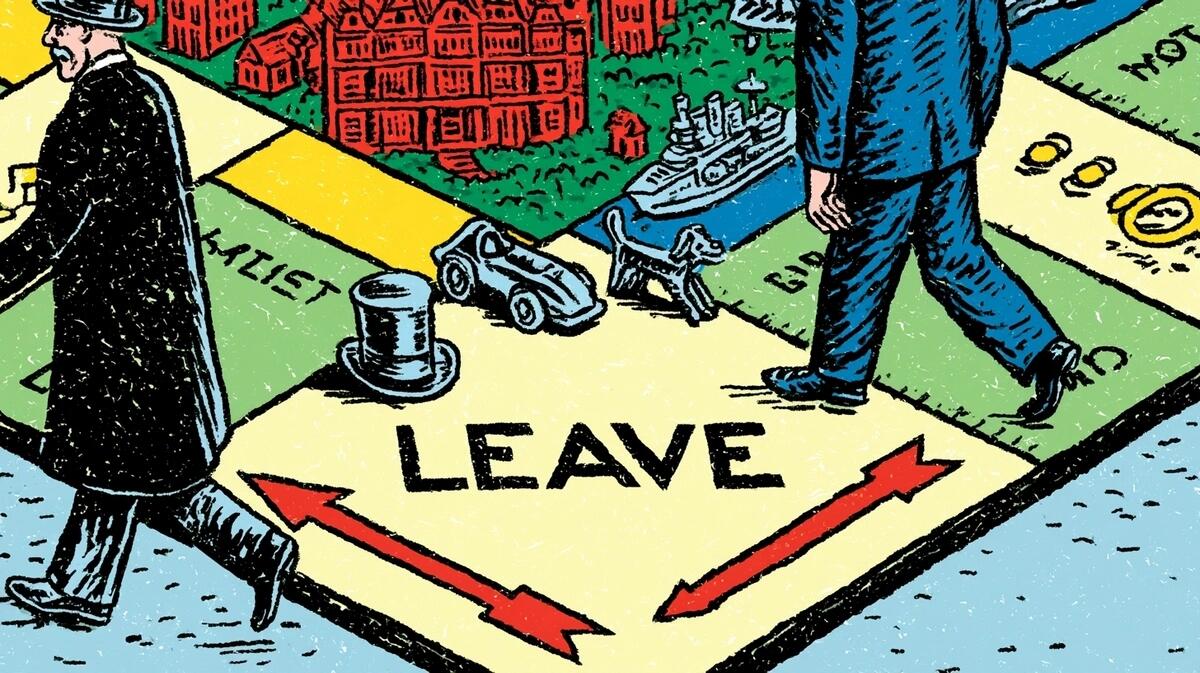
The lack of customers for high-end items hints at the shift—the UK has recently surpassed China as the world leader in millionaire emigration. In 2025, roughly 16,500 millionaires left the country. China ranked second, with fewer than half that number. But Samuel Johnson should take note, because these millionaires aren’t tired of life; they’re tired of a mission-led government.
When the Labour government came to power in 2024, it had a clear vision of the model of governance it wanted to pursue: mission-led government. Following the advice of Mariana Mazzucato (professor in the Economics of Innovation and Public Value at University College, London), the government embraced the idea that the state should become more entrepreneurial, stop viewing public spending as merely an expense, and subsidize key sectors in pursuit of a mission-directed economy.
After nearly two years, one lesson has become clear: nothing is worse for entrepreneurs than an entrepreneurial state.
One simple fact about mission-directed governance is that it requires more money—and that money has to come from somewhere. Since taking office, the government has introduced £40 billion ($53.4 billion) in tax rises in its first budget and added £186 billion ($248 billion) to the national debt, which is now close to the UK’s annual GDP.
Labour’s mistake began from the outset. It assumed that Britain’s fundamental problem was simply that the government didn’t spend enough. Chancellor Rachel Reeves argued that “the only way to drive economic growth is to invest, invest, invest. There are no shortcuts.” But the mission Reeves’s government believes in is not necessarily the mission Britain’s businesses believe in.
Mariana Mazzucato’s mission-driven model has attracted supporters from across the political spectrum—from the nationalist right, which wants to revive American manufacturing, to the left, which wants to achieve net zero or reduce inequality. But the central problem remains: Which mission should we choose?
Mazzucato herself might prioritize net zero, inclusive employment, or reducing inequality. But achieving any mission requires the government to direct economic outcomes. As Friedrich Hayek famously warned, “To be controlled in our economic pursuits means to be controlled in everything.” Every government mission requires government direction. Yet governments lack the knowledge to determine which direction an economy should take, as the Labour government’s experience already illustrates. If politicians truly knew which industries represented the future, they probably wouldn’t be in government. As Deirdre McCloskey has asked social engineers: If you’re so smart that you know where the economy should go, why aren’t you rich?
The consequence of this mission-led approach has been an ever-growing search for new sources of tax revenue. As one cabinet minister reportedly complained in a leaked WhatsApp message, “Every meeting I have is who can we tax in order to pay benefits to others.”
That mindset has helped drive millionaires out of the UK; but it’s not confined to Labour alone. In March 2024, the previous Conservative government abolished the long-standing non-domicile tax regime, ending tax exemptions on foreign income and gains. Then came further increases to capital gains tax, inheritance tax, and corporation tax. Someone has to pay for the mission, I suppose.
The outlook also appears increasingly uncertain. Prime Minister Sir Keir Starmer has resigned, and Andy Burnham, the former mayor of Manchester, has become the new prime minister, after returning to the House of Commons by winning in the Makerfield by-election. Journalist Andrew Neil once remarked that every time Burnham “opens his mouth, he adds to public spending.”
Markets no longer appear to trust the government’s fiscal direction. UK government bond yields are now the highest in the G7, and the borrowing costs that forced Liz Truss from office after less than two months have become the new normal.
But what the Labour government needs isn’t more public spending. It needs a theory of growth. Growth does not require an entrepreneurial state. It requires a government willing to step aside. The UK government wants to be entrepreneurial while also redistributive, to raise taxes while remaining business-friendly. The new prime minister tellingly described his ideology as “business-friendly socialism.”
Economic growth does not emerge from offices in Whitehall. It emerges from the garages, workshops, and start-ups of entrepreneurs. Growth has microeconomic foundations: businesses take risks because they expect to enjoy the rewards of success, not to see them redistributed elsewhere.
The government does not need to push entrepreneurs, assign them missions, or direct their investments. What Professor Mazzucato and the Labour government fail to appreciate is that the great strength of the free market is precisely that it has no single mission or master plan. Instead, it is guided by millions of individuals pursuing different plans, each tested through competition.
Britain should once again embrace individual autonomy in economic life, and reject politicians who believe they know better than everyone else which direction the economy should take.
Related Markets
All MarketsMarket data may be delayed. Not financial advice.
Powered by Gab AI
The Story At A Glance
Reading this article now — analysis appears below
💡 AI analysis provides alternative perspectives on current events