RBC Commodities Chief Warns "War Entering Dangerous Phase" As Chokepoint Chaos Risks Oil Above 2008 Peak
The short version
- Tankers are again turning away from the southern Red Sea, reversing a recovery in traffic following the 2023 disruptions.
- On Wednesday night, we reported that Houthi militants targeted two Saudi Arabian tankers in the Red Sea, escalating the Gulf area conflict and threatening deeper energy supply…
- Here we go again: Murban futures surged to as much as $112.56 a barrel, a rise of 26% from Wednesday.
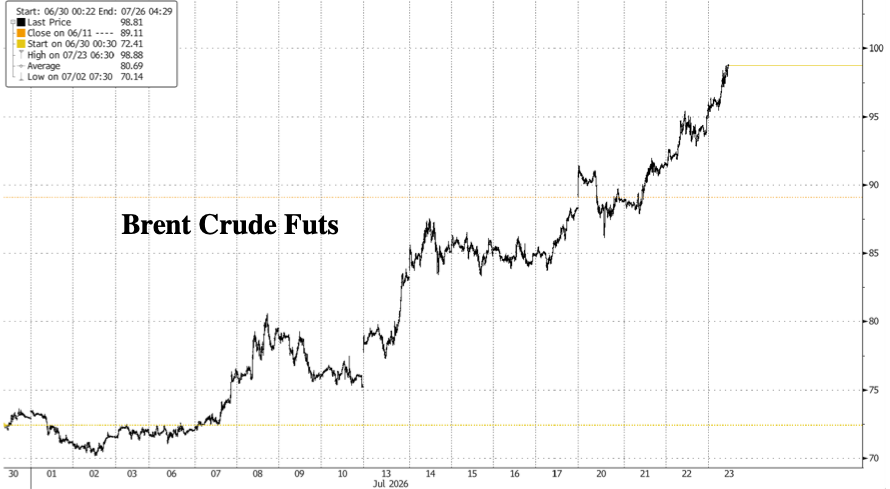
- By early Thursday, the added war risk premium sent Brent crude to $98.70.
- Given the dangerous escalation currently unfolding, we remain of the view that oil prices could potentially take out the Russia/Ukraine oil price highs of $128/bbl in 2022 or even…
The story
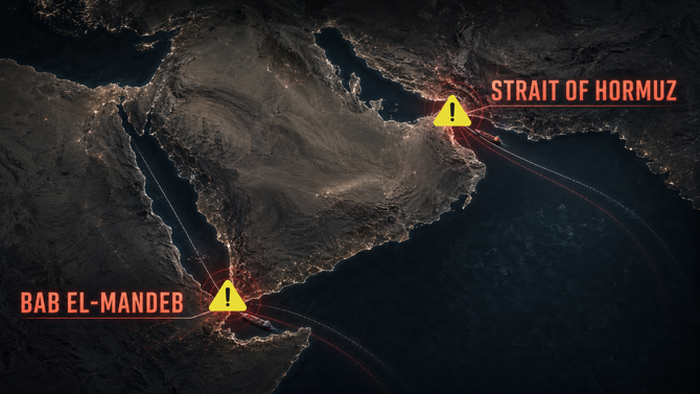
Brent crude futures rose nearly 5% to the mid-$98-a-barrel range after tanker attacks near the Bab el-Mandeb Strait threatened another critical maritime chokepoint as the Strait of Hormuz remained partially disrupted. Tankers are again turning away from the southern Red Sea, reversing a recovery in traffic following the 2023 disruptions.
On Wednesday night, we reported that Houthi militants targeted two Saudi Arabian tankers in the Red Sea, escalating the Gulf area conflict and threatening deeper energy supply disruptions - which spiked Brent above $95 in post-settlement trading.
Here we go again:
— zerohedge (@zerohedge) July 23, 2026
Murban futures surged to as much as $112.56 a barrel, a rise of 26% from Wednesday. The rise was much more than other benchmarks including Brent and WTI.
Iran's key proxy in Yemen, the Houthis, pose a direct threat to regional energy flows, while Saudi Arabia signaled it will respond forcefully to any attacks on its tankers or land-based energy assets. By early Thursday, the added war risk premium sent Brent crude to $98.70.
Helima Croft, head of global commodity strategy at RBC Capital Markets, warned clients earlier today that "war enters a dangerous phase with the Red Sea and critical infrastructure at risk."
Croft continued:
While Brent prices have risen over 30% since July 1, we still see them as a lagging indicator of the extreme pressure building in the region. Given the dangerous escalation currently unfolding, we remain of the view that oil prices could potentially take out the Russia/Ukraine oil price highs of $128/bbl in 2022 or even the 2008 peak of $146/bbl, especially in the worst-case scenario of a full regional war.
The Houthi entry into the conflict has the potential to expand the war's supply losses by reducing the effectiveness of the East-West pipeline offset route. With the Houthis indicating that they targeted two Saudi tankers in the Red Sea, we think a sustained deployment of force would cause a material reduction in total Red Sea oil flows. It could also shift the sentiment of "the market always finds a workaround" camp.
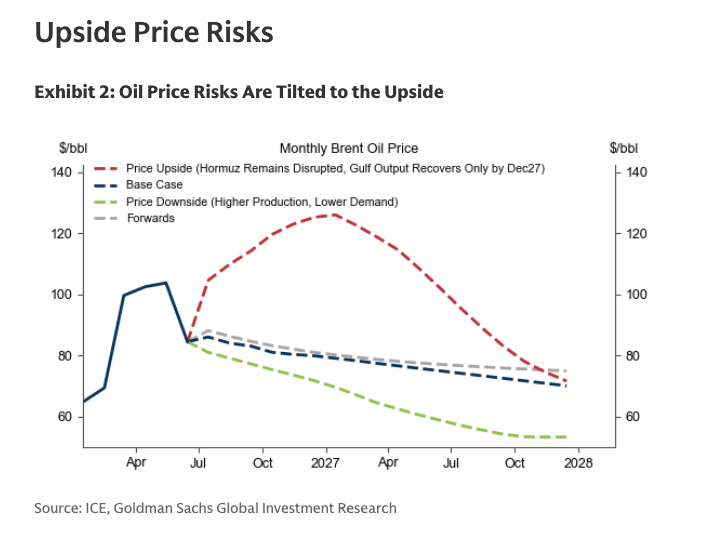
On Monday, Goldman commodities expert Daan Struyven warned that Brent crude futures could surge above $120 a barrel by the fourth quarter if disruptions in the Hormuz maritime chokepoint persist. He noted, however, that such an outcome is not his base case.
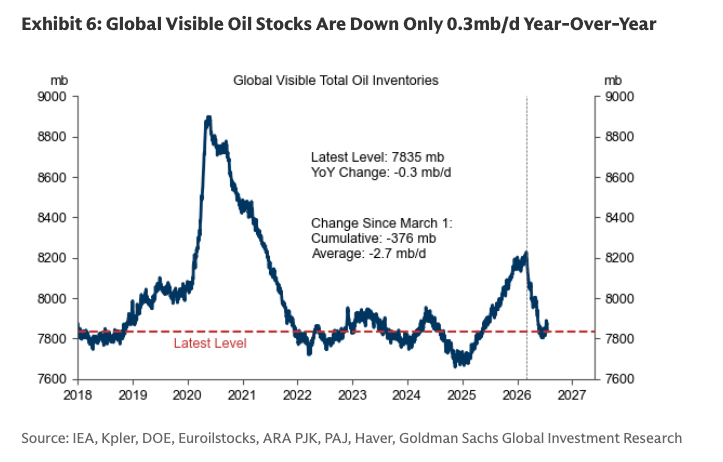
The big risk now is that the Hormuz disruption is unfolding after global oil buffers have already been depleted, with Cushing inventories reportedly near "tank bottoms." This leaves the market with limited spare capacity to absorb a prolonged supply shock and will likely increase pressure on the Trump administration to revive diplomacy once the US military has sufficiently degraded Tehran's missile and drone capabilities used to threaten commercial shipping through the strait.
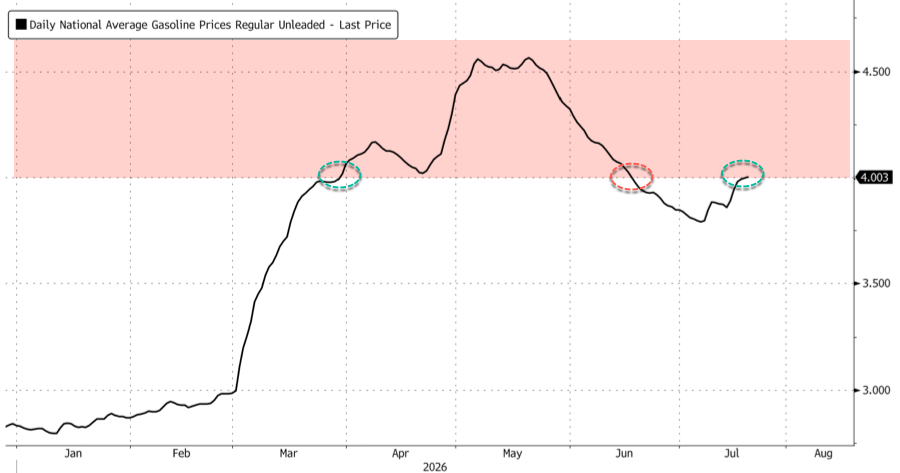
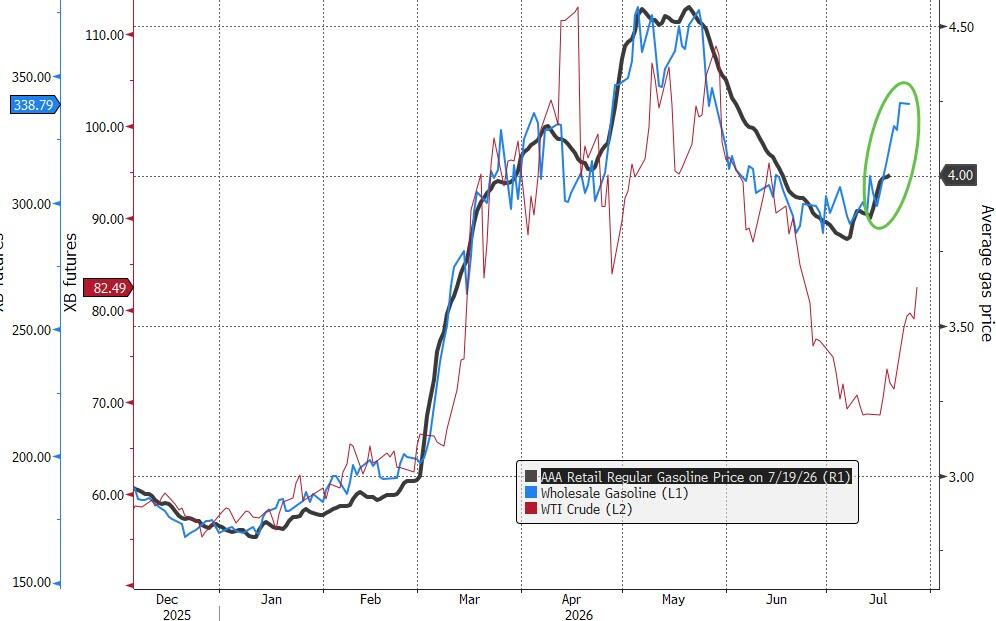
The US national average for regular gasoline breached $4 a gallon on Monday, intensifying pressure on the Trump administration to pursue Gulf diplomacy.
Gas prices may go higher...
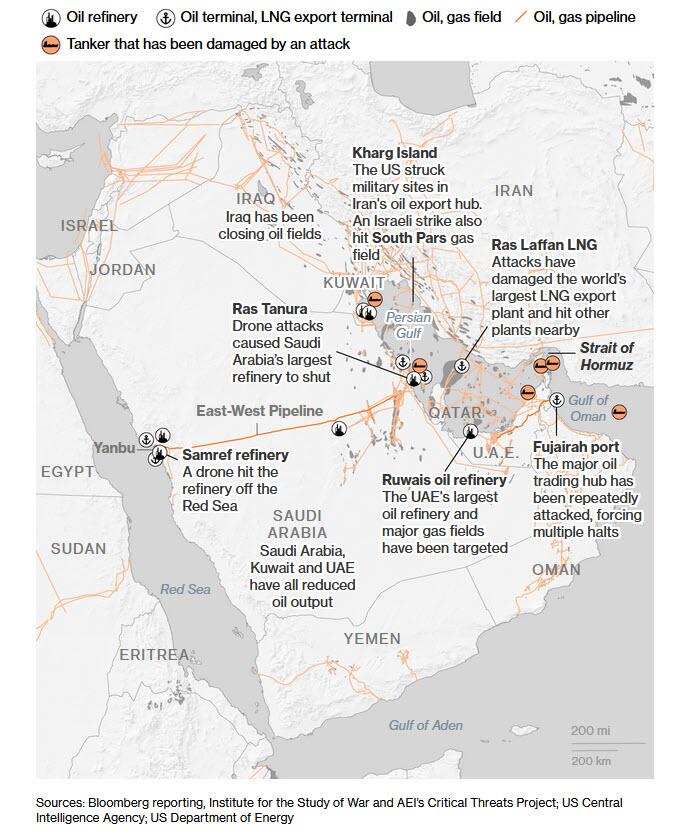
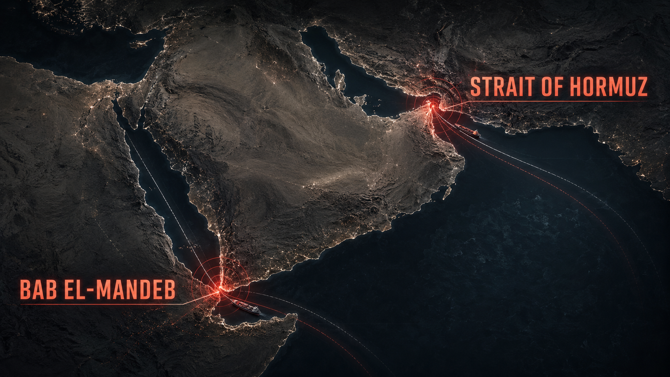
Saudi Arabia has offset some disruption from the Strait of Hormuz closure by rerouting crude through its 7 million-barrel-a-day East-West pipeline. However, if Bab el-Mandeb becomes impassable, Asia-bound tankers would be forced around the Cape of Good Hope, raising freight costs, delaying deliveries by weeks, and further tightening the physical market.
Simultaneous disruption would therefore put roughly one-fifth of global oil supply directly at risk through Hormuz, while disrupting or delaying as much as another 8 million to 9 million barrels a day that normally transits the Bab el-Mandeb chokepoint.
Next Read: "Goldman Warns Brent Could Top $120 If Gulf Chokepoint Crisis Deepens."
Related Markets
All MarketsMarket data may be delayed. Not financial advice.
How this story developed
Full timelineAlto has tracked this across 5 days of coverage from 1 outlet.
- RBC Commodities Chief Warns "War Entering Dangerous Phase" As Chokepoint Chaos Risks Oil Above 2008 PeakYou are here
Powered by Gab AI
The Story At A Glance
Reading this article now — analysis appears below
💡 AI analysis provides alternative perspectives on current events