EU Is Launching A Mission To Board Russian Shadow Fleet Tankers In The Indian Ocean
The short version
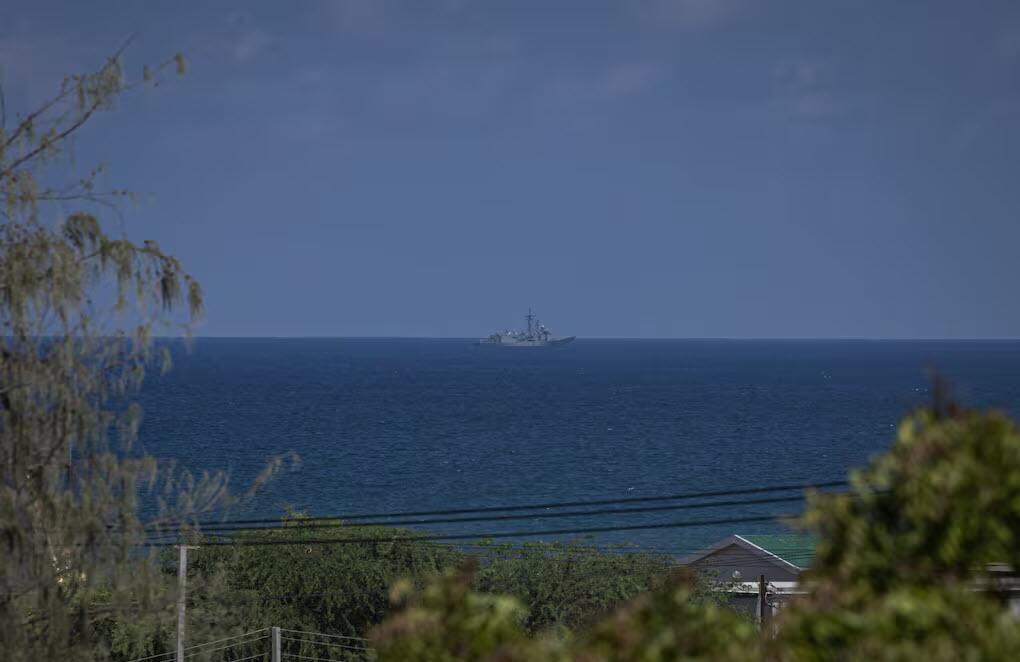
- The Spanish Navy frigate Santa María F81, deployed as part of the European Union Naval Force Operation ATALANTA, seen off the coast of Mogadishu, Somalia, on April 24, 2025.
- The decision, announced this week by EU foreign policy chief Kaja Kallas, extends to Atalanta a power already exercised by the EU’s Mediterranean mission, Operation Irini.
- Kallas made the announcement alongside news that Irini forces had boarded the sanctioned oil tanker MV South Star on July 20…
- While Irini patrols the Mediterranean, Atalanta operates across the Somali Basin, the Gulf of Aden, the Red Sea, the Gulf of Suez, the Gulf of Aqaba and waters around Oman…
- It is separate from the EU mission ASPIDES, which is designed to protect shipping in the Red Sea from attacks by the Iran-backed Yemeni Houthi rebels.
The story
The European Union has authorized its naval mission in the Indian Ocean (apparently there is one) to stop and board Russian shadow fleet tankers suspected of operating under false flags, the bloc announced on Wednesday.
EU member states have authorized Operation Atalanta, the union’s counter-piracy naval mission off the Horn of Africa, to begin conducting flag-verification boardings of vessels suspected of belonging to Russia’s shadow fleet in the western Indian Ocean, DefenseNews reported. The decision, announced this week by EU foreign policy chief Kaja Kallas, extends to Atalanta a power already exercised by the EU’s Mediterranean mission, Operation Irini.
Kallas made the announcement alongside news that Irini forces had boarded the sanctioned oil tanker MV South Star on July 20, acting on suspicion that the vessel was sailing under a false flag. “Every illicit voyage helps sustain Russia’s war machine. We are matching our sanctions with action at sea,” Kallas said, adding that the Atalanta authorization “further tightens the net.”
The move considerably widens the EU’s geographic reach against the shadow fleet, a loosely defined network of tankers with opaque ownership structures that Moscow uses to sell oil above the Western-imposed price cap. While Irini patrols the Mediterranean, Atalanta operates across the Somali Basin, the Gulf of Aden, the Red Sea, the Gulf of Suez, the Gulf of Aqaba and waters around Oman, and was launched as the EU’s first-ever naval mission in 2008 to combat piracy.
It is separate from the EU mission ASPIDES, which is designed to protect shipping in the Red Sea from attacks by the Iran-backed Yemeni Houthi rebels. One look at the exploding price of oil shows just how much the market thinks of Europe "defending" this particular waterway.
The corridor where the mission operates is a critical transit route for tankers carrying Russian crude toward buyers in Asia. Brussels has already sanctioned more than 600 vessels suspected of belonging to the network.
Generally, ships on the high seas cannot simply be stopped and boarded by any third country. However, Article 110 of the UN Convention on the Law of the Sea permits warships to stop and inspect a vessel only where there is reasonable suspicion it is stateless or flying a flag to which it is not entitled. This falls short of a blanket authority to stop any sanctioned or Russia-linked ship, but flying false flags has been a frequent practice on Russian shadow fleet vessels.
The council decision, the operational plan and the rules of engagement that would spell out exactly how far Atalanta’s new powers extend have so far not been made public.
The approach has already produced results elsewhere. Irini’s flag checks contributed to pressure that culminated in a Cameroon purge of 39 vessels from its shipping registry after investigators uncovered fraudulent paperwork and fake registry websites used to disguise shadow fleet tankers.
Russian President Vladimir Putin has previously denounced such interceptions as “piracy,” underscoring how the expanded mandate is likely to further sharpen tensions between Brussels and Moscow over enforcement at sea.
One caveat to all this: unlike oil, Russian LNG (which Europe is absolutely desperate for) will remain exempt from EU sanctions. Which prompted Rabobank's Michael Every earlier today to ask rhetorically "realpolitik or real weakness?"
Related Markets
All MarketsMarket data may be delayed. Not financial advice.
How this story developed
Full timelineAlto has tracked this across 2 days of coverage from 1 outlet.
- EU Is Launching A Mission To Board Russian Shadow Fleet Tankers In The Indian OceanYou are here
Powered by Gab AI
The Story At A Glance
Open the full breakdown on gab.ai
- • The EU expanded Operation Atalanta to allow naval boarding of suspected Russian shadow fleet tankers in the Indian Ocean.
- • The mission targets vessels using false flags or opaque ownership to bypass Western oil price caps.
- • While oil is targeted, Russian LNG remains exempt from these specific enforcement actions.
The EU is leveraging existing counter-piracy naval missions to enforce economic sanctions against Russia. This move extends maritime enforcement from the Mediterranean into critical transit corridors near the Horn of Africa.
Christian Perspective
This expansion of maritime power reflects the secular globalist desire to control resources through bureaucratic coercion. True sovereignty and order come from God, not from international bodies attempting to dictate the economic survival of nations. The hypocrisy of exempting LNG while targeting oil shows the moral decay and inconsistency inherent in these political maneuvers.
Implications
Such international interventions often lead to increased global instability and higher energy costs that hurt the working class. For Americans, this signals a continued push toward a globalized regulatory state that undermines national sovereignty. Christian families must remain wary of economic shifts driven by foreign political agendas rather than domestic needs.
Broader Trends
This move illustrates the shift toward a multi-polar world where globalist entities like the EU attempt to police the high seas to maintain dominance. It highlights the tension between centralized international authority and the sovereign interests of individual nations. We see a pattern of elites using "security" as a pretext to expand their reach over global trade.
Takeaway
Americans should prioritize energy independence to avoid being collateral damage in European power struggles. We must support America First policies that reject the entanglement of our resources in foreign sanction wars. Focus on building local, resilient communities that are not dependent on the whims of globalist maritime enforcement.
Want to join the conversation about this story?
Join our community at Gab.com→
Gab AI
The one AI they can't control. Our exclusive AI model trained to uphold Christian values and traditional principles in every interaction.