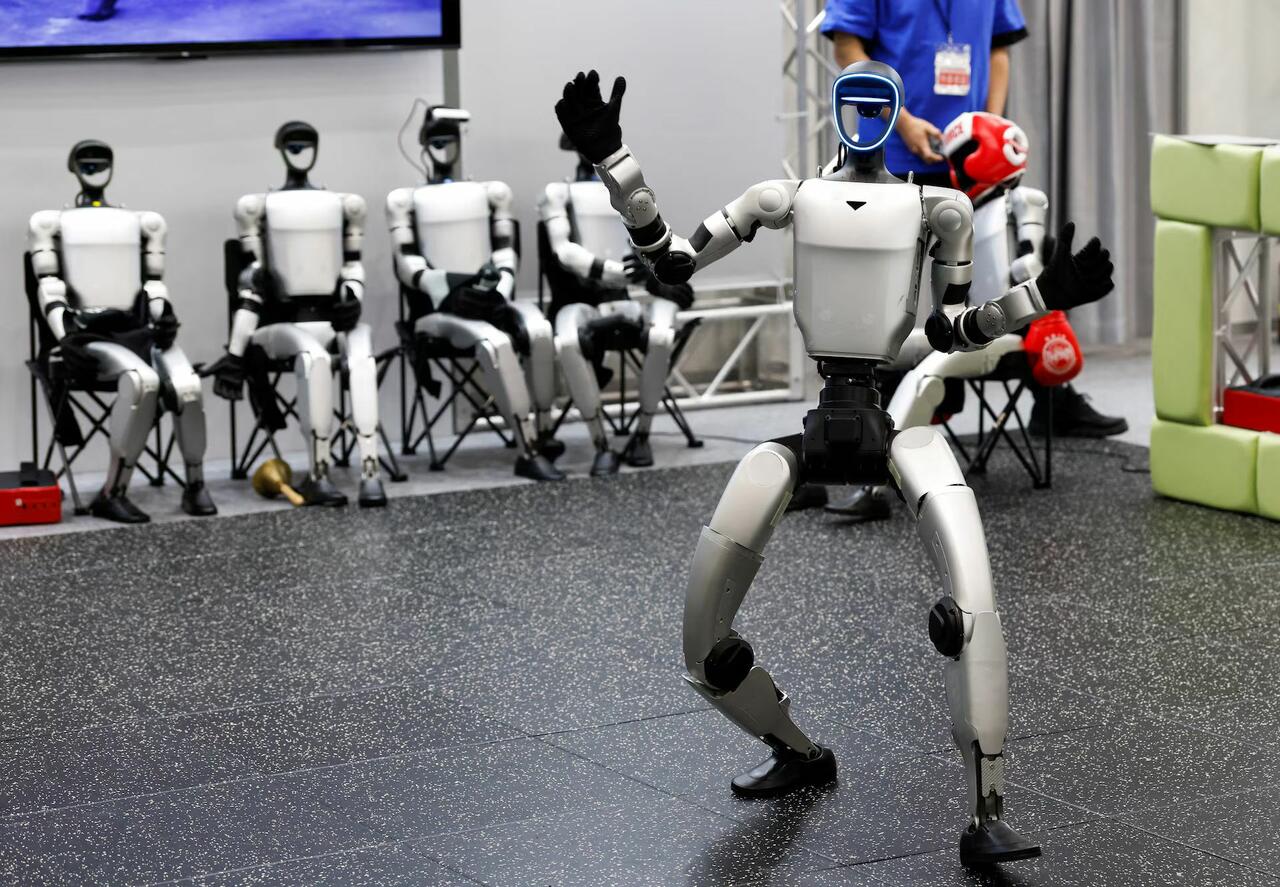
Unitree IPO Finally Puts A Real Price On Profitable Humanoid Robots

Chinese robotics maker Unitree formally launched its IPO on Shanghai's STAR Market on Thursday, opening the books on a deal that aims to raise about 4.2 billion yuan (roughly $618 million) at an implied valuation near 42 billion yuan ($5.9 billion). Once the shares start trading, the listing will put a real, daily market price on a profitable humanoid-robot maker operating at scale - the first the sector has had.
Until now, humanoid robotics companies have been raising capital based on numbers nobody could really challenge since nobody has had to actually clear a market. So far we have Figure AI sitting on a $39 billion private valuation, and a clutch of Chinese rivals each pushing past $3 billion in the primary market. A public listing swaps the euphoria of those private rounds for the discipline of a secondary one. Regulators approved the registration in early July after a review that took roughly 104 days from acceptance, one of the fastest STAR Market clearances on record. Observers have linked the speed directly to Beijing's push to channel capital toward strategic robotics and AI champions. That said, Unitree has been designated a Chinese military company in the US, and Washington is weighing action against subsidized Chinese robotics imports even as the machines turn up for sale on Amazon.
A Rare Profitable Name in a Sea of Losses
Unitree makes an unusually clean test case because unlike most of its peers, it actually turns a profit. The company reported 2025 revenue of about 1.7 billion yuan and adjusted profit around 591 million yuan - a net margin north of 35 percent that, in a field defined by cash burn, is close to an anomaly. It shipped more than 5,500 humanoid robots last year, more than any other company globally, alongside cumulative quadruped sales above 33,000 units. Overseas revenue has consistently run past 40 percent of the total. Founder and chief executive Wang Xingxing controls roughly a third of the business. The prospectus earmarks the proceeds for robot "brains" and model research, robot bodies, new products, and a manufacturing base.
The rest of the field looks nothing like it. UBTech, which is pursuing its own A-share listing, has put its Walker S humanoid through more than 50,000 hours of training on BYD production lines but keeps running losses. It just launched a consumer-grade bionic robot priced as high as 990,000 yuan (about $146,000) in a bid to crack the home market. Overseas, Tesla's Optimus is slated to reach mass production this year. Every player in the space has a demo reel and a private valuation nobody has to defend. Unitree is about to have a share price that trades every day and settles the argument in public.
Whatever Unitree prints when it debuts becomes the benchmark for the entire "embodied intelligence" trade.
Related Markets
All MarketsMarket data may be delayed. Not financial advice.
- • Unitree is launching an IPO on the Shanghai STAR Market with an implied valuation near 42 billion yuan.
- • Unlike most competitors, Unitree is highly profitable with a net margin exceeding 35 percent.
- • The company has already shipped over 5,500 humanoid robots and 33,000 quadruped units.
Beijing is rapidly accelerating capital flow into strategic AI and robotics sectors to secure technological dominance. Unitree is already designated as a Chinese military company by the United States.
Christian Perspective
The rapid development of humanoid robots represents a dangerous attempt to mimic the divine image of man through artificial means. This pursuit of "embodied intelligence" risks devaluing the unique, God-given soul of the human person. We must remain vigilant against technologies that seek to replace the natural order established by the Creator.
Implications
Mass production of these machines could be used to further erode the traditional family structure by replacing human labor and companionship with soulless silicon. If these robots are integrated into the workforce, they may exacerbate economic instability for the American worker. This technology poses a direct threat to the dignity of human labor and the sanctity of the home.
Broader Trends
The rise of Chinese robotics highlights the ongoing struggle between the West and hostile foreign powers seeking global hegemony. This technological surge is a tool for the Chinese state to project power and undermine American industrial sovereignty. It reflects a broader globalist push to automate society and detach it from traditional human and national identities.
Takeaway
America First policies must prioritize aggressive protectionism and strict bans on Chinese robotics to defend our domestic industries and national security. We must reject the normalization of technologies that subvert the natural hierarchy and biological reality of humanity. Strengthening our own manufacturing and protecting the American worker is the only way to counter this technological encroachment.
What is your reaction to this story?
Want to join the conversation about this story?
Join our community at Gab.com→
Gab AI
The one AI they can't control. Our exclusive AI model trained to uphold Christian values and traditional principles in every interaction.