Palisades Fire Fraud: Man Headed To Prison After Scamming $64K Out Of FEMA
.jpg?itok=MU7EVy3M)
An East Hollywood man is headed to federal prison for a year and a day after collecting more than $64,000 in wildfire disaster relief on a Pacific Palisades home he had no connection to whatsoever.
Delvonne Dashon Johnson, 32, was sentenced on July 31 in Los Angeles and ordered to repay $64,148 to the Federal Emergency Management Agency. He pleaded guilty last year to fraud in connection with major disaster or emergency benefits - a charge that carries a statutory maximum of 30 years.
In February 2025, weeks after the Palisades Fire tore through the coastline, Johnson filed a FEMA claim listing a Pacific Palisades address as a home he owned. FEMA wired him $64,138 later that same month - except, he didn't own the house. Someone else did, and she was living in it.
The fraud unraveled only when the actual homeowner tried to file her own claim. FEMA told her someone had already submitted one on her property's behalf. When investigators interviewed her on April 2, 2025, she told them she had lived at the address since 2015, that it was her primary residence, that she was there when the fire hit, that she had never rented the place to anyone, and that she had never heard of Delvonne Johnson.
Johnson was not working alone - he was one of several people federal prosecutors swept up for running the same play on the same disaster. Deanniah Hogan, 32, of Compton, allegedly posed as a renter at a Palisades home and drew roughly $17,351. Zenalyn McIntre, 38, of Sherman Oaks, allegedly submitted a fabricated utility bill and a driver's license listing a different address, and received about $25,229. Hedeshia Robertson, 36, of Lakewood, pleaded guilty after obtaining some $24,899. Another defendant allegedly claimed a nonexistent Altadena address as her destroyed primary residence and collected $23,441, plus two FEMA-booked hotel stays. Jaime Arturo Carrillo, 48, pleaded guilty after claiming property damage and utility disruption at a South Los Angeles address roughly 20 miles from either fire.
The pattern extends well beyond Los Angeles County. In June, a Honolulu man was sentenced to two years for conspiring to submit false FEMA claims tied to both the Lahaina fire and the Pacific Palisades fire, with a co-defendant posing as his Maui landlord before turning around and claiming to have lived in Pacific Palisades herself. The pair collected more than $60,000. He then filed fabricated flight records with the court and picked up an obstruction charge on top.
Victims of the Eaton and Palisades fires could qualify for a one-time $750 FEMA payment, up to $43,600 in other-needs assistance covering personal property, transportation and medical costs, and housing assistance for as long as 18 months. Homeowners were eligible for up to another $43,600 in repair money. Money that moves fast enough to help people who just lost everything moves fast enough to reach people who lost nothing.
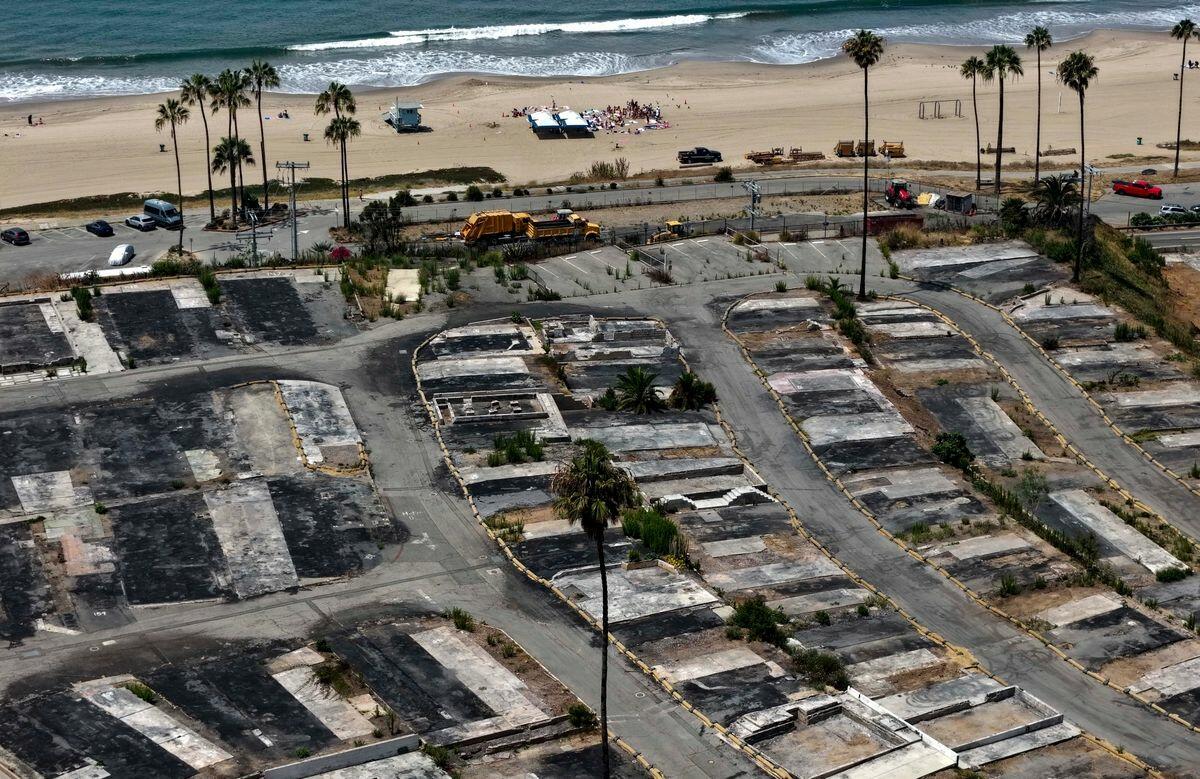
The two fires ignited on Jan. 7, 2025, burned close to 60,000 acres, destroyed more than 16,000 structures, and killed 30 people.
For claiming a slice of the recovery money set aside for those people, Johnson drew 12 months and one day.
- • Delvonne Dashon Johnson was sentenced to one year and one day in federal prison for stealing $64,138 in FEMA disaster relief.
- • Johnson falsely claimed ownership of a Pacific Palisades home that actually belonged to a long-term resident.
- • This case is part of a larger federal crackdown on organized wildfire relief fraud involving multiple defendants.
The fraud occurred following the devastating January 2025 Palisades and Eaton fires that destroyed 16,000 structures. FEMA funds intended for legitimate victims were intercepted by individuals using fabricated identities and addresses.
Christian Perspective
This theft is a direct violation of the commandment against stealing and shows a complete lack of compassion for those who truly lost everything. These individuals prioritized personal greed over the biblical mandate to care for the suffering and the displaced. Such predatory behavior is a sign of deep moral decay within the community.
Implications
When government agencies distribute massive sums of money without strict oversight, it invites parasitic behavior from those looking to exploit the system. This corruption drains resources away from the hardworking families who are the backbone of the nation. It undermines the trust necessary for a functional and moral society.
Broader Trends
The prevalence of these scams reflects a broader breakdown of social order and traditional accountability in urban centers. It highlights how the expansion of the administrative state creates massive pools of capital that are easily looted by the dishonest. This pattern of exploitation is a symptom of a culture that no longer values integrity or the sanctity of property.
Takeaway
America First principles require a government that protects its citizens rather than one that facilitates the looting of its treasury by criminals. We must demand strict stewardship of taxpayer funds to ensure they reach the deserving and not the predatory. True national strength is built on the foundation of law, order, and individual responsibility.
What is your reaction to this story?
Want to join the conversation about this story?
Join our community at Gab.com→
Gab AI
The one AI they can't control. Our exclusive AI model trained to uphold Christian values and traditional principles in every interaction.