World's Largest PC Makers Start Using Memory Chips From China's CXMT
It's not just Apple that is scrambling to find cheap memory alternatives to the DRAM offerings from the memory "cartel" of Samsung, SK Hynix and Micron: according to the Nikkei Asia, a trio of the world's leading PC makers - HP, Asus and Acer - have started to use small amounts of chips from China's ChangXin Memory Technologies (better known as the recently IPOed CXMT) amid an unprecedented memory shortage fueled by demand for artificial intelligence infrastructure.
Many major PC makers completed the qualification process for CXMT's DRAM chips around the middle of this year and have started to use a limited amount in their notebook computers, according to multiple sources familiar with the matter.
The amount of CXMT chips used and the number of notebook models utilizing them are very limited as of now, as CXMT is prioritizing a large part of its production capacity for Chinese clients, such as Huawei. The notebook models that use CXMT chips are for sale in non-U.S. markets.
The PC companies are also taking a restrained approach over their use of CXMT chips due to concerns that doing otherwise would anger leading global memory chipmakers Micron, Samsung Electronics and SK Hynix, two sources said.
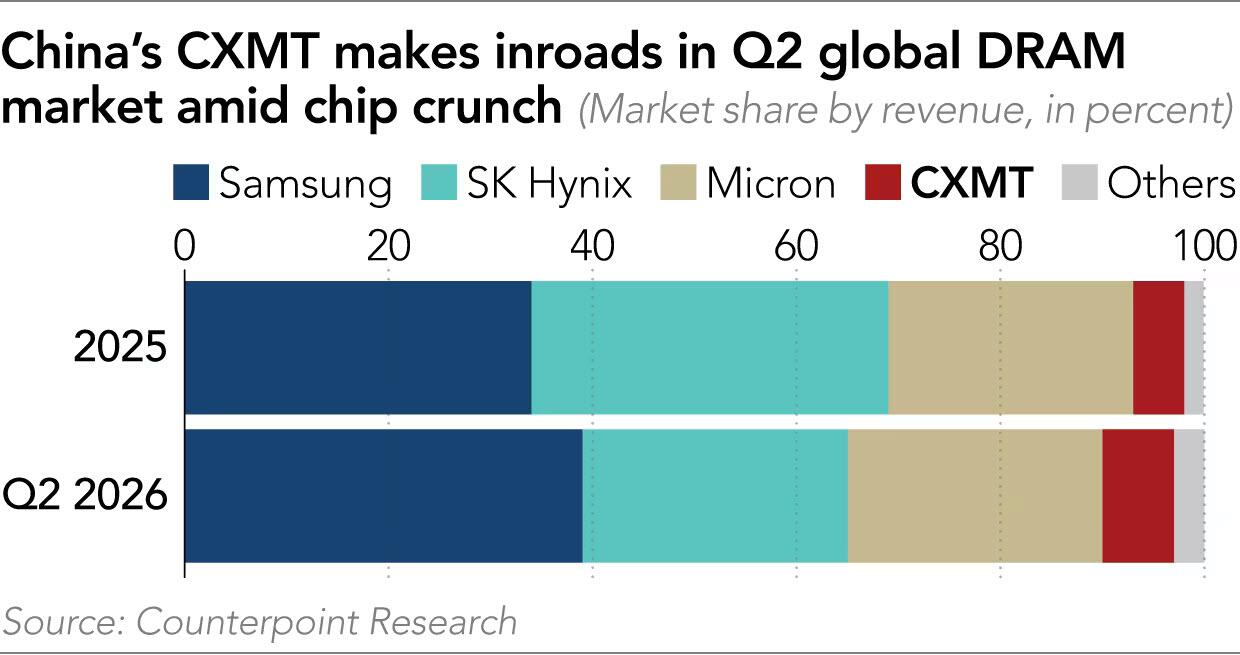
"The top three memory chipmakers accounted for more than 90% of global market share," an executive with a PC company with direct knowledge of the matter told Nikkei Asia. "PC companies have to be very careful and stay low-key about [the use of CXMT chips] ... After all, it is a seller's market now. We dare not source too much from CXMT at this moment."
CXMT, moreover, is included on a Pentagon list of companies alleged to have ties to the Chinese military, making sourcing from it potentially sensitive for U.S. companies. The Chinese company has denied the allegations and is not subject to an outright trade blacklist.
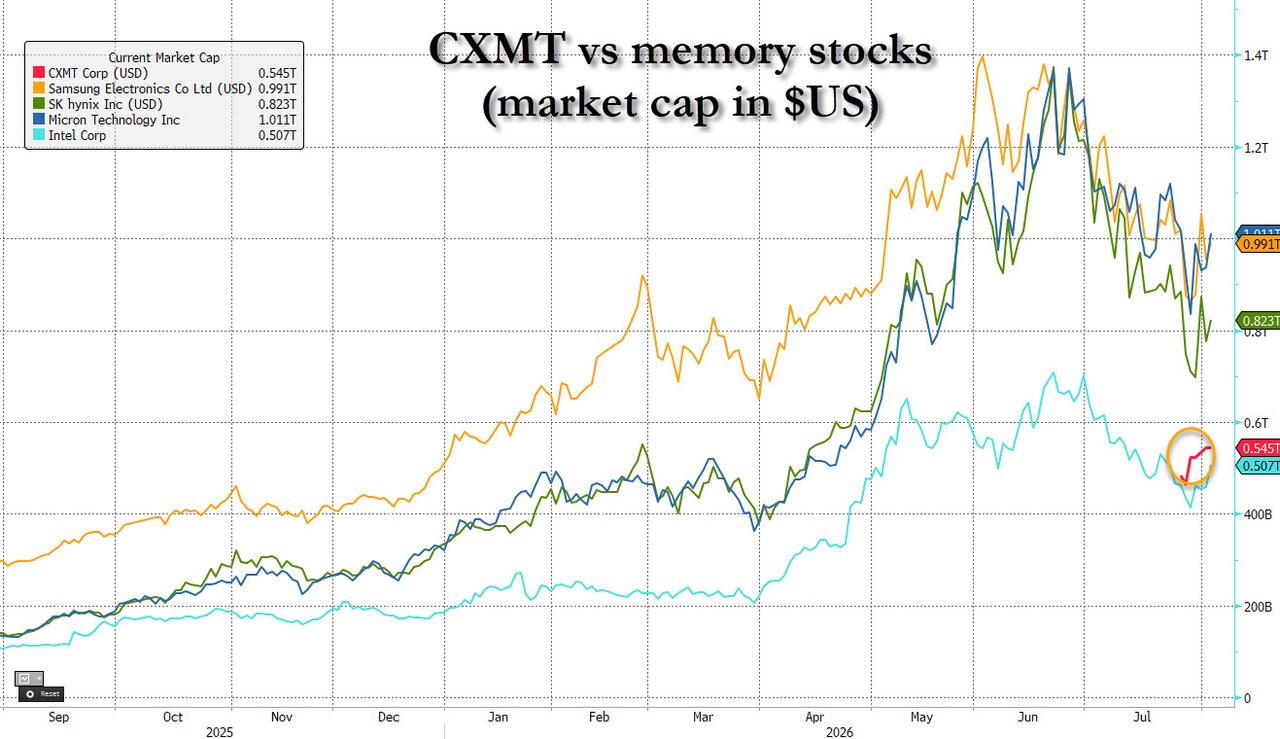
Still, the adoption marks a significant win for CXMT, which recently listed on Shanghai's STAR Market and after soaring nearly 8-fold since its IPO last week, boasts a market valuation exceeding that of Intel, America's top microprocessor maker.
"Although PC makers only use very small volumes [of CXMT's DRAM] for budget models, they don't want to neglect a potential important source, particularly when the market is so constrained," one supply chain manager supplying to HP and Asus told Nikkei Asia.
Not everyone is terrified of retaliation by the memory cartel: another industry executive said some PC makers have secured additional supplies of central processing units (CPUs) and are now racing to lock in more memory to match, making them much more open to sourcing from any available supplier, including CXMT. "After all, PC makers still hope to work with all the available sources as the market is very constrained now," the person said.
In response to request for comment, Acer said: "We do not disclose our suppliers, but that we keep in close contact with multiple global manufacturers and suppliers to dynamically adjust operations to manage component prices changes. We work with multiple manufacturers and suppliers to enhance our supply chain resilience."
The PC and smartphone industries have been suffering from shortages of memory chips and CPUs since late last year. Earlier thi year, Nikkei Asia was the first to report that HP, Dell, Asus and Acer were considering using CXMT's DRAM.
PC companies have prioritized chips for premium models and raised overall prices by several hundred dollars to reflect the rising component costs. Smartphone companies like Xiaomi, Oppo, and Vivo, on the other hand, cut their 2026 shipment forecasts several times due to the memory shortages.
The global PC industry is expected to decline more than 11% this year due to the unprecedented memory crunch, with supply conditions worsening toward the end of this year, market research company IDC estimates.
The shortfall in memory chips has turned out to be a golden opportunity for CXMT to tap the global PC supply chain. The Hefei, China-based memory chipmaker listed on the Shanghai Stock Exchange's tech-focused STAR Market on July 27 and its share price soared almost 5x on the first day of trading. Its market capitalization reached more than 3.5 trillion yuan ($545 billion) as of Tuesday, topping Intel and starting to approach Micron and SK Hynix.
CXMT estimated in a filing to the Shanghai Stock Exchange that its net profit for the first half of 2026 would reach between 52 billion yuan and 58 billion yuan, up as much as 2,530% from a year earlier. The chipmaker attributed the surge to favorable market conditions and a better pricing environment. CXMT already supplies to almost all the top Chinese tech companies including Tencent, Alibaba Cloud and ByteDance.
"You would think CXMT's price is cheaper than the top three players, which is a wrong assumption. ... Their DRAM is definitely no cheaper than the likes of Samsung," one of the people said. "We also couldn't book supplies from CXMT beyond the current quarter, as so many companies are racing to secure DRAM from it," the person added.
CXMT and domestic peer Yangtze Memory Technologies (YMTC) are undertaking their most aggressive capacity expansion plans at home. CXMT is expanding plants in Shanghai with the aim of having a capacity two to three times larger than its homebase in Hefei, including capacity for building high-bandwidth memory (HBM), a crucial AI component, Nikkei Asia reported earlier.
Related Markets
All MarketsMarket data may be delayed. Not financial advice.
- • Major PC makers HP, Asus, and Acer are integrating memory chips from China's CXMT into notebook models for non-U.S. markets.
- • CXMT is expanding capacity aggressively and is valued higher than Intel, signaling a massive shift in technological dominance.
- • The move is driven by an AI-induced memory shortage and the need to bypass the existing market cartel.
The global semiconductor market is facing an unprecedented shortage due to the rapid expansion of artificial intelligence infrastructure. This scarcity is forcing Western corporations to seek alternative suppliers, even those with alleged ties to the Chinese military.
Christian Perspective
The reliance on Chinese technology represents a dangerous entanglement with a nation that does not share our foundational Christian values. Entrusting critical infrastructure to a foreign power with potentially hostile intentions undermines the stewardship of our national security. We must recognize that technological dependence can become a form of spiritual and political bondage.
Implications
This shift threatens American sovereignty by allowing a foreign adversary to embed itself into the very hardware that powers our economy and defense. As we lose control over our supply chains, we lose the ability to protect our people and our way of life. A nation that cannot produce its own essential components is a nation that has surrendered its independence.
Broader Trends
This development illustrates the ongoing erosion of American industrial strength and the rise of a multipolar world where the West is no longer the sole arbiter of progress. It reflects a globalist economic model that prioritizes short-term corporate profit over long-term national survival. The shift toward Chinese tech dominance is a symptom of the managed decline of the West.
Takeaway
America First policies must prioritize the rapid rebuilding of domestic semiconductor manufacturing to ensure total technological independence. We must reject the siren song of cheap foreign components that come at the cost of our national integrity. True strength lies in self-reliance and the protection of our borders and our industries.
What is your reaction to this story?
Want to join the conversation about this story?
Join our community at Gab.com→
Gab AI
The one AI they can't control. Our exclusive AI model trained to uphold Christian values and traditional principles in every interaction.