Physical AI Faces One Critical Chokepoint, And Here's How To Profit
The rise of physical AI is already underway, with humanoid robots entering factories, warehouses, and other industrial environments, and soon the modern battlefield.
Global shipments of humanoid robots are expected to accelerate in 2027, but the broader robotics revolution faces one critical chokepoint: access to the rare-earth magnets that power high-performance motors and actuators. China controls most of that supply chain.
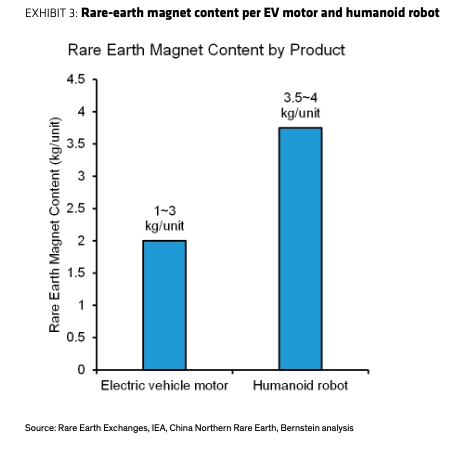
Bernstein analyst Dien Wang told clients Monday that humanoid robots require an estimated 3.5 to 4 kilograms of rare-earth magnets per unit, compared with roughly 1 to 3 kilograms for an EV motor.
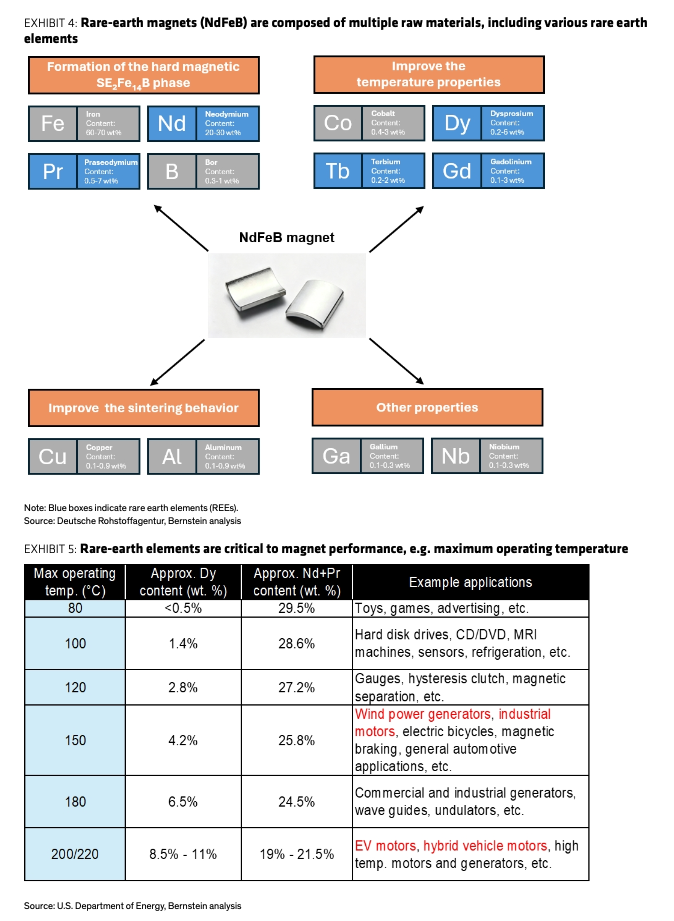
"A humanoid robot can consume more than twice as much magnetic material as an EV motor (Exhibit 3), highlighting the growing strategic importance of rare-earth magnets. Beyond well-known neodymium (Nd) and samarium (Sm), rare-earth elements such as dysprosium (Dy), terbium (Tb), and praseodymium (Pr) are also critical for magnetic performance (Exhibit 4, Exhibit 5). We therefore see the entire rare-earth magnet value chain as strategically important," Wang said.
Rare-earth magnets (NdFeB) are composed of multiple raw materials, including various rare-earth elements.
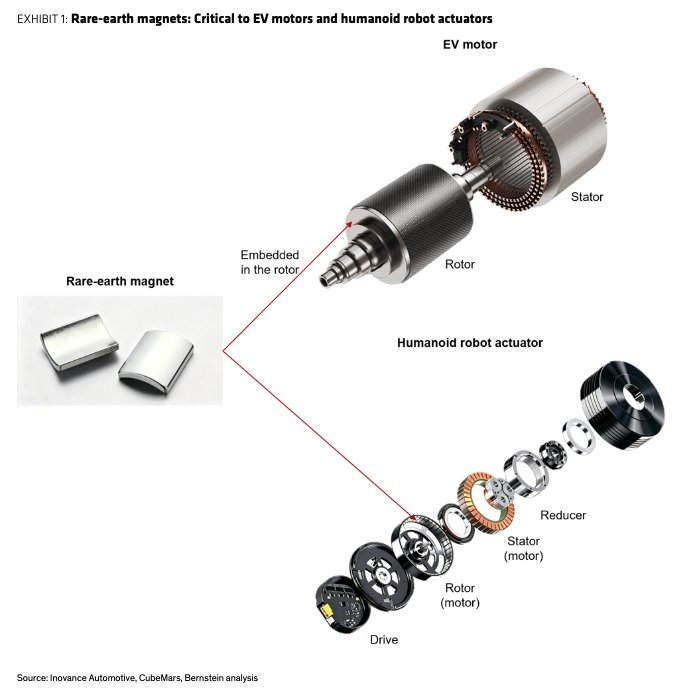
The magnets provide the torque density, compact size, and heat resistance needed for high-performance motors and robotic actuators.
Wang outlined that China's dominance in rare-earth magnets is troubling in an "increasingly multipolar world." He said there are only three conclusions to draw from this:
- Chinese EV (e.g. BYD) and humanoid OEMs could benefit from an improved competitive position overseas.
- Chinese robotic actuator (e.g. Tuopu, Sanhua) and EV-motor suppliers (e.g. Inovance) could gain share globally, as rival supply chains remain more vulnerable to rare-earth magnet disruptions.
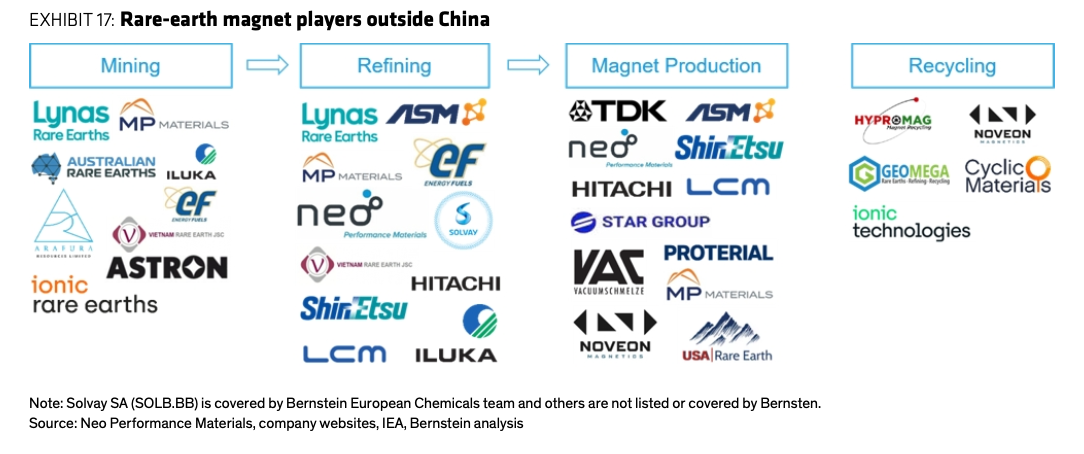
- Non-Chinese rare-earth magnet players (Exhibit 17) could benefit from growing requests for supply-chain diversification.
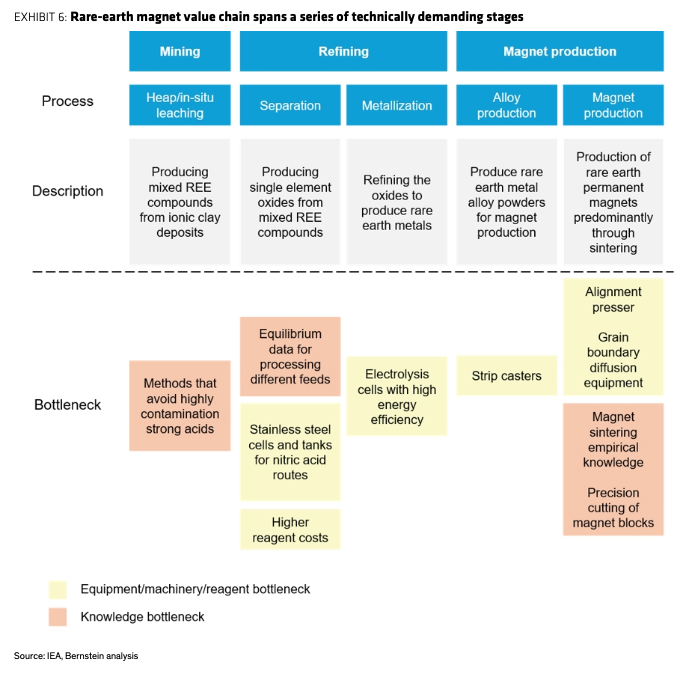
Rare-earth magnet value chain spans a series of technically demanding stages
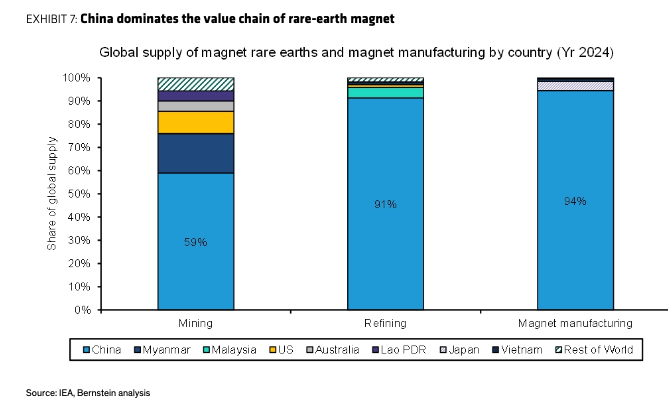
China controls about 59% of global magnet rare-earth mining, 91% of refining and 94% of magnet manufacturing, according to the analyst.
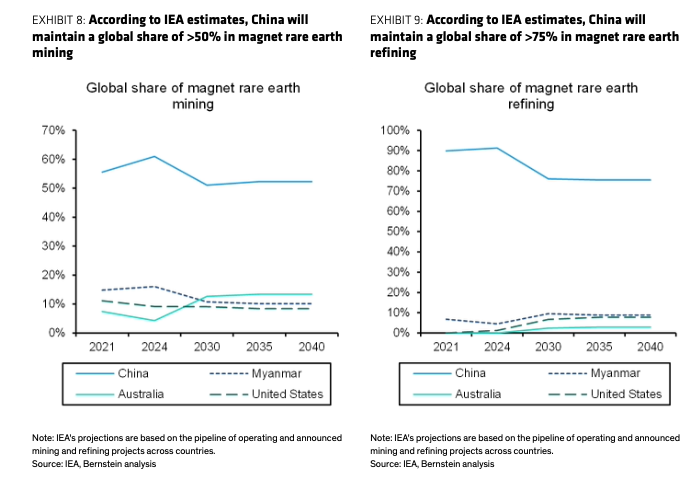
The International Energy Agency expects China to retain more than half of mining and over 75% of refining through 2040, while recycling is unlikely to meaningfully reduce near-term supply risks.
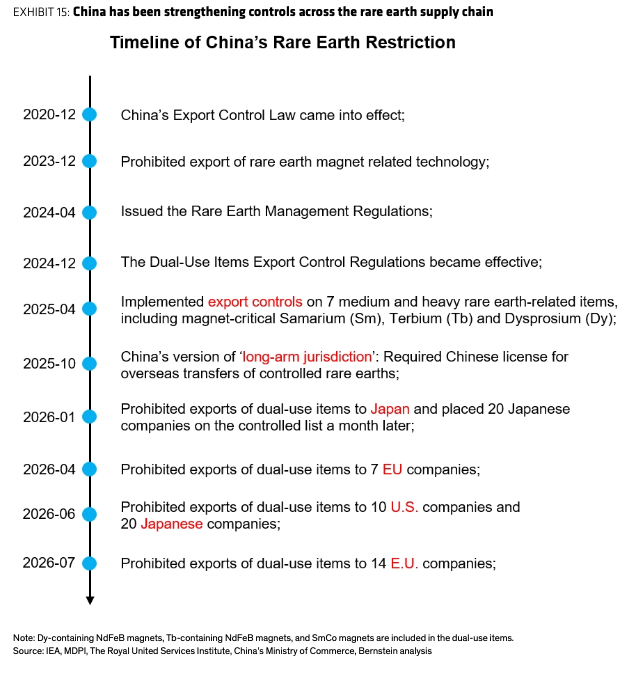
Beijing has weaponized its dominance of rare earths as a geopolitical tool against the US. China imposed controls on seven medium and heavy rare-earth products in 2025, extended licensing requirements to some overseas transactions, and restricted exports to dozens of US, European, and Japanese companies.
Those 2025 measures caused an immediate, though temporary, collapse in Chinese magnet exports.
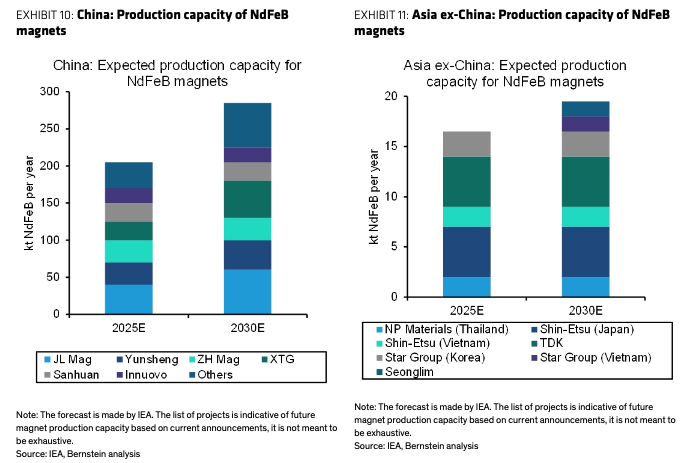
China/Asia Production of NdFeB magnets
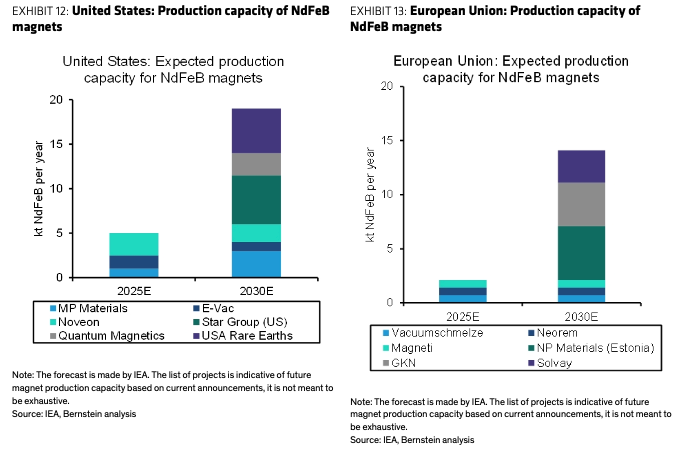
Comparing with the US and Europe...
Here's how to profit across the entire magnet supply chain ex-China:
"As Physical AI emerges as a strategic battleground among leading nations, control of critical chokepoints could ultimately determine who gains the upper hand," Wang noted.
China may already hold a structural advantage in humanoid robot development, supported by its massive manufacturing ecosystem and dominance of the rare-earth supply chain. On Monday, Hugging Face's CEO told CNBC that China is winning the AI race and increasingly dominating open-source models. Taken together, these signals suggest the West's lead in AI might be eroding against China.
Professional subscribers can read more color on humanoid robots here at our new Marketdesk.ai portal.
💡 AI analysis provides alternative perspectives on current events