Treasury Refunding: No Change To Auction Sizes As Bessent Deepens Reliance On Short-Term Debt
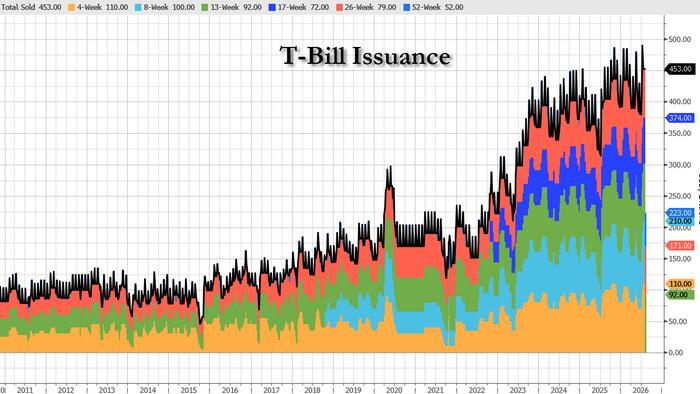
For yet another quarter, the Treasury's Quarterly Refunding offered no surprises, which considering the state of the US bond market is probably not a bad thing.
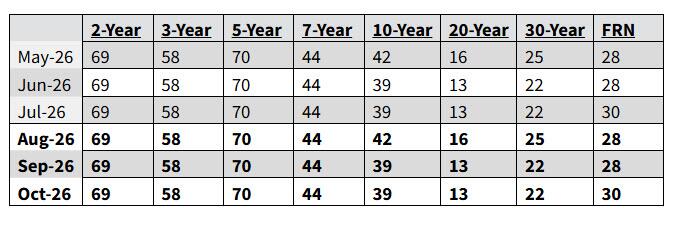
In its 8:30am ET report, the US Treasury retained its previous guidance for future debt issuance, signaling no change in note and bond auction sizes well into 2027 even as federal borrowing needs balloon to stratospheric levels (and will explode once the AI bubble bursts leading to catastrophic consequences for corporate bonds).
As for next week, the Treasury will hold $125 billion of refunding auctions, in line with estimates, which will be made up of:
- $58 billion of 3-year notes on Aug. 11
- $42 billion of 10-year notes on Aug. 12
- $25 billion of 30-year bonds on Aug. 13
The refunding will raise new cash of approximately $28.7 billion, the Treasury said.
Based on current projections, officials expect to maintain current sales amounts for nominal coupon securities and floating rate notes "for at least the next several quarters" - the same market-soothing language which the department has used in its quarterly debt-issuance strategy statement ever since the Janet Yellen "Activist Treasury Issuance" days of early 2024.
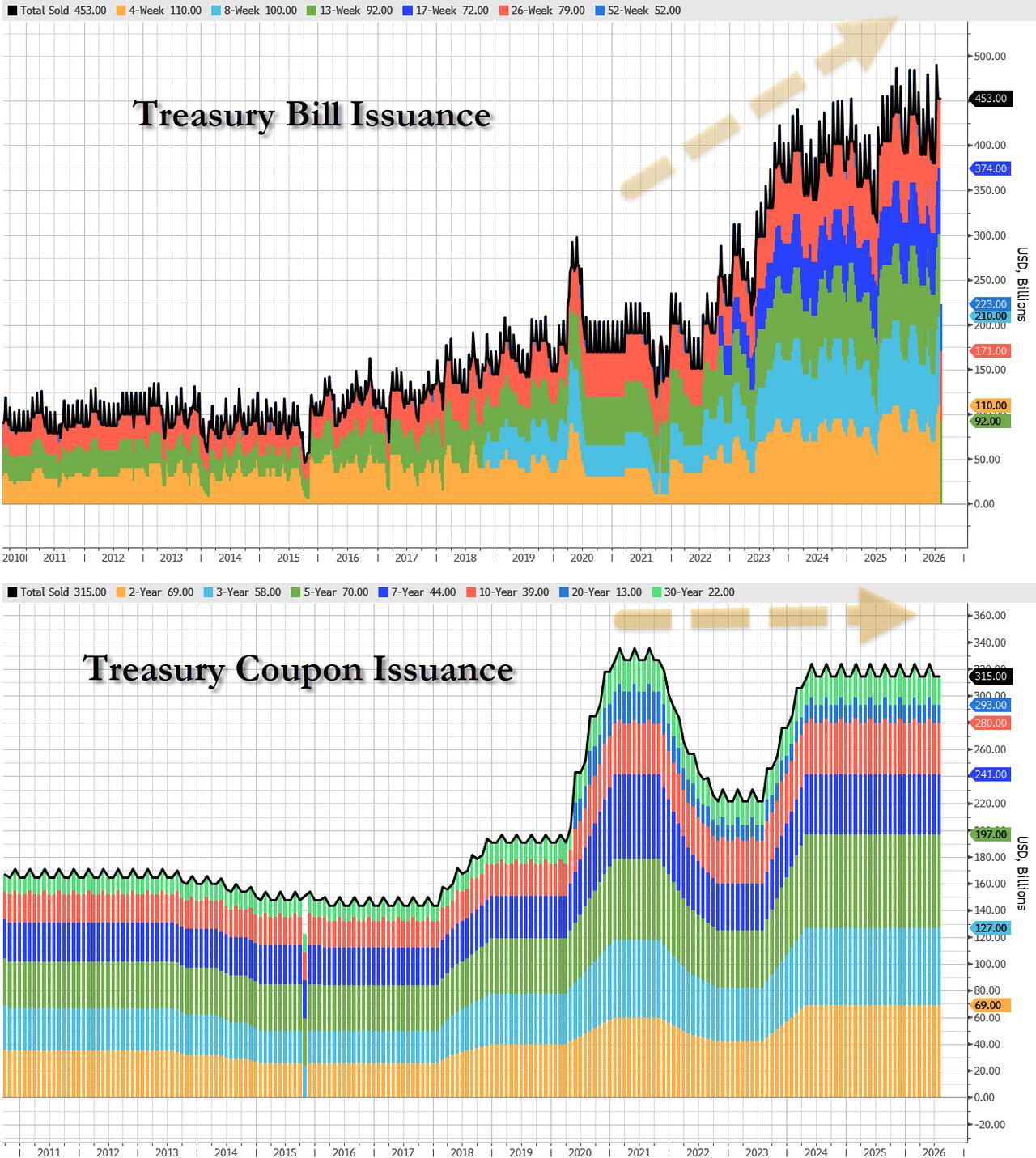
On bills, “based on current forecasts, Treasury expects to maintain current auction sizes in benchmark bills in the coming weeks”; and in "late-August, Treasury anticipates issuing a short-dated cash management bill."
The language and schedule is in line with the expectations of many dealers, who predicted Treasury Secretary Scott Bessent and his team would refrain from tweaks given that longer-dated yields have climbed in recent months. Benchmark 10-year yields hit their highest since he took office last week, making them all the costlier for the government.
The Treasury also retained its suggestion from May that it’s biased toward the shorter end of the yield curve for any future increase in coupon auctions. It said it’s monitoring growing bill demand and continuing to evaluate the situation “with a focus on trends in structural demand and potential costs and risks of various issuance profiles.”
Of course, the lack of boosting coupon debt means that the Treasury’s reliance on Bills and other short-term securities that mature in up to a year, will deepen even more, in a strategy dealers have dubbed “T-bill and chill.”
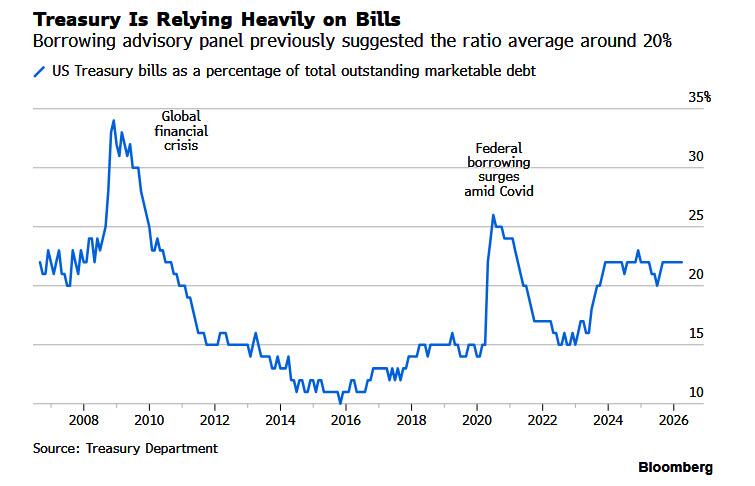
The ratio of bills to outstanding debt is now historically high, however, running the risk of debt-servicing costs becoming sensitive to shocks — at a time traders are betting the Federal Reserve will be forced to tighten monetary policy in coming months.
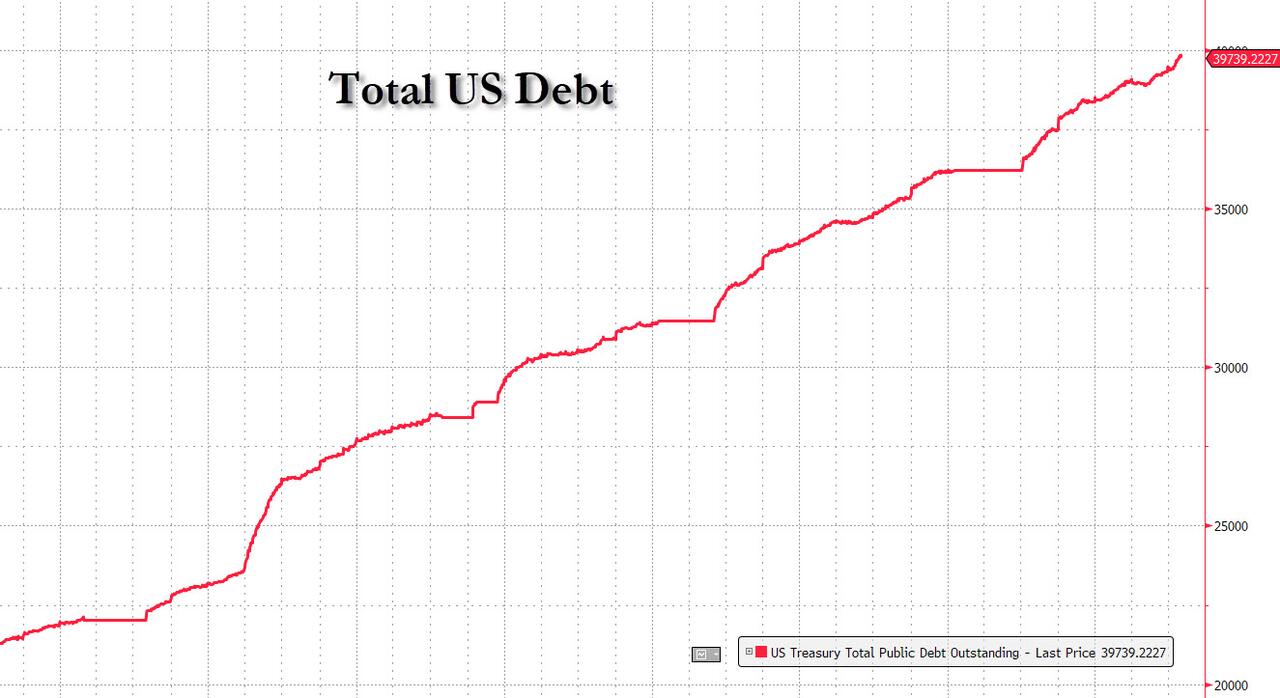
The problem is that current auction sizes won’t leave the Treasury in position to raise fresh cash as time goes on, which means the T-bill share of debt will climb inexorably if issuance isn’t changed. Borrowing needs, meantime, continue to swell. The Treasury on Monday stepped up its estimate for borrowing for the current quarter to $739 billion, up $68 billion from May, mainly due to lower projected cash flows. Meanwhile, total US debt will hit $40 trillion in two weeks.
According to Bloomberg, some strategists have linked Bessent’s reluctance to alter forward guidance to the looming November congressional elections, and preferring to avoid any debt-issuance tweak that risked sending yields higher.
Of course, the longer the Treasury holds off on signaling a change, the more dramatic and sudden the shift will need to be when it happens. But for now there is a market meltup to engineer until the midterms, at which point all bets are off.
The Treasury Borrowing Advisory Committee in the past has advised the Treasury to seek an average of 20% for the share of T-bills, but officials haven’t offered their own clear guidance on where their tolerance level may lie. For now, demand remains robust for bills, from money market funds to the Fed - which has been recycling maturing mortgage securities into bills.
💡 AI analysis provides alternative perspectives on current events