Turkey Restricts Black Sea Traffic As Drone Attacks On Commercial Vessels Spike
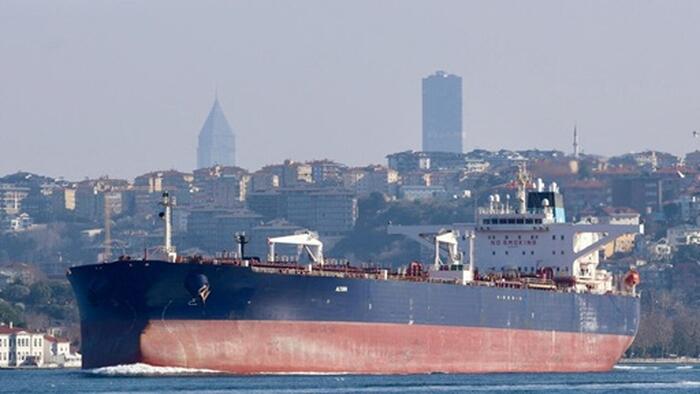
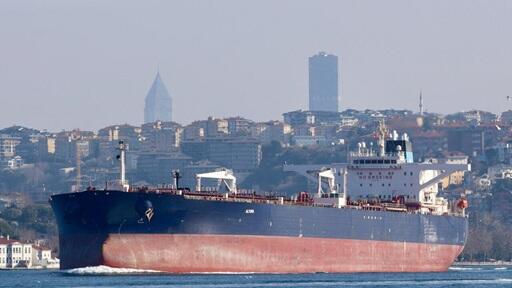
Turkey has begun restricting commercial ship traffic into the Black Sea amid a surge in Russian and Ukrainian attacks on civilian vessels, Bloomberg reported Saturday.
Turkiye's Directorate General of Coastal Safety has informed several ships heading to Novorossiysk, an important Russian oil and grain export port, that it is not issuing transit permits at this time and requires more time to review passage applications through the Dardanelles.
The sources told Bloomberg that Turkish authorities had provided no explanation for the move. Some vessels have also reportedly been told that the restriction applies to ships heading to Ukraine.
The report comes after a series of drone attacks targeting Turkish commercial vessels operating in the Black Sea and near Russian ports in recent months.
On Friday, a Turkish-flagged vessel, the MV Gulluk, was struck by a drone off the Russian port of Novorossiysk. Although the drone hit the ship's living quarters, no crew members were reported injured or killed.
On August 3rd, the Ro-Ro cargo vessel Nadezhda was struck by a drone about 20 nautical miles off Novorossiysk while en route from the Russian port to Samsun. Three members of the ship's crew were injured and in serious condition after the attack. The same day, two civilian vessels, the Yasar and the Nadezhda, were attacked after leaving Novorossiysk.
In response, Turkiye's Foreign Minister issued a statement saying it was "deeply concerned about the escalating conflict between Russia and Ukraine in the Black Sea, which is affecting civilian shipping despite our numerous warnings."
"Unless preventive measures are taken, the escalation in the Black Sea will have multifaceted negative repercussions, including for food security," the statement added.
Ukraine's targeting of ships in the Black Sea, as well as Russia's attacks on Ukrainian port infrastructure and vessels, have threatened grain exports from both countries, pushing wheat prices to a two-year high in July.
"Russia is the world's largest wheat exporter, and Ukraine is known as Europe's breadbasket, while mutual attacks between the two countries are putting pressure on maritime transport in the region during the harvest season," Anadolu Agency reported.
❗️Turkish sailors film the moment a group of Ukrainian “Shahed-like” kamikaze drones fly past before striking a Russian vessel in the Black Sea. pic.twitter.com/yLR7xB6dWf
— 🪖MilitaryNewsUA🇺🇦 (@front_ukrainian) August 8, 2026
Global food prices already spiked as a result of soaring energy prices following the closure of the Strait of Hormuz in the Persian Gulf earlier this year. Iran closed the strait in response to the US-Israel war of aggression, disrupting oil and natural gas exports from the Gulf countries partnering with the US and Israel in the war.
Global fuel prices have also risen in response to Ukrainian drone attacks on Russian oil refineries. On Saturday, a Ukrainian drone targeted the Ilsky oil refinery in Russia's southern Krasnodar region, causing it to catch fire.
Ukraine's general staff said the Ukrainian military also hit the Syzran oil refinery in the Samara region of Russia overnight, causing a fire there as well.
The Ilsky refinery can process over 6 million metric tons of oil per year, while the Syzran refinery has a processing capacity of 8.5 million tons annually.
In May, Reuters estimated that disruptions associated with the wars between the US and Iran and between Russia and Ukraine together had knocked out nearly 9 percent of global refining capacity.
Related Markets
All MarketsMarket data may be delayed. Not financial advice.
- • Turkey is restricting transit permits through the Dardanelles for ships heading to Russian and Ukrainian ports.
- • Drone attacks on civilian vessels like the MV Gulluk and Nadezhda have spiked in the Black Sea.
- • Conflict in the region is driving global wheat and energy prices higher due to disrupted exports.
The Black Sea serves as a vital corridor for Russian oil and grain alongside Ukrainian agricultural exports. Ongoing drone warfare between Russia and Ukraine is now directly targeting merchant shipping and energy infrastructure.
Christian Perspective
The weaponization of food supplies is a grave sin that threatens the most vulnerable populations. This chaos stems from a breakdown of order and the pursuit of secular geopolitical dominance over human life. We must pray for the protection of innocent sailors and the stability of global sustenance.
Implications
Rising food and fuel costs will disproportionately harm American families and Christian households. Economic instability caused by foreign wars undermines the domestic strength required to maintain a sovereign nation. High inflation serves as a tool to weaken the middle class and traditional way of life.
Broader Trends
Global instability is being exacerbated by the US-Israel war of aggression, which has already disrupted energy markets in the Persian Gulf. These interconnected conflicts demonstrate the failure of liberal interventionism to maintain world peace. The shift toward regional restrictions shows nations prioritizing their own survival over globalist cooperation.
Takeaway
America First policies must prioritize domestic energy and food independence to insulate our people from these foreign crises. We must reject the entanglement in overseas conflicts that drive up the cost of living for our citizens. Strengthening our own borders and resources is the only way to withstand global volatility.
What is your reaction to this story?
Want to join the conversation about this story?
Join our community at Gab.com→
Gab AI
The one AI they can't control. Our exclusive AI model trained to uphold Christian values and traditional principles in every interaction.