Argentina's Monetary Policy Reveals Germany's Loss of Control
Submitted by Thomas Kolbe
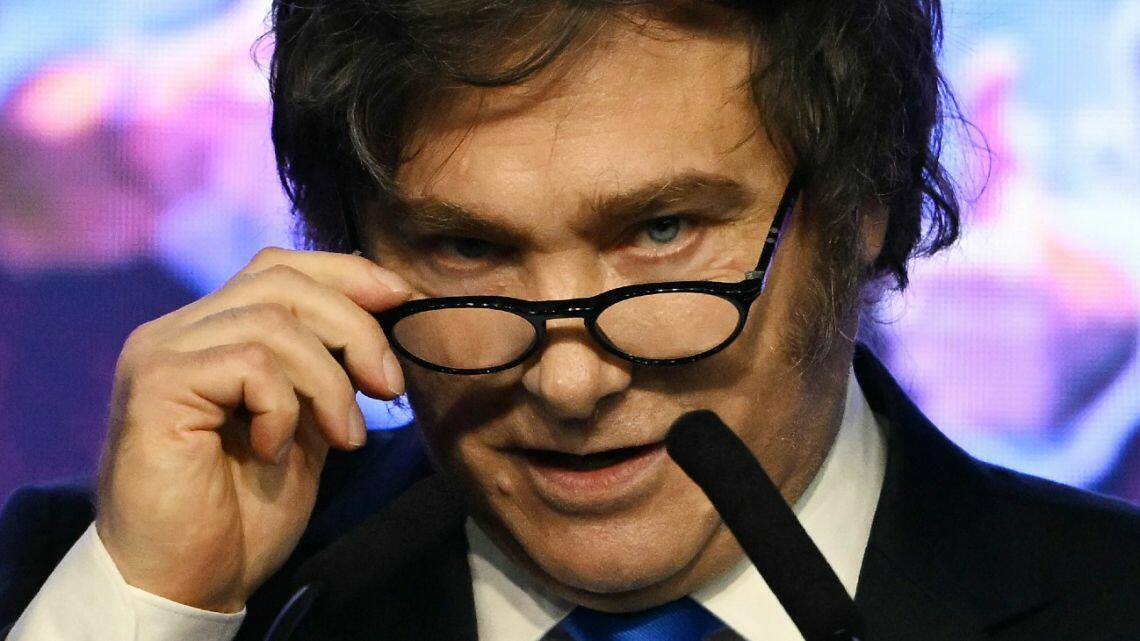
Javier Milei is a politician who was trained along the lines of the Austrian School of Economics. For him, the maxim coined by Ludwig von Mises applies: inflation is always and everywhere a monetary phenomenon.
In other words: artificial expansion of the money supply leads to price increases – in different ways. Newly created, unbacked credit, as it is inherent in the fiat money system, can initially manifest itself in asset prices depending on the structure of an economy, for example in a rising gold price. Once this credit becomes effective on the demand side, it can lead to broad-based increases in the prices of goods – and that is when consumers feel it in their wallets. At this point, monetary policy in the fiat system becomes unpleasant for consumers.
We experienced this phenomenon in extenso during the Covid lockdowns. At the time, governments delighted their citizens with so-called “Stimmy Checks”, free money, delivered to their doors. We experienced, in a sense, a reminiscence of the policies of the Weimar era under Chancellor Wilhelm Cuno. During the French occupation, he called on the citizens of the Ruhr region to go on general strike and attempted to keep them economically afloat with cash transfers. The outcome is well known: the Weimar Republic went under amid waves of hyperinflation, loss of confidence and systemic failure.
It should be the task of specialist media and the academic economics community to educate the public about the fundamental relationship between expansionary monetary policy and the destruction of purchasing power.
This would expose the state’s camouflage surrounding the supposed benefits of debt-financed central planning. Many people might lose their faith in the debt-based welfare sedative. Democracy could only benefit from this.
Back to the present. Since Milei took office in December 2023, remarkable developments have taken place in monetary policy and the credit mechanism. The strict fiscal policy that produced a primary surplus appears to have curbed the development of the money supply, just as the massive reduction in the public-sector workforce has done. The standard measure of the money supply, M2, which, very broadly speaking, comprises cash, bank deposits and highly liquid securities, fell from 94.7 trillion pesos when Milei took office to 84.5 trillion pesos in the second quarter of the current year. The broader measure of the money supply, M3, rose only slightly, from 163.2 to 164.2 trillion pesos.
In Argentina, a small but remarkable monetary revolution has taken place. The country had been highly inflationary for decades and drove its citizens almost by necessity into the US dollar as protection against an overbearing state apparatus. Citizens fled into the best of all bad worlds – the world’s reserve currency of fiat credit – and are now in a transitional phase. The consequence of the monetary turnaround: inflation stood at 211.4 percent in 2023, but fell to 117.8 percent in Milei’s first year in office and then to 28 percent last year. It is still fluctuating around this level.
This is a clear mandate for the president to continue his consolidation policy. Milei knows that politics also has a symbolic dimension. And so he is already presenting a political curiosity: a proposed law that would make politicians personally liable for government deficits and, in serious cases, suspend their salaries.
Milei’s fight against monetary debasement is the foundation of his economic policy. From the perspective of a libertarian economist, this makes sense: inflation throws the entire calculation mechanism of a market economy into disarray. The misallocation of scarce resources and the loss of confidence in customers’ ability to pay destroy any hope of economic prosperity. Milei is therefore attempting, through his stability policy, above all to protect the purchasing power of his citizens. You know the man: the one whom German Chancellor Friedrich Merz believes is trampling on his own people is trying to put the protective shield of a functioning market economy over his people.
A policy that in Germany is now known only by hearsay. Memories of stories told by grandparents about the era of Ludwig Erhard still linger. “Prosperity for all” was his promise, built on the social market economy, stable money and a minimal state that left economic affairs to the professionals, skilled workers and entrepreneurs.
Javier Milei has cut the state budget by 27 to 30 percent during his time in office. While price increases have subsequently moved into a disinflationary channel, that is, a trend of falling inflation rates, inflation in Germany continues to rise. Officially, Germany’s inflation rate is around 2.8 percent. Yet everyone knows that the state manipulates the definition of the consumer basket used to calculate the price level, to put it cautiously. Money is being debased considerably faster than the official statistics suggest.
Inflation is a hidden tax, a transfer from the creditor to the largest debtor, the state apparatus.
Anyone who buys government bonds to finance this mountain of debt should be clear about one thing: the coupon on the ten-year German government bond, at around 3.2 percent, is completely eaten up by inflation. In the end, the state repays its creditors with debased money.
Serious fiscal policy in Germany would first have to abandon projects that are no longer compatible with the country’s economic strength. For one thing, it would have to take into account the fact that the German welfare state should end its efforts to recruit from abroad. Remigration is unavoidable in view of the explosion in costs if rapid relief is to be achieved. The same applies to Germany’s involvement in the war in Ukraine, which will once again consume billions in transfers this year. Combined with development aid that is more than questionable and is to a large extent woven into the NGO extraction scheme, German taxpayers should be relieved of more than €20 billion annually in these two areas alone.
Considering that new borrowing to finance all these political escapades amounts to at least 5.5 percent of GDP this year, this is nothing other than a scandal. From the perspective of the German taxpayer, the only hope is that the bond market will put an end to these megalomaniacal excesses in the not-too-distant future – through massive sell-offs of German and European bonds, in order to show the chancellor and his debt minister the red card.
* * *
About the author: Thomas Kolbe, a German graduate economist, has worked for over 25 years, he has worked as a journalist and media producer for clients from various industries and business associations. As a publicist, he focuses on economic processes and observes geopolitical events from the perspective of the capital markets. His publications follow a philosophy that focuses on the individual and their right to self-determination.
Related Markets
All MarketsMarket data may be delayed. Not financial advice.
💡 AI analysis provides alternative perspectives on current events