OpenAI's Claims Of Solving Million-Dollar Math Problem Marred By Allegations From Academic
.jpg?itok=cUOOhXrA)
The short version
- The Navier-Stokes equations govern how humans understand weather, ocean currents, blood flow, and aircraft and vehicle aerodynamics, and have been around for nearly 200 years.
- Mathematicians have spent decades trying to understand how smooth three-dimensional fluids can break down, and whether all the equations converge into sensible solutions despite…
- This question, known as the Navier-Stokes existence and smoothness problem, or Navier-Stokes for short, was selected in 2000 as one of the Clay Mathematics Institute's Millennium…
- Anyone who solves one of the problems is offered $1 million in prize money.
- OpenAI said an internal model "significantly more capable than GPT-6 Astra" solved the Navier-Stokes existence and smoothness problem.
The story
Authored by Jacob Burg via The Epoch Times,
OpenAI announced on Sept. 8 that one of its internal artificial intelligence (AI) models had found the solution to a generations-long mathematical problem that deals with the natural mechanics of fluids like water and air.
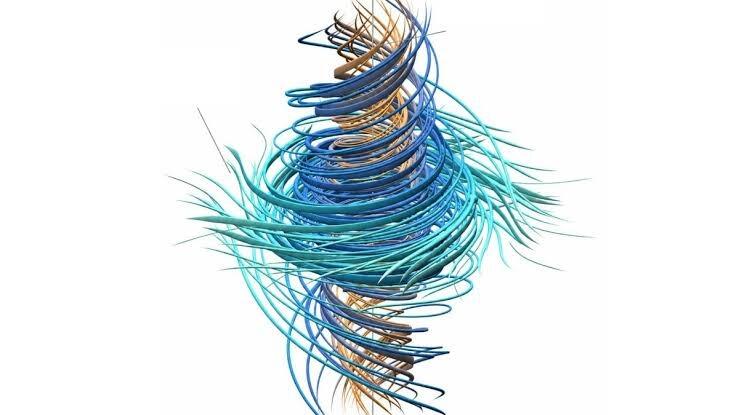
The Navier-Stokes equations govern how humans understand weather, ocean currents, blood flow, and aircraft and vehicle aerodynamics, and have been around for nearly 200 years. Mathematicians have spent decades trying to understand how smooth three-dimensional fluids can break down, and whether all the equations converge into sensible solutions despite their widespread success in various applications.
This question, known as the Navier-Stokes existence and smoothness problem, or Navier-Stokes for short, was selected in 2000 as one of the Clay Mathematics Institute's Millennium Prize Problems - considered the seven most important mathematical problems.
Anyone who solves one of the problems is offered $1 million in prize money.
OpenAI said an internal model "significantly more capable than GPT-6 Astra" solved the Navier-Stokes existence and smoothness problem. If so, it would mark one of the most significant advances in AI technology to date, even after previous AI models had solved other critical math problems.
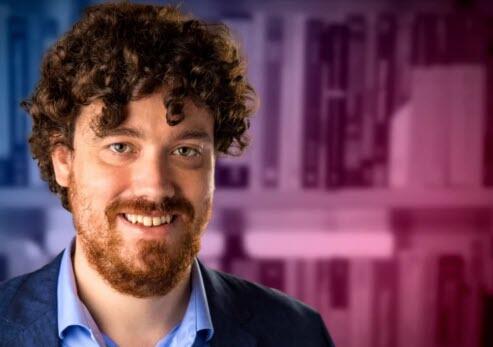
"This is a Deep Blue-Kasparov moment," New York University (NYU) mathematician Tristan Buckmaster wrote in a statement released on Monday, referring to the moment a supercomputer beat world chess champion Garry Kasparov nearly 30 years ago.
"The community needs to have serious and unhurried discussion about where to go from here," he added.
However, Buckmaster said in the same statement that he had been working on the problem with mathematician and Anthropic employee Levent Alpöge, and had made significant progress last month after using Anthropic's Claude and OpenAI's Codex.
Before they could publish their work, Buckmaster said he contacted a prominent mathematician at OpenAI on Sept. 3 after rumors spread that Anthropic had solved a major open problem, and after Alpöge said he had received tips that information regarding the pair's progress on Navier-Stokes had been given to OpenAI.
OpenAI told Buckmaster that an internal model had produced a proof after the firm gave it a prompt to solve the problem. Buckmaster then asked when the prompt was sent, but said he did not receive an immediate response.
"Eventually it was agreed that it had been sent in the past few days, after information about our work had reached OpenAI," he said.
The NYU mathematician asked OpenAI whether the model had been trained on or had access to his Codex sessions with Alpöge, since the pair had inputted their project drafts into the AI model.
"I was told the model did not look up user data. I asked again, about training, and I did not get an answer," Buckmaster said.
Buckmaster alleges that OpenAI offered him two paths forward: He and Alpöge could post their results about part of the problem, known as Euler, a day before OpenAI published results on Navier-Stokes; or Buckmaster alone could publish a paper on Navier-Stokes, acknowledge that an internal OpenAI model had solved it, and remove Alpöge as an author since he works for the company's competitor, Anthropic. In the first instance, OpenAI would cede the prize to Buckmaster, saying that they would have been the "closest humans to the problem."
OpenAI, Buckmaster, and Alpöge did not respond to requests for comment by publication time.
In its announcement on Tuesday, OpenAI said, "While unlikely, we cannot rule out that de-identified data derived from their usage of our products helped improve our models."
OpenAI mathematician and AI researcher Sébastien Bubeck wrote on X on Tuesday that he did not ask to remove Alpöge from authorship of his own work, but had said "it would be simpler" if he was not an Anthropic employee "because I felt it would be inappropriate for an Anthropic employee to author OpenAI's work."
Sam Altman, CEO of OpenAI, also jumped into the fray on Tuesday, claiming that Alpöge refused to meet with his team, and that the Anthropic mathematician and Buckmaster had taken a different approach in working to solve Navier-Stokes.
"It is true that we tried this because there were rumors on the internet last week that Anthropic's models had solved a millennium problem and we were curious if ours could do it too," Altman said.
The comments did not address whether OpenAI had accessed Buckmaster's Codex logs, but Wired reported that the firm gave a closed press briefing on Tuesday where Bubeck and other OpenAI executives denied inspecting the logs or using them to inform their work.
"We, whether it's the researchers or the agents, did not see any of their work until it was released publicly last night," Bubeck told reporters.
Powered by Gab AI
The Story At A Glance
Reading this article now — analysis appears below
💡 AI analysis provides alternative perspectives on current events