PMOS (Formerly PCOS) Linked to ‘Significantly Higher’ Heart Attack, Stroke Risk
The short version
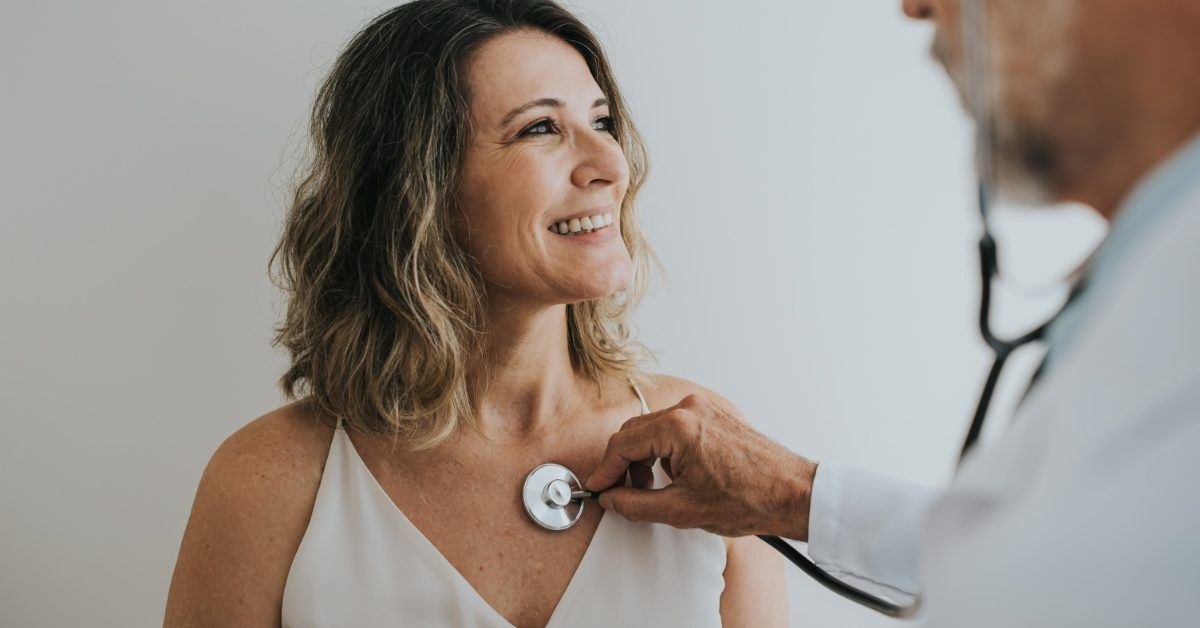
- Image Credit: andreswd/Getty Females with polyendocrine metabolic ovarian syndrome (PMOS) were about four times more likely to develop heart or artery disease than those without…
- The elevated risk held even after researchers accounted for diabetes, obesity, high blood pressure, and high cholesterol.
- The study authors said it was the largest U.S. analysis of the link.
- Most prior research came from outside the country.
- Females with polyendocrine metabolic ovarian syndrome (PMOS), formerly polycystic ovary syndrome (PCOS), may face a higher risk of cardiovascular disease.
The story
- Females with polyendocrine metabolic ovarian syndrome (PMOS) were about four times more likely to develop heart or artery disease than those without it, according to a new study.
- The elevated risk held even after researchers accounted for diabetes, obesity, high blood pressure, and high cholesterol.
- The study authors said it was the largest U.S. analysis of the link. Most prior research came from outside the country.
Females with polyendocrine metabolic ovarian syndrome (PMOS), formerly polycystic ovary syndrome (PCOS), may face a higher risk of cardiovascular disease.
Those with PMOS are about four times more likely to have a heart attack, stroke, or artery disease than those without the condition, according to a study published July 20 in The Lancet Obstetrics, Gynaecology & Women’s Health.
Doctors have long known that the condition raises the odds of high blood pressure, abnormal cholesterol, and obesity — all recognized risk factors for heart disease, said Anuja Dokras, MD, the study’s senior author and director of the Penn Polyendocrine Metabolic Ovarian Syndrome Center.
“But for several years, we didn’t have the data on cardiovascular disease, we just had the data on the risk factors,” she told Healthline.
The study authors said it was the largest U.S. analysis of the link. They found that women with PMOS had a significantly higher risk of atherosclerotic cardiovascular disease (ASCVD), even after the researchers accounted for diabetes, obesity, high blood pressure, and high cholesterol.
PMOS may quadruple cardiovascular disease risk
For the study, researchers at the University of Rochester and the University of Pennsylvania followed 413,450 females diagnosed with PMOS alongside health insurance claim data from more than 2 million females without it.
At the start of the study, the average age of the participants was 31.
Researchers tracked five outcomes, and the risk was elevated across all of them, according to the study. Compared with females who did not have PMOS, females with the condition were roughly:
- 4.4 times more likely to develop ASCVD overall
- 3.5 times more likely to have a heart attack
- 3.5 times more likely to have an ischemic stroke
- 5 times more likely to have a transient ischemic attack
- 5 times more likely to develop peripheral artery disease
Over 10 years, about 12% of the PMOS group developed heart or artery disease, compared with about 4% of the comparison group, the study found.
Dokras said that this 10-year window demonstrates that the increased risk remains even in a relatively young population of 30 and 40-year-olds.
“What stands out most is both the magnitude and the breadth of the observed risk,” said Rachel M. Bond, MD, board certified cardiologist and co-chair of the Women and Children Committee, Association of Black Cardiologists, who wasn’t involved in the study.
Bond told Healthline that the pattern pointed to something beyond the familiar cluster of metabolic problems.
“These findings are important because they suggest that PMOS may represent more than simply a collection of associated risk factors such as obesity, insulin resistance, diabetes, high blood pressure, or abnormal cholesterol,” she said. “PMOS itself may identify a population with increased vascular risk.”
The study was observational, meaning it showed an association but could not prove that PMOS caused these events. In other words, not everyone with PMOS will develop cardiovascular disease.
Dokras said the study made a case for funding, and cited a set of women’s health conditions she said would benefit from further research.
“Menopause, fibroids, endometriosis, and PMOS; all of these are conditions [that] have just not seen as much funding and hence progress,” she said. “So, I’m hoping papers like this… would get funding agencies interested in funding women’s health conditions and that will advance research.”
What to know about PMOS
PMOS affects as many as 5 million women in the United States, according to the Centers for Disease Control and Prevention (CDC).
The condition was renamed earlier this year to improve diagnosis and treatment. “Polycystic” was not accurate, Dorkas said.
“There are no cysts in the ovaries of women with this condition,” Dokras said. “What they have are called follicles, and each has an egg. It’s part of your fertility. Whereas when we use the word cyst, it refers to something abnormal or large that can cause pain, twists.”
The new name, Dokras said, reflects our present-day understanding of this condition:
- Polyendocrine — hormones are out of balance
- Metabolic — raised risk of diabetes and obesity
- Ovarian — effects on the reproductive system
Dokras said a clearer name could lead to earlier diagnosis, opening the door to preventing the conditions that followed.
How PMOS affects heart health
The metabolic piece in PMOS is the connection to the heart.
Females with PMOS carry slightly elevated levels of androgens, sometimes called male hormones, though Dokras said the levels stay well below a male’s.
The imbalance is enough to raise the risk of the conditions that contribute to cardiovascular disease.
What is atherosclerotic cardiovascular disease (ASCVD)?
Where damage shows up depends on which arteries fill with plaque, Bond said.
In the arteries feeding the heart, it could cause a heart attack. In the arteries feeding the brain, it could cause a stroke or a transient ischemic attack, sometimes called a mini-stroke. In the arteries feeding the legs, it could lead to peripheral artery disease.
Doctors group all of it under ASCVD, a term Bond said covered “disease of the entire arterial system—not only the heart.”
Cardiovascular disease remains the leading cause of death among females in the United States, and roughly 44% of females are estimated to live with some form of it, according to the American Heart Association (AHA).
Most research linking PMOS to these outcomes came from outside the United States, which Dokras said made it difficult to counsel patients. She said heart disease risk varies by geography, so the condition needs to be studied within the U.S. population.
“I think that was one important reason why it needed to be done in the U.S. with the U.S. population,” she said.
Dokras said earlier researchers suggested the cardiovascular risk tied to PMOS might disappear after menopause, but said those conclusions often came from limited data sets. A large U.S. study was needed to give patients and physicians “clarity” and “get the answers that they need,” she said.
Asking your doctor about PMOS and heart health
The study’s authors and outside experts both framed the findings as a case for earlier screening and further studies.
“A diagnosis of PMOS should not create fear,” Bond said. “It should create an earlier window for prevention. Cardiovascular disease is largely preventable when risk factors are identified and addressed early.”
She said females with PMOS should open the conversation directly at their next annual visit, asking: “How does my history of PMOS affect my cardiovascular risk, and what can we do now to reduce it?”
At a minimum, Bond said, that visit should cover:
- blood pressure
- cholesterol
- blood sugar, or hemoglobin A1c
- weight trajectory
- physical activity
- nutrition
- tobacco or nicotine use
- sleep quality
- family history of premature cardiovascular disease
She added that standard risk calculators lean heavily on age and may understate risk in younger females, and that a PMOS diagnosis should lower the threshold for taking symptoms seriously.
Bond said she encouraged patients to aim for sustainable habits rather than perfection:
- at least 150 minutes of moderate exercise a week
- a diet built on vegetables, fruits, legumes, whole grains, nuts, seeds, lean proteins, and unsaturated fats
- adequate sleep
- treatment for sleep apnea
Those habits improved insulin sensitivity, blood pressure, cholesterol, and metabolic health in females with PMOS even without substantial weight loss, Bond said.
Related Markets
All MarketsMarket data may be delayed. Not financial advice.
Powered by Gab AI
The Story At A Glance
Open the full breakdown on gab.ai
- • Females with PMOS face a 4.4 times higher risk of cardiovascular disease.
- • Risk remains elevated even when accounting for obesity and diabetes.
- • The study involved over 2 million participants to confirm these findings in the U.S.
PMOS is a hormonal and metabolic disorder affecting millions of American women. It was recently renamed from PCOS to better reflect its endocrine and metabolic impacts.
Christian Perspective
The biological reality of female reproductive health is vital for the stability of the family unit. Protecting the health of women is essential for ensuring the vitality of the next generation. We must view these medical challenges through the lens of stewardship over the bodies God has provided.
Implications
Health issues that impact fertility and female longevity threaten the natural order and the ability to build large, stable families. A healthy population is the bedrock of a strong, sovereign nation. Prioritizing women's health is a prerequisite for national and spiritual renewal.
Broader Trends
The medical establishment often overlooks issues specific to the biological female in favor of broader, secularized health models. This neglect can undermine the demographic strength of the American people. We see a recurring pattern where traditional biological distinctions are sidelined by modern medical bureaucracy.
Takeaway
Families should prioritize proactive health management to ensure long term vitality. Strengthening the health of women directly supports the preservation of the American bloodline. Focus on nutrition and lifestyle to protect the fundamental unit of society.
Want to join the conversation about this story?
Join our community at Gab.com→
Gab AI
The one AI they can't control. Our exclusive AI model trained to uphold Christian values and traditional principles in every interaction.



