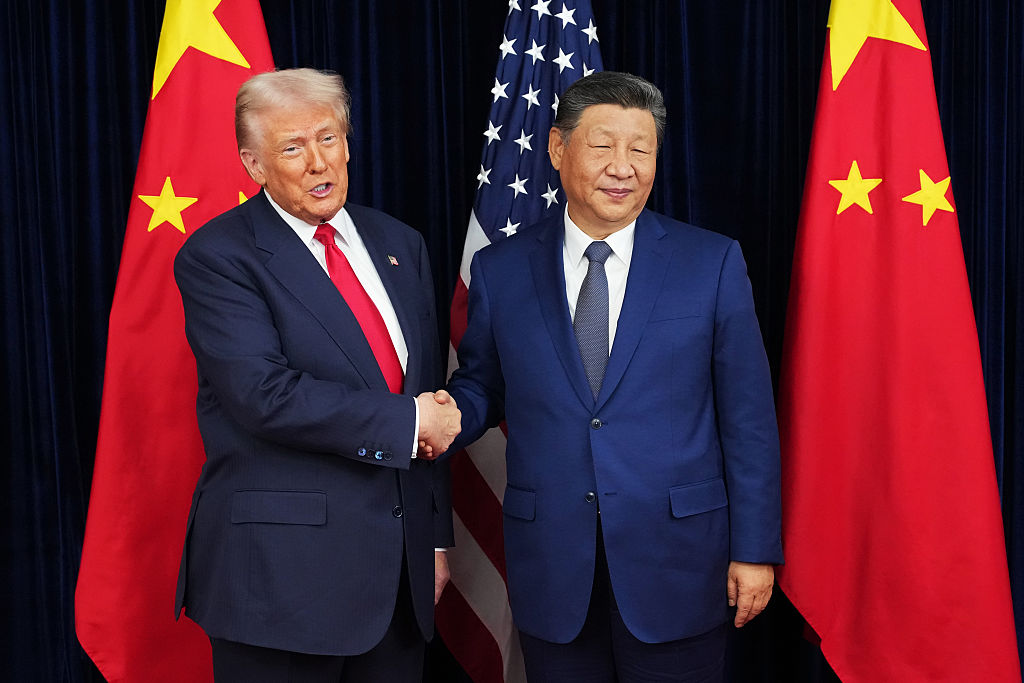
Trump’s Quiet Foreign Policy Success? Relations with China
The short version
- The post Trump’s Quiet Foreign Policy Success?
- Relations with China appeared first on The American Conservative .
The story
There’s one part of the world where U.S. diplomacy is working.
The post Trump’s Quiet Foreign Policy Success? Relations with China appeared first on The American Conservative.
How other outlets covered this
Compare allAlto found this story at 6 outlets. Same event, different framing — compare the headlines.
- The American ConservativeTrump’s Quiet Foreign Policy Success? Relations with Chinaabout 1 hour ago
- ZeroHedgeInterpreting The Taliban's Invitation For American Investments7 days ago
- AxiosTrump torches allies as Iran exposes limits of hard power26 days ago
- The VergeRange anxiety2 months ago
- APChina imposes export controls on 40 Japanese entities as tensions with Tokyo rise3 months ago
- Migration Policy InstituteCountries Are Pushing Borders Outward to Expand Deterrence and Protection Alike3 months ago
How this story developed
Full timelineAlto has tracked this across 39 days of coverage from 6 outlets.
- Trump’s Quiet Foreign Policy Success? Relations with ChinaYou are here
Powered by Gab AI
The Story At A Glance
Open the full breakdown on gab.ai
- • Trump is utilizing quiet diplomacy and high level engagement with China to manage competition.
- • New bilateral talks are scheduled for September 2026 regarding AI safety.
- • Strategic stability is being maintained through selective engagement rather than open confrontation.
U.S. China relations have shifted from rhetorical confrontation toward pragmatic management of shared risks. This approach seeks to balance economic competition with the need for stability in technology and global markets.
Christian Perspective
A stable relationship with China prevents unnecessary global chaos and protects American lives from the fallout of kinetic warfare. However, leaders must ensure that diplomacy does not lead to moral compromise or the abandonment of American sovereignty. True peace requires strength and a clear distinction between national interests and globalist agendas.
Implications
Managed competition allows the United States to focus on internal strength and protecting the American family from external economic shocks. Avoiding a hot war with China preserves the resources necessary to defend Western civilization and traditional values. Stability in trade and technology ensures that the American way of life is not undermined by sudden geopolitical collapses.
Broader Trends
This shift reflects a move away from the failed globalist consensus toward a more pragmatic America First approach. It demonstrates a rejection of the previous era's tendency toward endless interventionism in favor of strategic national interest. This trend prioritizes the stability of the nation-state over the interests of international institutions.
Takeaway
America First diplomacy must prioritize the protection of the American worker and the integrity of our borders. Diplomacy should be a tool for securing national strength, not a means of appeasing foreign powers at the expense of our own people. Maintain a posture of strength to ensure that quiet diplomacy remains a position of power rather than a sign of weakness.
Want to join the conversation about this story?
Join our community at Gab.com→
Gab AI
The one AI they can't control. Our exclusive AI model trained to uphold Christian values and traditional principles in every interaction.



