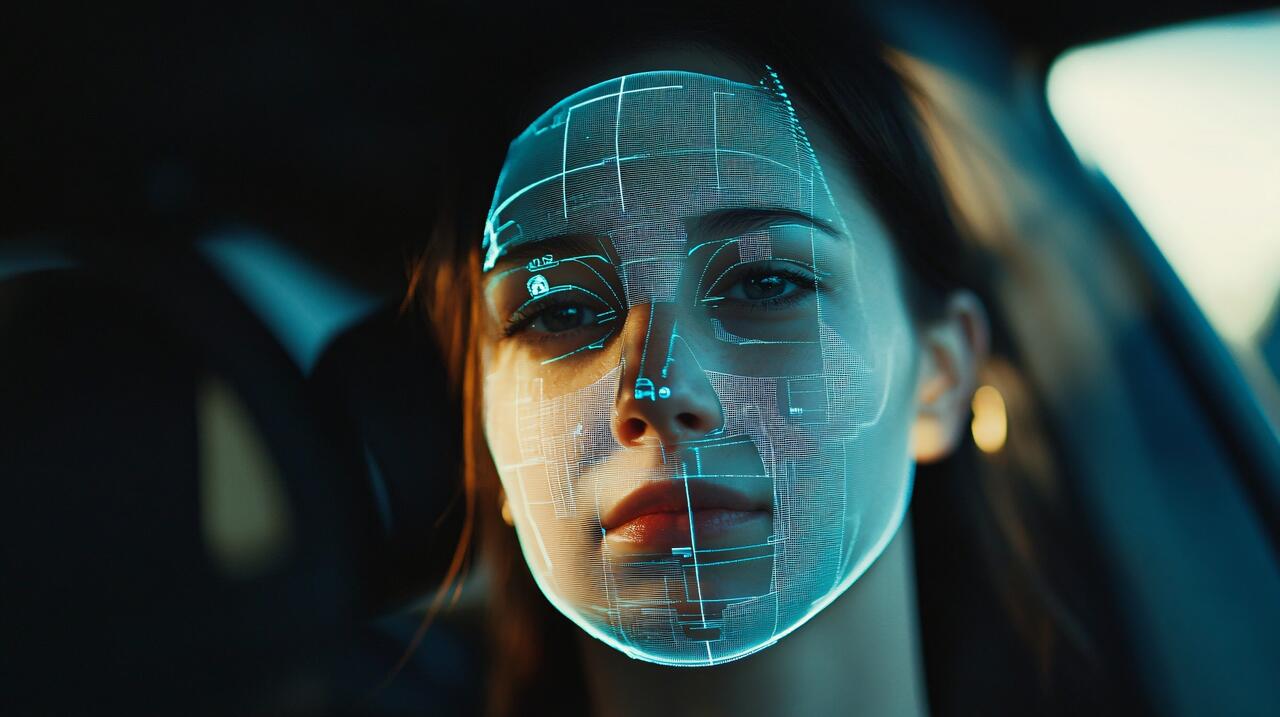
The EU Is Pushing "Driver-Monitoring Cameras" - Here's Why...
The short version
- Authored by Kit Knightly via Off-Guardian.org, From July of this year, every vehicle registered in the European Union will be required to have driver-monitoring cameras in place.
- That’s not every new car manufactured , but every car registered .
- The “Advanced Driver Distraction Warning” (ADDW) cameras are designed to monitor driver behaviour for signs of potential distraction…
- It was first announced in 2024 as part of the EU’s “Vision Zero” plan to eliminate car-related deaths by 2050.
- It’s never about what they say it’s about.
The story
Authored by Kit Knightly via Off-Guardian.org,
From July of this year, every vehicle registered in the European Union will be required to have driver-monitoring cameras in place. That’s not every new car manufactured, but every car registered.
The “Advanced Driver Distraction Warning” (ADDW) cameras are designed to monitor driver behaviour for signs of potential distraction, and then set off a warning if those signs are detected.
It was first announced in 2024 as part of the EU’s “Vision Zero” plan to eliminate car-related deaths by 2050.
But it’s not really about that.
It’s never about what they say it’s about.
Here’s where this goes…
Firstly, kiss successful insurance claims goodbye.
Any accident will be blamed on “sub-optimal driver performance”, and that time you checked your phone while stopped at a light, or your hands moved briefly from the 10-and-2 or your eyeline wasn’t correctly picked up by the mirror sensor, will be used to blame your fender-bender on you.
This will create a change in accident reporting statistics, spiking “driver error” as the cause for anything and everything that goes wrong on the road.
This, in turn, will kick off a big “people drive dangerously” propaganda push.
Headlines like “ADDW data harvesting has shown up 80% of us might be driving more recklessly than we think”, or “most veteran drivers slip in to bad habits, reports show” will appear.
Then comes the new legislation to act on this totally fabricated problem.
What is it? It’s re-certification.
That’s not speculation; it already happened. Under new EU rules, passed just a few months ago, every driver has to be re-certified and issued a new driver’s license after 15 years. It would be the smallest of tweaks to add “or after Y number of distraction warnings are recorded” to that legislation.
The new driver’s licenses will be digital, with biometrics included. It’s possible new cars will be undrivable without a scan of your biometric license.
Your car’s data will be uploaded to a database, of course. That’s going to happen.
…in fact, it already is.
It’s not at all far-fetched to imagine your driver monitoring data getting scanned for errors by an AI, and any detected errors putting points on your license. If you go over a certain number of points, your ability to drive is taken away…pending recertification.
You can appeal, and drive while the appeal takes place. But the appeal fee will be greater than the recertification fee, and if you lose, you have to pay extra legal costs, and you’re subject to an extended driving ban.
This will be covered in the press as a universally Good Thing.
Headlines will celebrate the (almost entirely fictional) decrease in traffic fatalities, whilst baselessly claiming that the smaller number of private vehicles on the road has “improved pollution levels in the inner cities”.
An opinion piece from an anonymous “former driver” will appear in the Guardian, “I lost my driver’s license, and it’s the best thing that ever happened to me”.
It will talk up how much money they’re saving on petrol and road tax, and how much fitter they get walking and cycling everywhere and how they know their neighbours so well now.
Not forgetting all sorts of cozy anecdotes about the charming characters you meet and life-affirming tableaux you witness using public transport.
Meanwhile, American “journalists” will wax poetic about the EU’s “forward-thinking system”, and the UK press and punditry will talk of “lagging behind the EU”, and blame every road accident on Brexit.
Some academics will publish a paper finding that “private car ownership has decreased under EU driver monitoring regulations”, and this “unintended upside” will be widely applauded.
Cue Buzzfeed: “New license rules have taken cars off the road, and it’s a good thing.”
And Vox: “The EU’s driver’s license law has given us a glimpse of what a car-less future could look like, and it’s beautiful”.
While all this is going on, there will be persistent white noise on the safety of “robot drivers” vs human drivers, talking up automatic driving software in Chinese electric cars and so on.
Public transport will be increasingly automated too – whether really automated, or just remotely driven doesn’t matter. The point will be to remove images of people driving from the public sphere.
The important part is you don’t get to decide where you’re going or how you’re getting there.
The end goal will be to inculcate a generally anti-car atmosphere, where even knowing how to drive will be considered somewhat old-fashioned.
Middle-class parents will boast to social media echo chambers that “I never wanted my Jacinda to learn!”, and receive bot-fueled applause as a reward. Implausible self-congratulatory anecdotes detailing how “My eight-year-old just told me he doesn’t want to drive because it’s bad for the planet! Children are so wise!” will go viral.
Because the easiest way to trap people is to make freedom uncool.
That might seem like a lot of speculation based on a little information, and in some ways it is, but pattern recognition is important. It’s much easier to put out a fire that hasn’t started yet, and we know they want to burn it all down.
We know they want to end private vehicle ownership; they have repeatedly said so.
Well, this is how they do that. A little at a time, creating atmospheres and environments. Seemingly arbitrary rules and regulations with “unforeseen consequences”. That’s how they work now, they come at us sideways with slow-developing long-cons, because they can’t afford to work in straight lines, not since Covid.
Stuff like this might seem a small – a throwaway issue vs war or the price of oil – but the powers-that-shouldn’t-be have an eye on the far horizon when they take small steps, and we should pay attention to where they want to take us.
Related Markets
All MarketsMarket data may be delayed. Not financial advice.
How this story developed
Full timelineAlto has tracked this across 3 days of coverage from 1 outlet.
- The EU Is Pushing "Driver-Monitoring Cameras" - Here's Why...You are here
Powered by Gab AI
The Story At A Glance
Reading this article now — analysis appears below
💡 AI analysis provides alternative perspectives on current events