Bessent Says US, China To Launch AI Safety Talks After Trump-Xi Meeting In Beijing
.jpg?h=df3c6bf4&itok=NlMBqVXP)
The short version
- President Donald Trump and Chinese leader Xi Jinping in Beijing.
- Bessent’s comments come as the rival powers sought to stabilize ties strained by trade disputes, the Iran conflict, and AI competition.
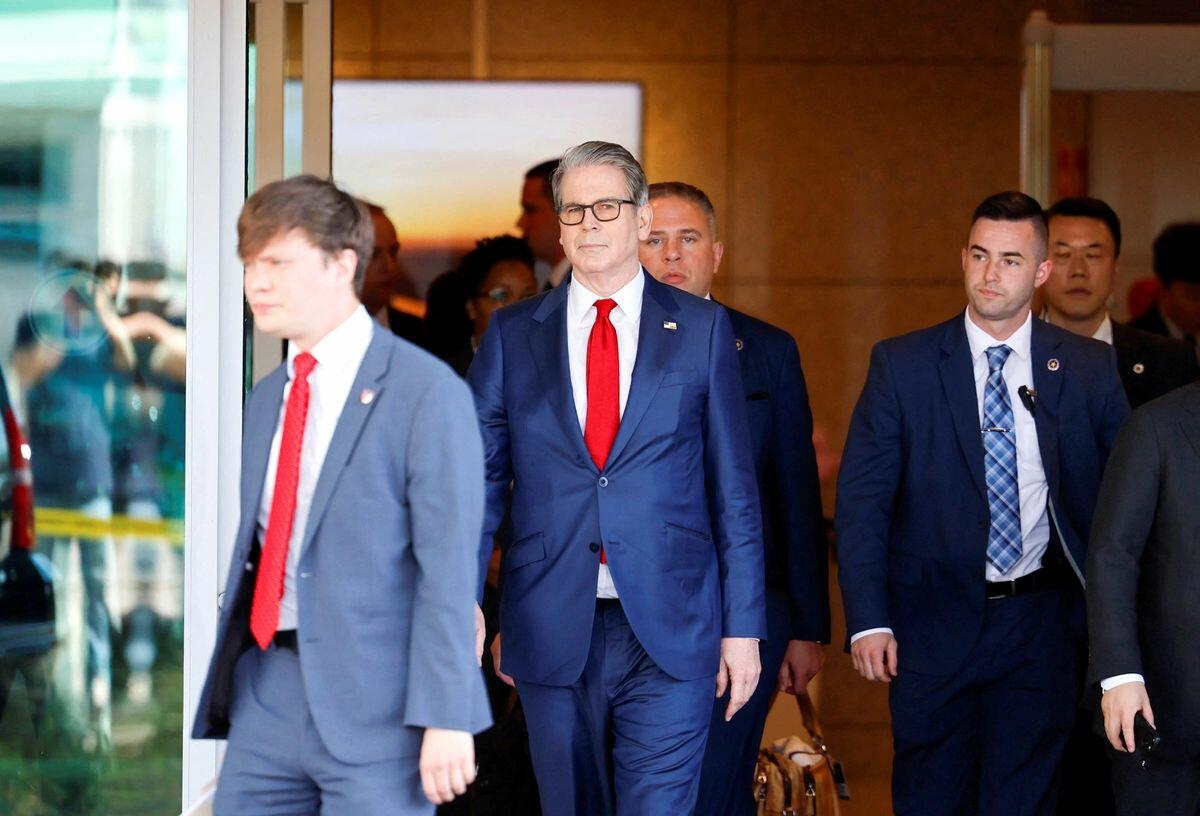
- Treasury Secretary Scott Bessent arrives at Incheon International Airport ahead of a scheduled meeting with South Korean President Lee Jae Myung and trade talks with Chinese Vice…
- The readout noted that Xi expressed Beijing’s opposition to the militarization of the strait or to Iran charging tolls for use of the critical waterway.
- Bessent said he expected a major “step-function jump” in upcoming AI model releases from Google and OpenAI.
The story
Authored by Tom Ozimek via The Epoch Times (emphasis ours),
Treasury Secretary Scott Bessent said on May 14 that Washington and Beijing would begin formal discussions on artificial intelligence (AI) safety protocols following meetings between U.S. President Donald Trump and Chinese leader Xi Jinping in Beijing. Bessent’s comments come as the rival powers sought to stabilize ties strained by trade disputes, the Iran conflict, and AI competition.
Speaking to CNBC from the sidelines of the Trump–Xi summit, Bessent said the United States and China—which he described as the world’s “two AI superpowers”—were preparing to establish a framework on AI best practices and safeguards aimed at preventing advanced models from falling into the wrong hands.
“The two AI superpowers are going to start talking,” Bessent said.
“We’re gonna set up a protocol in terms of how do we go forward with best practices for AI to make sure non-state actors don’t get a hold of these models.”
Bessent said the United States would seek to embed “U.S. values” and American-led best practices into emerging global AI standards, adding that Washington was engaging Beijing from a position of technological strength.
“The reason we are able to have fulsome discussions with the Chinese on AI is because we are in the lead,” he said. “I do not think we would be having the same discussions if they were this far ahead of us.”
The remarks came as Trump and Xi concluded the first major round of meetings during Trump’s two-day visit to Beijing, his first trip to China since returning to office for a second term.
In a White House readout issued after the meeting, Washington said the leaders discussed expanding economic cooperation, increasing Chinese investment in the United States while expanding market access for American businesses into China, boosting Chinese purchases of U.S. agricultural products, and maintaining freedom of navigation through the Strait of Hormuz.
A subsequent White House readout said both countries agreed that the Strait of Hormuz must remain open to “support the free flow of energy.” The strait is a key maritime chokepoint that normally handles around one-fifth of global energy shipments but has been heavily restricted by Iran amid its war with the United States and Israel.
The readout noted that Xi expressed Beijing’s opposition to the militarization of the strait or to Iran charging tolls for use of the critical waterway. Both countries also agreed that Iran “can never have a nuclear weapon.”
AI, Chips, and Investment Talks
AI and semiconductor policy were among the issues discussed at the summit, Bessent told CNBC, with the U.S. delegation’s visit set against a backdrop of intensifying competition between Washington and Beijing over advanced computing technologies with military and economic applications.
Bessent said he expected a major “step-function jump” in upcoming AI model releases from Google and OpenAI. He also addressed the ongoing debate over potential U.S. approvals for Nvidia’s sales of advanced AI chips to Chinese companies.
When asked about reports that Washington had cleared sales of Nvidia’s H200 AI chips to several major Chinese technology companies, Bessent said there had been “a lot of back and forth” on the issue but did not indicate that any finalized agreement had been struck.
Nvidia Chief Executive Jensen Huang joined Trump’s delegation to China alongside a large group of U.S. corporate executives, including leaders from Tesla, Apple, BlackRock, Boeing, and Qualcomm.
The H200 chip, part of Nvidia’s Hopper line of AI processors, is significantly more powerful than the export-restricted H20 chip previously designed for the Chinese market. Critics in Washington have argued that allowing Beijing access to such advanced chips could accelerate China’s military modernization and narrow the U.S. advantage in AI.
“The H200 is one of the most advanced AI chips on the market, and it is currently used to produce frontier AI systems with military applications,” a group of U.S. lawmakers wrote in a December 2025 letter expressing concern about the Trump administration’s decision to permit H200 sales to China, arguing that it “undercuts” national security.
At the same time, administration officials and some technology advisers have argued that controlled sales could preserve U.S. technological dominance while generating revenue for U.S. companies and taxpayers.
“This policy will support American Jobs, strengthen U.S. Manufacturing, and benefit American Taxpayers,” Trump wrote in a December 2025 social media post, noting that sales of the H200 would only go to “approved customers in China.”
David Sacks, chair of the president’s Council of Advisors on Science and Technology, said at the time that he believes sales of the H200 would discourage competitors such as Chinese company Huawei.
Chris McGuire, senior fellow for China and emerging technologies at the Council on Foreign Relations, said in an analysis that H200s could give China’s AI computing power trajectory a threefold boost.
Catherine Yang, Owen Evans, and Troy Myers contributed to this report.
Related Markets
All MarketsMarket data may be delayed. Not financial advice.
How other outlets covered this
Compare allAlto found this story at 2 outlets. Same event, different framing — compare the headlines.
How this story developed
Full timelineAlto has tracked this across 7 days of coverage from 2 outlets.
- Futures At New Record High On Tech, Tehran, Trade, Taiwan And TariffsZeroHedge
- Bessent Says US, China To Launch AI Safety Talks After Trump-Xi Meeting In BeijingYou are here
Powered by Gab AI
The Story At A Glance
Reading this article now — analysis appears below
💡 AI analysis provides alternative perspectives on current events