US And China Agree To Establish Trade And Investment Boards As Trump-Xi Summit Delivers Modest Wins
The short version
- The new boards aim to oversee bilateral purchases, manage trade differences, facilitate deals in non-sensitive sectors (with roughly $30 billion in goods identified)…
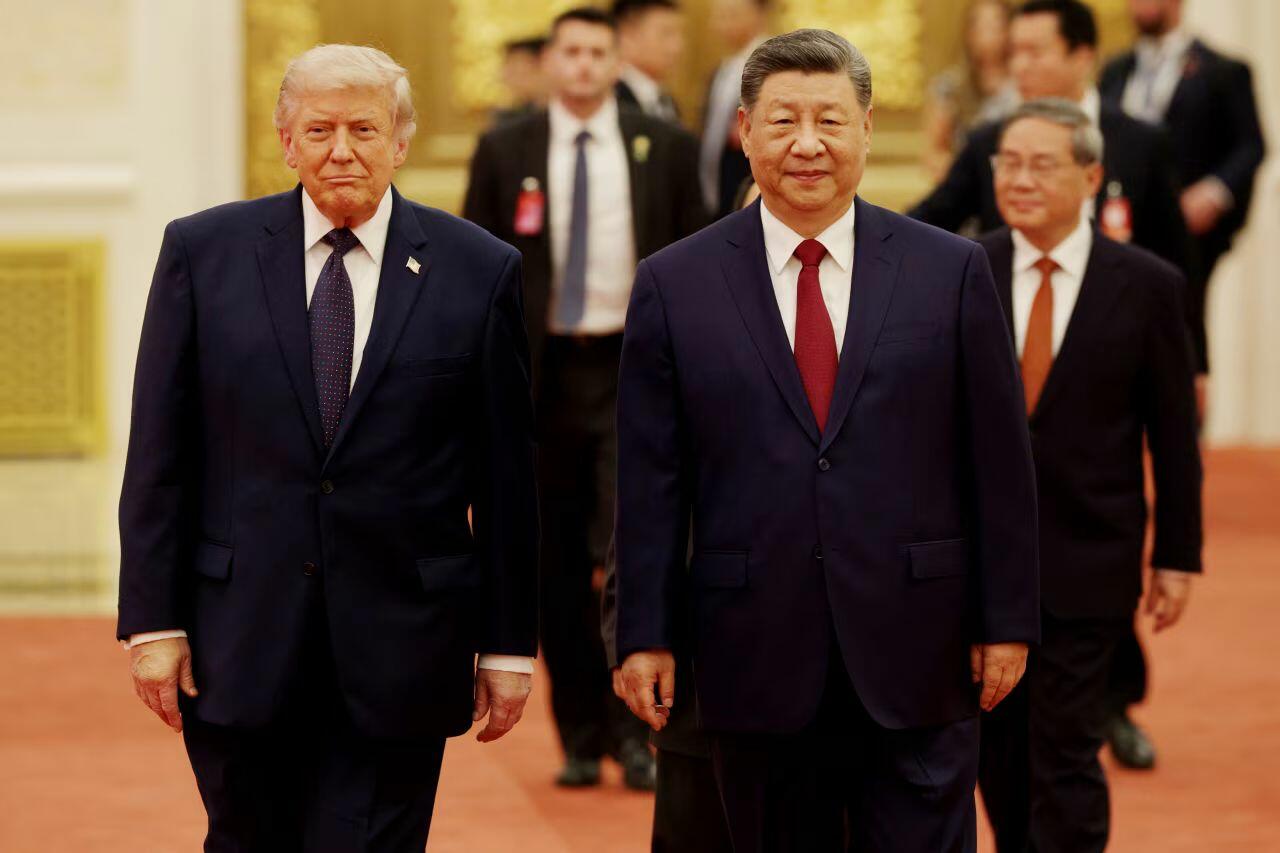
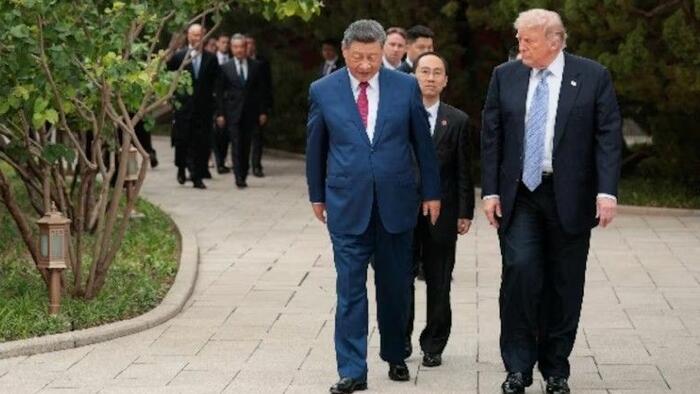
- President Trump and Chinese leader Xi Jinping at the Great Hall of the People in Beijing.
- Alex Wong/Getty Images The boards were a pre-summit priority pushed by U.S. officials, including Treasury Secretary Scott Bessent and U.S.
- Trade and Economic Deliverables Boeing Aircraft : China committed to purchasing 200 Boeing jets , with Trump indicating the order could potentially grow to 750 based on…
- This was the most visible commercial headline, though it fell short of earlier speculation around larger volumes and drew a muted market reaction.
The story
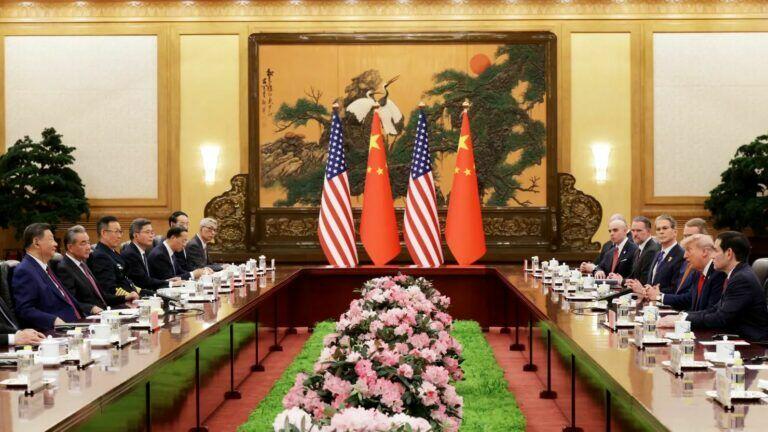
U.S. and Chinese leaders agreed to establish a new "Board of Trade" and a parallel "Board of Investment" during President Donald Trump’s two-day visit to Beijing - a summit that ended much as it began: with significant pageantry, warm personal rapport between the leaders, and modest, incremental progress on trade. The new boards aim to oversee bilateral purchases, manage trade differences, facilitate deals in non-sensitive sectors (with roughly $30 billion in goods identified), and provide a standing channel to prevent future escalations without constant high-level intervention.
The boards were a pre-summit priority pushed by U.S. officials, including Treasury Secretary Scott Bessent and U.S. Trade Representative Jamieson Greer. They build on preparatory talks in South Korea that produced what both sides described as "generally balanced and positive outcomes." Chinese state media, including Xinhua, highlighted the agreements as part of efforts to expand practical cooperation and maintain stable economic ties.
This development aligns with Xi Jinping’s broader push to reframe the bilateral relationship as one of "constructive strategic stability" - a new guiding vision intended to provide predictability for the next three years and beyond, emphasizing cooperation as the mainstay while allowing for "moderate competition" and "manageable differences." Xi described it as a positive, sound, constant, and enduring stability that should translate into concrete actions.
Trade and Economic Deliverables
- Boeing Aircraft: China committed to purchasing 200 Boeing jets, with Trump indicating the order could potentially grow to 750 based on performance. This was the most visible commercial headline, though it fell short of earlier speculation around larger volumes and drew a muted market reaction.
- Agriculture and Energy: Progress on expanded U.S. farm product sales (soybeans, beef, and other goods, with reports of commitments up to $10–50 billion in some readouts) and potential energy deals. Xi told accompanying U.S. CEOs that "China’s door will only open wider" to American businesses, signaling greater market access in mutually beneficial areas.
- Investment Outlook: Discussions included pathways for Chinese investment into non-sensitive U.S. sectors, with the Board of Investment intended to provide clearer guidelines and reduce uncertainty from national security reviews.
Trump touted "fantastic trade deals" upon departure, while Xi emphasized win-win outcomes and the importance of sustaining momentum in economic ties.
And hey, America apparently needs 500,000 Chinese students in the US, and China should be able to purchase US farmland so that collages and farm prices don't collapse, or something.
NOW - Trump says it's good to have 500,000 foreign Chinese students in the U.S. and for China to purchase U.S. farmland; otherwise, colleges and farm prices would collapse: "I frankly think that it's good that people come from other countries and they learn our culture." pic.twitter.com/3vQDXpjchz
— Disclose.tv (@disclosetv) May 15, 2026
Areas Without Breakthroughs
Despite the institutional progress, several high-priority issues saw limited or no resolution:
- Nvidia H200 AI Chips: No major summit agreement on advanced AI chip exports. While some U.S. licensing approvals for sales to select Chinese firms occurred around the visit (with Jensen Huang joining the delegation), export controls remained a sticking point and were not centrally resolved in leader-level talks.
- Rare Earths: No announced extension of the existing truce or easing of Chinese export controls, which continue to affect U.S. chipmakers and aerospace firms. This remains a lingering vulnerability from prior tariff exchanges.
- Iran Conflict: Both leaders expressed a shared desire for stability and reopening the Strait of Hormuz, with Xi showing interest in greater U.S. oil purchases to reduce Middle East dependence. However, China offered no concrete commitments to leverage its influence with Tehran. Beijing’s foreign ministry reiterated support for peace efforts without pledging active intervention.
Taiwan And Competing Narratives
Competing narratives quickly emerged from the summit - highlighting the persistent gap in how Washington and Beijing frame their relationship. Chinese state media, including Xinhua, emphasized Taiwan as "the most important issue" in bilateral ties, with Xi warning Trump that mishandling it could lead to confrontation or even conflict while reiterating opposition to “Taiwan independence.” (U.S. officials, including Secretary of State Marco Rubio, reaffirmed that American policy on Taiwan remains unchanged.) In contrast, the White House readout and Trump’s public comments focused heavily on international issues such as Iran, reopening the Strait of Hormuz, global energy security, and economic cooperation - including Xi’s reported interest in buying more U.S. oil to reduce Middle East dependence, fentanyl precursor controls, and increased agricultural purchases. Trump described the relationship as one that is “going to be better than ever before,” while Xi suggested that "cooperation benefits both, while conflict hurts both." Analysts noted that Beijing’s spotlight on Taiwan may serve to shape domestic and international perception and divert attention from other sensitive topics like trade imbalances, nuclear issues, and Iran. Meanwhile, the strong U.S. business delegation - including NVIDIA’s Jensen Huang - underscored Washington’s priority of securing concrete commercial wins. These divergent readouts reflect each side’s strategic messaging priorities: China seeking to reinforce red lines and stability on its terms, and the U.S. highlighting transactional progress and geopolitical alignment.
As Rabobank notes;
While markets kept a watchful eye on any headlines about the war in Iran, palates were left dry as only tepid announcements dripped out, such as that China “offered help” on Iran and “pledged not to send weapons.” What they did not manage to evade was a conversation about Taiwan. During the two and a half hour conversation with Trump, Xi underscored that US intervention in Taiwan could trigger a “highly dangerous situation.” While Rubio underscored that the topic of American arms sales to Taiwan wasn’t a major focus of discussion, it likely will be when Congress’ approved USD 14bn arms sale to Taiwan lands on Trump’s desk, and again when Xi visits the White House in September.
* * *
Overall Assessment: The summit went a long way in stabilizing ties through new dialogue mechanisms and modest commercial wins rather than grand bargains. Trump returned with a few modest wins he can highlight domestically ahead of midterms - though the whole 'Chinese students and farms' might be a tough pitch to MAGA, while Xi secured a narrative of strategic predictability and time for China to address its economic challenges.
Underlying rivalries in technology, supply chains, Taiwan, and global influence persist, but the relationship now has a more structured channel for management. Future progress is likely to remain incremental and transactional, with the newly agreed boards playing a central role in testing whether this stability proves durable.
Related Markets
All MarketsMarket data may be delayed. Not financial advice.
How other outlets covered this
Compare allAlto found this story at 2 outlets. Same event, different framing — compare the headlines.
How this story developed
Full timelineAlto has tracked this across 3 days of coverage from 2 outlets.
- US And China Agree To Establish Trade And Investment Boards As Trump-Xi Summit Delivers Modest WinsYou are here
Powered by Gab AI
The Story At A Glance
Reading this article now — analysis appears below
💡 AI analysis provides alternative perspectives on current events