DOE Declares Southeast Grid Emergency As Sweltering Heat Boosts AC Demand
The short version
- On Thursday, the Department of Energy issued an emergency order to mitigate blackout risks across the Carolinas amid extreme heat that threatens to sharply increase power demand.
- The order, issued under Section 202(c) of the Federal Power Act , allows Duke Energy Carolinas and Duke Energy Progress to run certain generating units at maximum output.
- A few severe storms will be possible again this afternoon and evening, but not everyone will get a storm.
- Some relief is expected this weekend, but temperatures are forecast to rebound next week as heat builds back into the region.
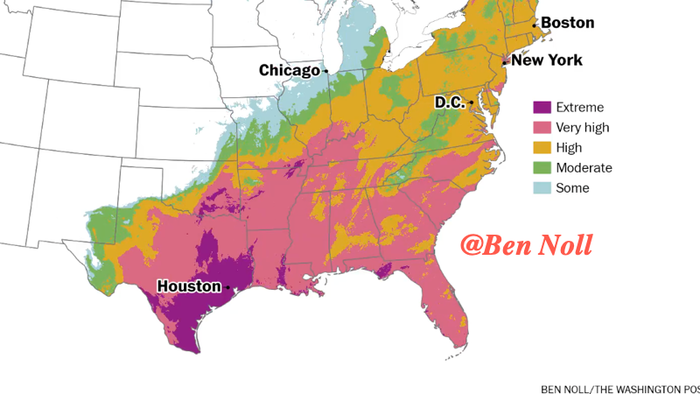
- "It's super humid in the Northeast and Mid-Atlantic, but relief is coming by Saturday," Meteorologist Ben Noll wrote on X.
The story
As the U.S. men's national soccer team kicks off its first match against Paraguay in Southern California on Friday night, large swaths of the country are trapped in what feels like a wet sauna, with dangerous heat and humidity forcing households to crank up their air conditioning and straining power grids from the Southeast to the Northeast.
On Thursday, the Department of Energy issued an emergency order to mitigate blackout risks across the Carolinas amid extreme heat that threatens to sharply increase power demand.
The order, issued under Section 202(c) of the Federal Power Act, allows Duke Energy Carolinas and Duke Energy Progress to run certain generating units at maximum output.
Secretary of Energy Chris Wright stated, "Maintaining affordable, reliable, and secure power in the Duke Energy service territory is non-negotiable."
"The previous administration's energy subtraction policies weakened the grid, leaving Americans more vulnerable during events like this. Thanks to President Trump's leadership, we are reversing those failures and using every available tool ensuring Americans in the Carolinas' have continued access to affordable, reliable, and secure energy to power and cool their homes," Wright said.
⚠️🔥 One day left of the oppressively hot and humid conditions. A few severe storms will be possible again this afternoon and evening, but not everyone will get a storm. It will turn much less humid for Saturday, but high temperatures will remain in the upper 80s to near 90°. pic.twitter.com/pi6sJDUwKp
— NWS Mount Holly (@NWS_MountHolly) June 12, 2026
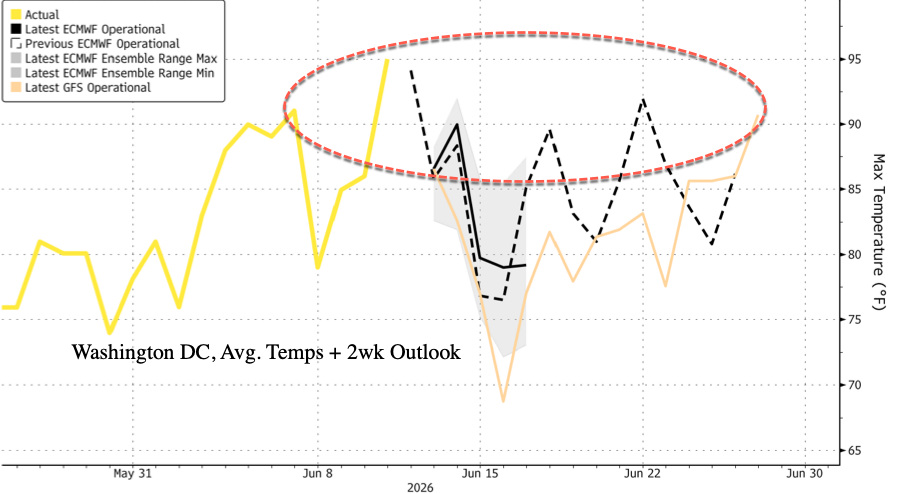
Maximum temperatures across the Mid-Atlantic, especially around Washington, D.C., have ranged from the 80s to the 90s, reaching as high as 95°F on Thursday. Some relief is expected this weekend, but temperatures are forecast to rebound next week as heat builds back into the region.
"It's super humid in the Northeast and Mid-Atlantic, but relief is coming by Saturday," Meteorologist Ben Noll wrote on X.
It's super humid in the Northeast and Mid-Atlantic, but relief is coming by Saturday!
— Ben Noll (@BenNollWeather) June 12, 2026
After a brief spike in humidity on Sunday, much more comfortable conditions will arrive early next week. pic.twitter.com/ZN4ilGdMuv
Bloomberg noted that grid stress materialized late Thursday, with PJM real-time power prices rising above $1,300 per megawatt-hour as sweltering heat lingered across the Mid-Atlantic. New York's grid operator prepared to activate emergency demand response, while New England's grid operator declared abnormal conditions as heat indices approached 100°F.
US SPOT POWER PRICES REACH RECORD HIGH OVER $1,000 PER MWH AT PJM WEST HUB IN PENNSYLVANIA AND MARYLAND
— zerohedge (@zerohedge) January 27, 2026
we are about to have a very shrill discussion about data center power use
We have seen four-digit territory before. As we covered in April when PJM prices shattered $1,000/MWh after first running during the January freeze to $2,300+, the same structural weakness keeps reappearing. Demand surges, variable resources drop off, and the system leans on whatever thermal capacity can still run.
It is the direct consequence of a generation mix that has shed firm, dispatchable megawatts faster than it has replaced them with anything that actually shows up when the forecast is wrong and the temperature is not.
The blackout in Spain is a phenomenal example of when this is taken to the extreme. And based on some recent warnings from ERCOT, Texas could be the next example.
When push comes to shove on the electric grid, it's not the renewables that are there to help…
Sleep tight America. We got this. Thousands of coal miners, truck drivers, railroaders, river boat workers and power plant employees will make sure that you stay warm and safe on a cold winter night. Fuel Satisfaction. Affordable Power. Grid Reliability. All from American Coal. pic.twitter.com/io0dzRD6vu
— WV Coal Association (@WV_coal1) January 27, 2026
Renewables and batteries help at the margin on good days. They do not solve the evening ramp or multi-day heat dome when every household and every server farm is pulling maximum power. The emergency waiver for Duke is the quiet admission that the current fleet cannot carry the load without violating the operating permits it was given.
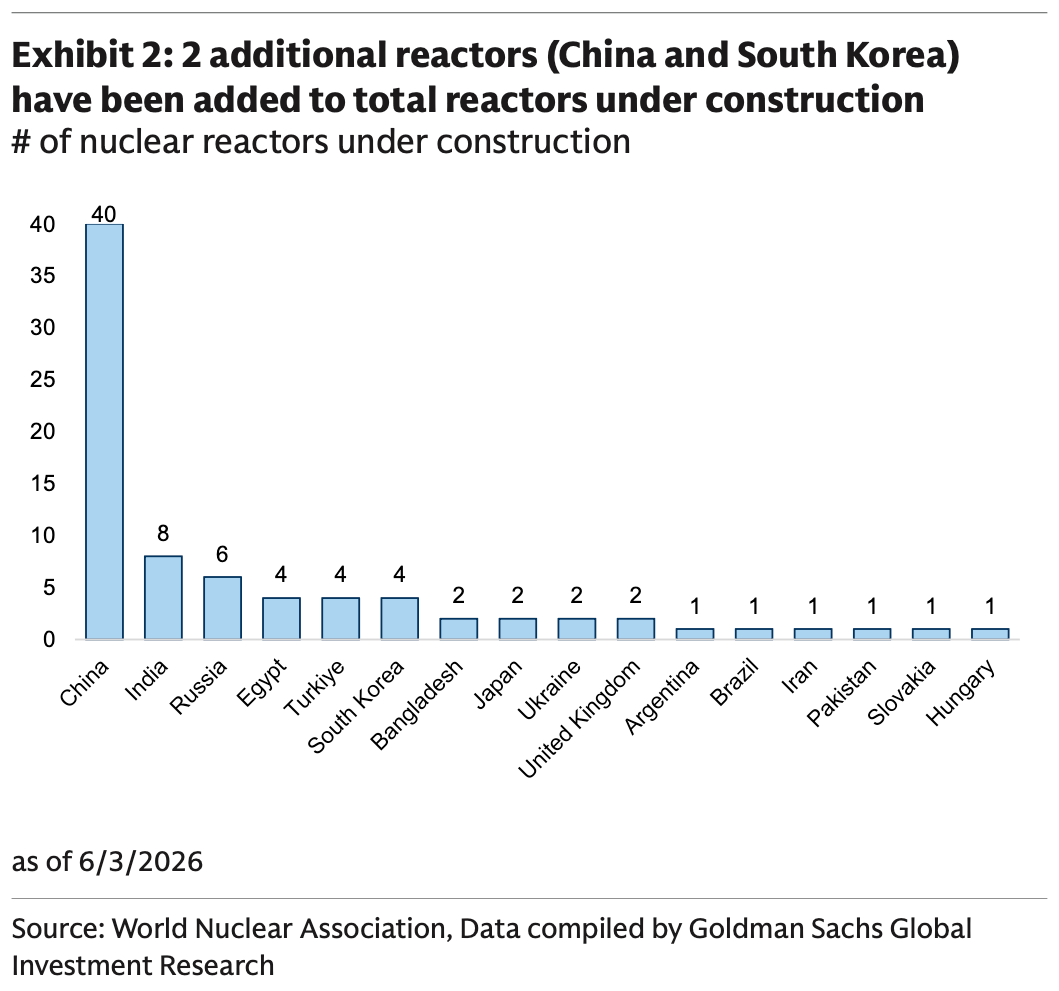
Nuclear is the obvious technology that could have filled this gap with carbon-free, always-available capacity. A fleet of new reactors sited years ago would be delivering gigawatts of firm power right now without anyone needing to waive emissions rules or beg demand response programs to shed load.
Instead, the United States has spent the better part of four decades adding almost no new nuclear capacity at commercial scale. As we have documented repeatedly, including in our coverage of the NRC’s new fast-track permitting framework promising 6–12 month construction permit timelines, the regulatory environment has improved dramatically under the current administration. Yet the shovels in the dirt remain conspicuously absent for most projects.
Meanwhile...
NHC expanding cone ( though still minor) to the concern I have been showing for a couple of days now pic.twitter.com/rYhTRvtpvI
— The American Storm (@BigJoeBastardi) June 12, 2026
On watch for tropical activity in the Gulf of America.
Related Markets
All MarketsMarket data may be delayed. Not financial advice.
Powered by Gab AI
The Story At A Glance
Reading this article now — analysis appears below
💡 AI analysis provides alternative perspectives on current events