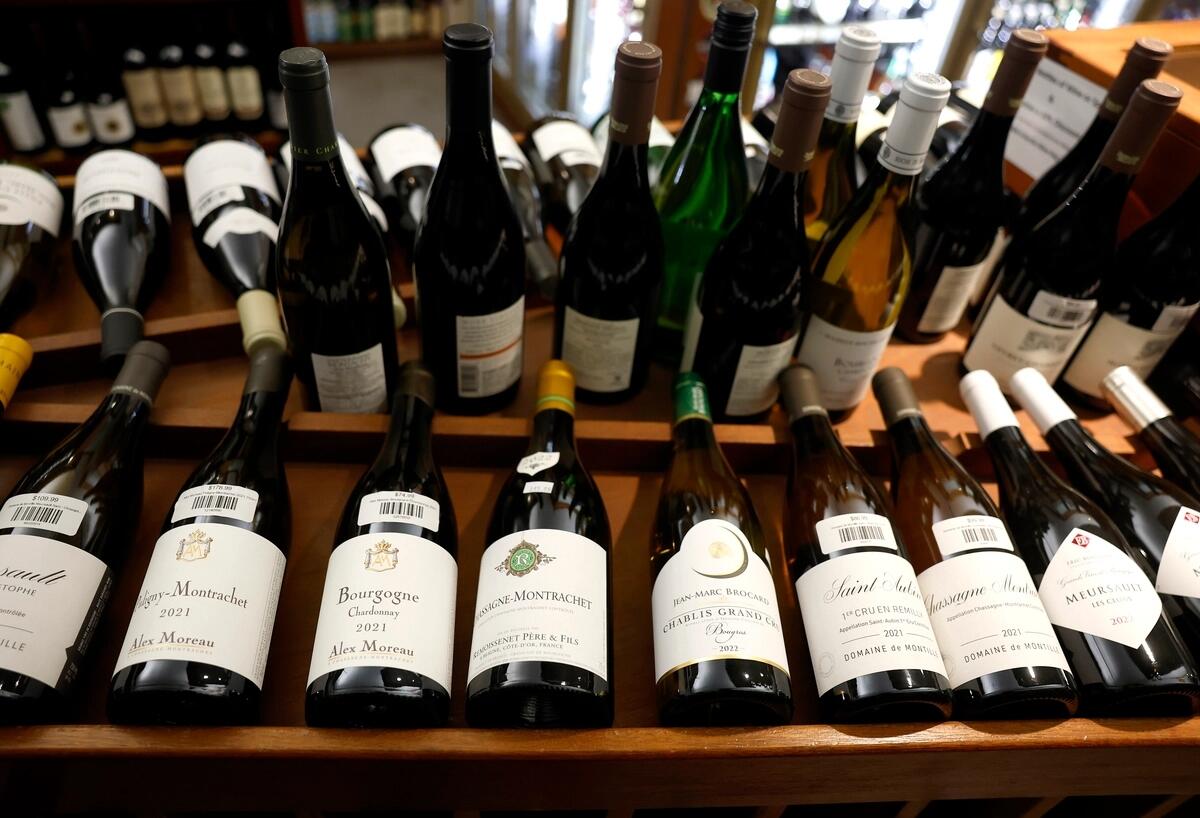
Trump Threatens 100% Tariff On French Wines Over Digital Services Tax
.jpg?itok=HVXyMF8m)
The short version
- "We will have a respectful but firm discussion," Macron told TF1 as he prepared to host Trump and other leaders at a G7 summit.
- "Tariffs don't do anyone any good, especially tariffs between G7 countries," Macron said.
- As Tom Ozimek reported earlier via The Epoch Times, U.S.
- President Donald Trump on June 15 threatened to impose a 100 percent tariff on French wines and champagne unless France eliminates its digital services tax on large American…
- The tax applies to firms with more than about $29 million in French revenue and roughly $870 million in global revenue.
The story
Update (0810ET): France's President Emmanuel Macron said Monday he wanted to have a "respectful but firm discussion" with Trump.
"We will have a respectful but firm discussion," Macron told TF1 as he prepared to host Trump and other leaders at a G7 summit.
"Tariffs don't do anyone any good, especially tariffs between G7 countries," Macron said.
As Tom Ozimek reported earlier via The Epoch Times, U.S. President Donald Trump on June 15 threatened to impose a 100 percent tariff on French wines and champagne unless France eliminates its digital services tax on large American technology companies.
Trump said he delivered the warning directly to French President Emmanuel Macron, demanding that Paris scrap its 3 percent levy on major U.S. tech firms or face steep duties on some of France’s best-known exports.
“I asked him not to charge American companies, and if they do, I have no choice but to charge a 100% tariff on all champagnes and all wines coming out of France,” Trump told the New York Post in an interview. “All [Macron] has to do is get rid of the sales tax, and he wouldn’t have that kind of pressure.”
Trump’s threat prompted concern from French exporters, who warned of further strain on an industry that depends heavily on overseas markets.
“This new threat is bad news for our industry, which relies heavily on exports,” French wine and spirits exporters association FEVS said.
The group called for “responsible behavior” and urged France and the United States to maintain balanced and constructive trade relations “in the interest of both economies.”
France’s digital services tax, introduced in 2019, imposes a 3 percent levy on revenue generated in France by large digital companies. The tax applies to firms with more than about $29 million in French revenue and roughly $870 million in global revenue.
The measure has long drawn criticism from Washington, with the United States saying that it disproportionately targets American technology companies.
Experts say that even a relatively low digital services tax (DST) rate can lead to high effective tax burdens because revenues, rather than profits, are taxed.
“Because DSTs tax revenues, not profits, a company with a 10 percent profit margin would face a 60 percent effective tax rate on digital services provided in France,” economist Cristina Enache of the Tax Foundation Europe wrote in an October 2025 note.
Harvesters fill a press with Chardonnay grapes at the Mailly-Champagne cooperative during the 2025 Champagne harvest on August 26, 2025. Francois Nascimbeni/AFP via Getty Images
Enache described the French tax as discriminatory and cited research noting that France’s DST is ill-conceived because, while it purports to target big digital platforms, the cost mostly falls on consumers.
“The French DST, which functions like a tariff on certain services, is designed to be discriminatory,” Enache wrote. “It targets industries largely dominated by US companies, and the discrimination would be even greater if the revenue threshold is increased.”
Digital Tax Dispute
The United States has repeatedly challenged digital services taxes adopted by France and other countries. During Trump’s first term, the Office of the U.S. Trade Representative launched a series of Section 301 investigations into digital taxes that Washington viewed as discriminatory toward American companies.
“President Trump is concerned that many of our trading partners are adopting tax schemes designed to unfairly target our companies,” then-U.S. Trade Representative Robert Lighthizer said in a June 2020 statement. “We are prepared to take all appropriate action to defend our businesses and workers against any such discrimination.”
Trump has previously threatened tariffs on French alcohol imports. In January, he said he would impose a 200 percent levy on French wines and champagne if France declined to participate in the U.S.-led Board of Peace initiative for Gaza. In March 2025, he threatened a 200 percent tariff on alcohol imports from France and other European Union countries after Brussels announced plans to impose a 50 percent tariff on American whiskey.
The stakes are significant for France’s wine industry. Exports of French wines and spirits to the United States account for roughly one-quarter of the sector’s global sales, valued at about $4.4 billion annually, per FEVS data for 2024.
Wine and spirits imported from the European Union currently face a 15 percent U.S. tariff, a rate French officials have been lobbying to reduce since Trump and European Commission President Ursula von der Leyen reached a U.S.–EU trade agreement in Scotland last summer.
Last spring, amid an intensifying trade dispute between the United States and the EU, Commerce Secretary Howard Lutnick said that Trump’s tariff threats were intended to restore balance and fairness between trading partners.
“The EU has just so many years treated us so harshly, they just can’t stop,” Lutnick told Bloomberg TV in a March 2025 interview. “Their tariffs are way up here, and our tariffs are down here. How about: Relax. Let us balance it. We are your largest and most important trading partner. Treat us with respect and let’s get a little balance. Trump is out there saying: balance, balance, balance.”
Related Markets
All MarketsMarket data may be delayed. Not financial advice.
How other outlets covered this
Compare allAlto found this story at 5 outlets. Same event, different framing — compare the headlines.
- ZeroHedgeFutures Slide Ahead Of "Pivotal Week" With Nvidia Earnings. Warsh Speech On Deck3 days ago
- The Guardian — WorldTrump threatens 100% tariff on European countries that impose digital tax2 months ago
- Google NewsTrump threatens additional tariffs on European countries using digital service taxes - Politico2 months ago
- Washington ExaminerTrump threatens ‘100% tariff’ on European countries that implement new digital services tax2 months ago
- APTrump threatens 100% tax on European imports if countries impose tax on digital services2 months ago
How this story developed
Full timelineAlto has tracked this across 6 days of coverage from 5 outlets.
Powered by Gab AI
The Story At A Glance
Open the full breakdown on gab.ai
- • Trump threatened a 100% tariff on French wine and champagne to combat France's 3% digital services tax on American tech firms.
- • The French digital tax targets revenue rather than profit, creating an effective tax burden as high as 60% for some companies.
- • France's wine industry relies on the U.S. for roughly one-quarter of its global sales.
The United States has long opposed discriminatory digital taxes that disproportionately target American innovation. This dispute follows previous trade tensions regarding European tariffs on American whiskey.
Christian Perspective
Protecting American industry from predatory taxation is a matter of national stewardship and justice. Using economic leverage to defend domestic workers against foreign exploitation aligns with the duty to protect one's own household and nation.
Implications
Strong tariffs defend the American worker from being used as a piggy bank for foreign governments. This approach prioritizes the economic sovereignty of the nation over the interests of globalist trade agreements.
Broader Trends
This conflict highlights the ongoing struggle between America First policies and the globalist agenda of the European Union. It reflects a shift toward using economic strength to combat the erosion of national sovereignty.
Takeaway
Americans should support aggressive trade measures that protect domestic companies from foreign discrimination. Prioritizing American economic interests is essential to maintaining national strength and independence.
Want to join the conversation about this story?
Join our community at Gab.com→
Gab AI
The one AI they can't control. Our exclusive AI model trained to uphold Christian values and traditional principles in every interaction.