"Zero Hormuz Dependency": UAE Races To Rewire Energy Flows, Bypassing Chokepoint Chaos

The short version
- Either way, the interim peace deal appears likely to be signed within the next 48 hours, setting the stage for energy flows through the critical maritime chokepoint to begin…
- The broader takeaway is that buyers of crude, refined products, and LNG now have to rethink their sourcing stack after the US-Iran conflict effectively shut Hormuz for several…
- That means diversifying supply chains and reducing exposure to single-point maritime chokepoints.
- For Gulf energy producers, the Hormuz disruption will accelerate a massive push toward alternative export channels that bypass Hormuz entirely…
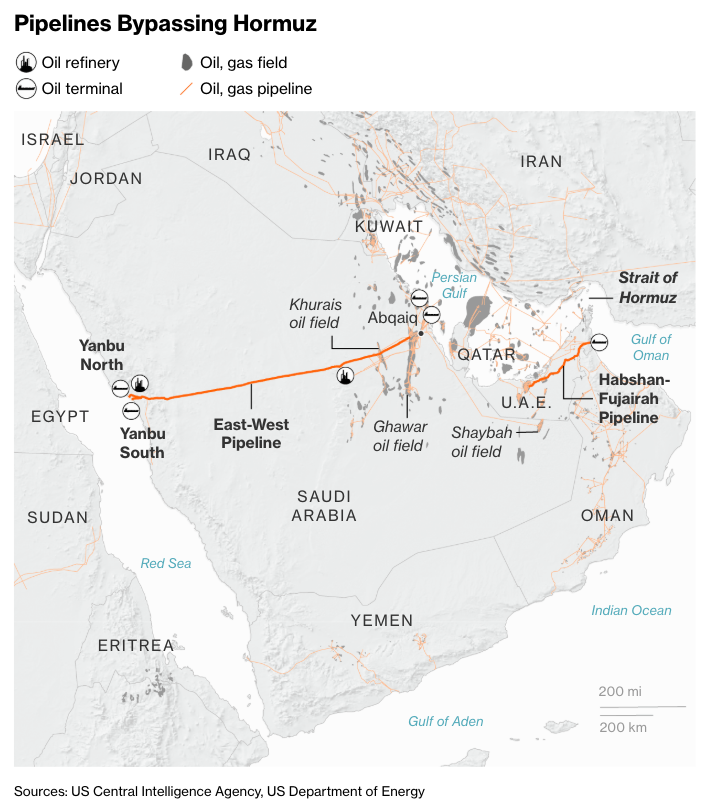
- In the first month of the conflict, Saudi Arabia's Hormuz-bypassing East-West pipeline ramped up to its full capacity of 7 million barrels a day…
The story
The shuttered Strait of Hormuz is expected to reopen within days, though conflicting reports suggest the US-Iran memorandum of understanding could be formally signed as early as today, Thursday, or Friday. Either way, the interim peace deal appears likely to be signed within the next 48 hours, setting the stage for energy flows through the critical maritime chokepoint to begin normalizing, a process that could take many months.
The broader takeaway is that buyers of crude, refined products, and LNG now have to rethink their sourcing stack after the US-Iran conflict effectively shut Hormuz for several months. That means diversifying supply chains and reducing exposure to single-point maritime chokepoints. For Gulf energy producers, the Hormuz disruption will accelerate a massive push toward alternative export channels that bypass Hormuz entirely, potentially reducing Tehran's ability to use the strait as a lever in future conflicts.
In the first month of the conflict, Saudi Arabia's Hormuz-bypassing East-West pipeline ramped up to its full capacity of 7 million barrels a day, allowing the Kingdom to divert flows from Persian Gulf loading terminals to those at Yanbu on the Red Sea.
Separately, there has been a rush across other Gulf states to identify alternatives to Hormuz, and major plans to begin building new pipeline routes may soon be approaching.
Earlier this month, Sheikh Khaled Ahmad Al-Sabah, managing director of international marketing at Kuwait Petroleum, said Kuwait is among the countries that have reportedly held talks with Saudi Arabia and the United Arab Emirates about potential cross-border pipelines that could connect Gulf oil production to buyers without relying on tanker transits through Hormuz.
New signals from Gulf states seeking to rewire energy flows emerged on Wednesday in a new note citing a top UAE official who said the energy exporter is preparing to have "zero dependence" on Hormuz.
"We're moving toward having zero Hormuz dependency and that's regardless of whether it's open or not," UAE's Minister of Foreign Trade Thani Al Zeyoudi told Bloomberg in an interview. "It's going to open and we hope that will happen quickly, but we will not stop the new plan."
The plan includes major investments in pipelines, rail, and road links from UAE ports in the Persian Gulf to Dibba, Fujairah, Khor Fakkan and at least one new harbor on the Gulf of Oman coast.
Abu Dhabi has already announced plans to fast-track a second crude pipeline to Fujairah by 2027 and is now reviewing a third petroleum pipeline, as well as ways to export petrochemicals, LNG, and other energy products without relying on Hormuz.
The UAE can reroute more crude through pipelines to eastern ports, but LNG, aluminum, container imports, and other commodities are harder to shift. Dubai's Jebel Ali remains the world's largest container hub outside Asia, and moving more cargo through eastern ports would raise inland transport costs and boost shipping times.
In recent weeks, the Iraqi cabinet approved plans to accelerate crude exports through the Kurdistan-Turkey pipeline network, which would more than triple its existing shipments from 220,000 barrels per day to 770,000.
"Iraq is in a much more complicated situation because we know that most, if not all, of its oil transits through Hormuz," Alan Lemangnen, senior economist at QuantCube, told CNBC in an interview.
What is becoming increasingly clear is that the Hormuz squeeze is rewiring the Persian Gulf's energy map. Over time, that shift could render Iran's leverage over the Hormuz chokepoint far less effective, if not obsolete.
Perhaps Tehran has already read the writing on the wall. That may help explain why Iranian officials are now willing to play ball with the Trump administration through an MoU to reopen Hormuz and eventually enter talks over the country's nuclear ambitions.
Related Markets
All MarketsMarket data may be delayed. Not financial advice.
How this story developed
Full timelineAlto has tracked this across 5 days of coverage from 1 outlet.
Powered by Gab AI
The Story At A Glance
Reading this article now — analysis appears below
💡 AI analysis provides alternative perspectives on current events