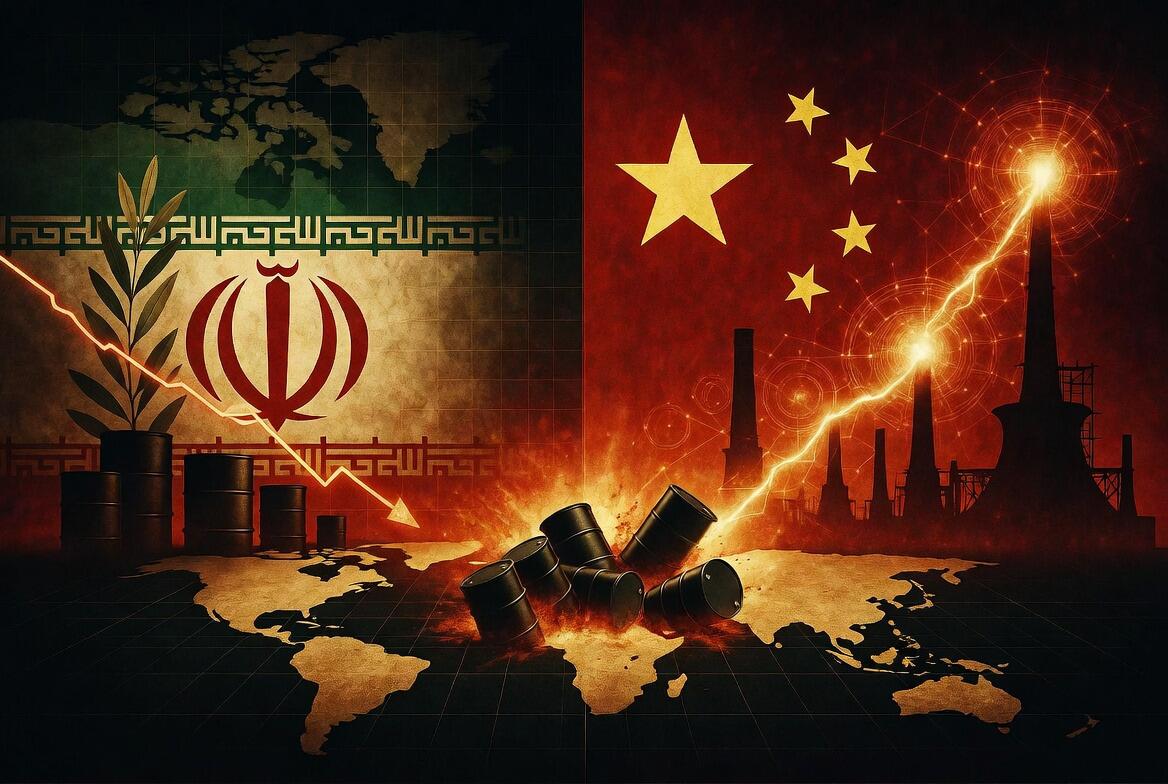
"Chinese Empire Is Next": Townsend Warns Beijing's Energy Dominance Is Rewriting The Global Order
The short version
- Anas Alhajji said during last night’s ZeroHedge debate that Iranian crude trading activity reflects a serious peace deal sticking .
- Alhajji joined Jeff Currie, co-chair of Abaxx Exchange, and Erik Townsend of Macro Voices to weigh in on the Iran deal’s implications for oil prices…
- Townsend, meanwhile, thinks China will come out on top.
- Currie, unlike Alhajji, remains bullish crude due to supply constraints and, assuming Hormuz does open Friday…
- That… and there’s no telling what the Israelis will do given that hardliners are already voicing their plans to continue attacking Lebanon…
The story
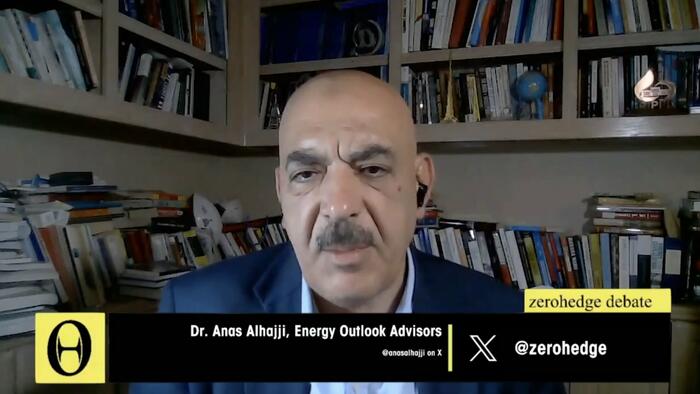
Veteran energy economist Dr. Anas Alhajji said during last night’s ZeroHedge debate that Iranian crude trading activity reflects a serious peace deal sticking. Alhajji joined Jeff Currie, co-chair of Abaxx Exchange, and Erik Townsend of Macro Voices to weigh in on the Iran deal’s implications for oil prices, which he believes are poised for a significant decline. Townsend, meanwhile, thinks China will come out on top.
Currie, unlike Alhajji, remains bullish crude due to supply constraints and, assuming Hormuz does open Friday, there is still a 6-week lag before ships begin reaching their destination. That… and there’s no telling what the Israelis will do given that hardliners are already voicing their plans to continue attacking Lebanon, violating a core component of the ceasefire.
Here were some highlights though we recommend the full discussion included at the end:
Alhajji: Iran Deal Is Serious
Alhajji argued the current ceasefire, even if tested, is likely serious.
"The question is, if this deal does not work, what is the default?" Alhajji asked. "It seems that if we have a default, basically, we are going to end up with a status quo where there is no war, no peace," he said. "I don't think we are going to revert to a war. It will be a default somehow of a status quo with attacks from time to time."
Tehran seems to credibly want a lasting peace, Alhajji said, judging by their ceasing of shadow discount sales to China.
"I'm going to tell you something that tells me that this is really serious," he said. "If we go back and study the Iranian behavior, now the market is telling us that Iranians are not able to export most of their oil because of the blockade. Well, that is not the case because if you go back to the era before the negotiations, the Iranians were able to smuggle.”
“When they are certain that there will be a solution, they look at it this way: ‘So, okay, either I sell my own oil to China at 40% discount… Or I wait just for a month or a few weeks, I'm going to get world price.’”
The fact that the Iranians are waiting for worldwide sales indicates a genuine anticipation that a peace deal is tangible.
— ZeroHedge Debates (@zerohedgeDebate) June 17, 2026
The Chinese Century?
Host Erik Townsend argued that the current Hormuz crisis may highlight a strategic advantage China has spent decades building:
"I'm sorry, I know a lot of Americans don't want to hear this, but sometimes the truth hurts. China has by far, by far, the most advanced nuclear energy program in the world. They've done more to diversify their energy resources. They've been smarter than anyone else, including us, about planning."
Referencing Currie's recent Carlyle Group research paper called the "New Joule Order," Townsend suggested that energy strategy ultimately shapes geopolitical power.
"Who's in charge of the world really derives from military power," he said. "Military power derives from energy dominance. Energy dominance derives from energy strategy and energy policy. And China's is a hell of a lot better than anybody else's, including ours."
“We went from the British Empire to the American Empire… I think the Chinese Empire is next and I think energy policy is what takes them there."
Currie agreed that the existing global framework is reaching an inflection point, though he argued the next era will be defined by a different form of energy competition.
"I definitely think that we ran the course of Bretton Woods, which was defined by the U.S. Navy, the U.S. dollar, and the global oil trade," Currie said. "I think it's come to a head right now and we need to replace it."
— ZeroHedge Debates (@zerohedgeDebate) June 17, 2026
Watch the full debate below, on YouTube, or listen on Spotify.
— zerohedge (@zerohedge) June 16, 2026
Related Markets
All MarketsMarket data may be delayed. Not financial advice.
Powered by Gab AI
The Story At A Glance
Reading this article now — analysis appears below
💡 AI analysis provides alternative perspectives on current events