When Will Gasoline Prices Return To Pre-War Levels?
The short version
- Authored by Robert Rapier via OilPrice.com, Oil futures have quickly priced in a favorable outcome from U.S.-Iran diplomacy, but physical oil flows, shipping networks…
- Low global inventories and the need to replenish strategic and commercial stockpiles could create significant demand for crude even after supply disruptions ease.
- Gasoline prices are influenced by refining capacity, inventories, distribution costs, and seasonal demand, meaning pump prices may remain elevated even if crude oil continues to…
- Gasoline prices have started to fall, and that is welcome news for drivers.
- After months of pain at the pump following the war with Iran and the disruption of traffic through the Strait of Hormuz, even modest relief is noticeable.
The story
Authored by Robert Rapier via OilPrice.com,
-
Oil futures have quickly priced in a favorable outcome from U.S.-Iran diplomacy, but physical oil flows, shipping networks, and refinery supply chains take much longer to normalize.
-
Low global inventories and the need to replenish strategic and commercial stockpiles could create significant demand for crude even after supply disruptions ease.
-
Gasoline prices are influenced by refining capacity, inventories, distribution costs, and seasonal demand, meaning pump prices may remain elevated even if crude oil continues to fall.
Gasoline prices have started to fall, and that is welcome news for drivers. After months of pain at the pump following the war with Iran and the disruption of traffic through the Strait of Hormuz, even modest relief is noticeable.
But falling from crisis levels is not the same thing as returning to normal.
That distinction may define the next several months in the oil market. The developing U.S.-Iran agreement has given traders a reason to mark down crude prices. Markets are forward-looking, and they have quickly priced in a scenario in which the Strait of Hormuz reopens, Gulf exports resume, and the energy shock that pushed gasoline prices sharply higher begins to fade.
That may ultimately prove correct. But the physical oil market does not move as quickly as futures prices. Tanker routes, insurance markets, shipping backlogs, refinery crude slates, and depleted inventories all take time to normalize. Even if the diplomatic framework holds, the path back to pre-war gasoline prices is likely to be slower and more uneven than the recent drop in crude prices might suggest.
Prices Are Falling, But From Very High Levels
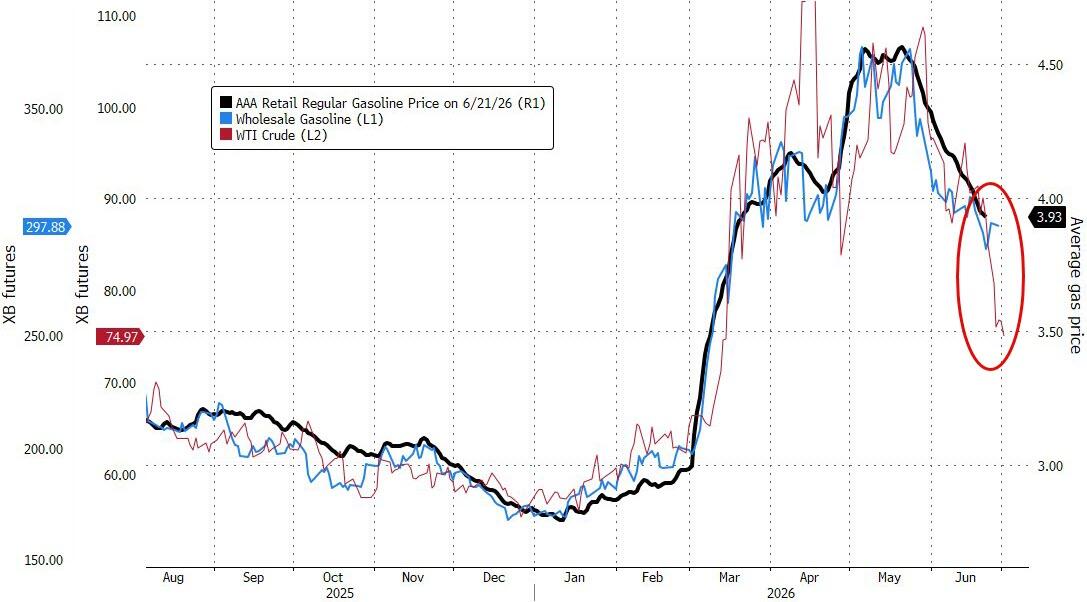
The national average gasoline price had climbed from under $3 a gallon before the conflict to more than $4 during the spring. Over the past three months, gasoline prices were more than $1 a gallon above pre-war levels, with consumers facing the combined effect of higher crude oil prices, refinery disruptions, and seasonal fuel demand.
That is why recent declines can be both real and incomplete. A drop from $4.50 to $4.05 is meaningful. It helps household budgets and eases some inflation pressure. But it still leaves gasoline far above where it was before the conflict began.
This is where the public conversation can become misleading. If prices fall for several weeks, some will argue that the oil shock is over. But the relevant question is not whether gasoline prices can come down from their highs. They already have. The better question is whether they can quickly return to pre-war levels.
That is a very different question.
Futures Markets Move Faster Than Tankers
Oil prices react immediately to headlines. A reported ceasefire, a diplomatic framework, or a sign that the Strait of Hormuz may reopen can move crude futures within minutes. That is exactly what happened as traders began to discount a lower geopolitical risk premium.
But moving physical barrels is different.
The Strait of Hormuz is the most important energy chokepoint in the world, and months of disruption cannot be unwound with a press release. Ships that were delayed have to be rescheduled. Insurers have to reassess war-risk premiums. Crews and cargo owners need confidence that passage is secure. Ports must deal with congestion. Refiners that changed crude sourcing patterns may not immediately switch back.
That is all important because gasoline prices are tied not only to the price of crude oil, but to the availability of the right crude in the right place at the right time. If refiners are still competing for prompt cargoes, or if logistical constraints keep barrels from flowing smoothly, gasoline prices can remain elevated even as futures markets anticipate relief.
Low Inventories Create A Bullish Backdrop
The bigger issue is inventories. During a major supply disruption, the world does not simply consume less oil and wait patiently for the crisis to end. It draws down inventories. Commercial stocks fall. Strategic reserves may be tapped. Refiners and importers use whatever supply they can secure.
For example, the U.S. Strategic Petroleum Reserve, which was already drawn down significantly in response to Russia’s invasion of Ukraine, has now been further drawn down to its lowest level since 1983.
When the crisis eases, those barrels have to be replaced.
That creates what could be called an inventory trap. Reopening Hormuz is bearish for oil prices because it allows more supply to move. But the need to refill depleted inventories is bullish because it creates additional demand for barrels just as the market is trying to normalize.
In other words, the end of the disruption does not necessarily create an immediate glut. It may instead trigger a period of aggressive restocking.
This is especially important for countries that rely heavily on imports from the Persian Gulf. Many will want to rebuild strategic and commercial inventories before the next geopolitical flare-up. Companies may do the same. If buyers conclude that inventories are too low for comfort, they may bid for barrels even as traders are assuming the crisis premium should disappear.
That restocking demand can put a floor under oil prices.
Gasoline Does Not Track Crude One-For-One
Another reason gasoline may not quickly return to pre-war levels is that crude oil is only one component of the pump price. It is the biggest component, but not the only one.
Refining margins, distribution costs, taxes, seasonal fuel specifications, regional supply constraints, and local inventories are all factors. Gasoline prices often rise quickly when crude spikes, but the decline can be slower when crude falls, particularly when refiners are still dealing with tight supply or strong demand.
This is also the time of year when gasoline demand tends to be seasonally strong. The summer driving season adds pressure just as the market is trying to recover from a major geopolitical disruption. Even if crude continues to ease, gasoline inventories and refinery utilization will help determine how much relief drivers actually see.
That is why a lower Brent crude price does not automatically mean a quick return to $3 gasoline.
The Market May Be Pricing In A Best-Case Scenario
None of this means gasoline prices cannot keep falling. They can. If the Iran agreement holds, if Hormuz traffic normalizes faster than expected, if inventories rebuild smoothly, and if crude prices continue to decline, drivers should see further relief.
But that is a favorable scenario with many moving parts.
The risk is that markets have already priced in much of the good news. They are assuming that the diplomatic breakthrough translates quickly into normal shipping flows, lower crude prices, lower inflation pressure, and a calmer economic backdrop. That may be too much to assume before the details of the agreement are known and before tanker traffic has returned to normal levels.
There are several ways this could disappoint. The agreement could be delayed. Implementation could be uneven. Shipping insurance could remain expensive. Regional security concerns could persist. Countries could compete aggressively to refill depleted stocks. Any of those factors could slow the decline in oil and gasoline prices.
That does not mean another price spike is inevitable. It simply means the market may have moved from fear to relief faster than the physical system can justify.
The Big Picture
The developing Iran agreement is good news if it reduces the risk of a wider war and allows the Strait of Hormuz to reopen. It should help bring oil prices down from the extreme levels reached during the conflict. Consumers should welcome that.
But the oil market is not a light switch. Reopening a chokepoint does not instantly refill inventories. It does not immediately clear the tanker backlogs. It does not erase insurance risk. It does not automatically bring gasoline prices back to where they were before the first missiles flew.
The most likely outcome is not that gasoline prices stay at crisis levels forever. It is that the road back to pre-war prices is far slower than many consumers expect.
Gas prices are falling. That part is real. But the bullish backdrop from low inventories, restocking demand, and lingering logistical risk has not disappeared. Until those issues are resolved, the market may struggle to deliver the kind of quick, complete relief that drivers are hoping for.
Related Markets
All MarketsMarket data may be delayed. Not financial advice.
How other outlets covered this
Compare allAlto found this story at 3 outlets. Same event, different framing — compare the headlines.
How this story developed
Full timelineAlto has tracked this across 42 days of coverage from 3 outlets.
Powered by Gab AI
The Story At A Glance
Reading this article now — analysis appears below
💡 AI analysis provides alternative perspectives on current events